
Hair Loss at Temples Men Treatment: Why the Corners Go First and How to Get Them Back
Most men remember the moment. A certain angle in the bathroom mirror, a photo taken in harsh light, or a comment from a friend, and suddenly the corners of the hairline look different. The temples have started to pull back. What follows is often a mix of denial and quiet worry, because temple recession feels like the first visible sign that hair loss has arrived.
Here is the truth that changes everything: temple recession is not random. It is the most biologically predictable zone of hair loss in men. The corners go first for specific, well-documented reasons rooted in follicle chemistry, and once those reasons are understood, the path forward becomes clear.
This is not exclusively an older man’s concern. Roughly 16% of men aged 18 to 29 already experience moderate to extensive hair loss, and the mean onset age of androgenetic alopecia is just 23.9 years. The treatment window opens far earlier than most men expect, and it also begins closing earlier.
This article delivers two things. First, the biology behind why the temples recede before anywhere else. Second, a staged treatment protocol that maps specific solutions to specific stages of loss. The core message is simple: early action preserves follicles that cannot be recovered once they are permanently lost.
Why the Temples Are the First to Go: The Biology Behind Temple Hair Loss
Most content about hair loss skips the foundational question of why. Understanding it is what separates men who act effectively from men who guess.
Male pattern hair loss, clinically known as androgenetic alopecia, affects up to 85% of men by age 50, and the temples are among the earliest and most consistent first signs. This condition preferentially targets the temples, the vertex (crown), and the mid-frontal scalp in a recognizable sequence.
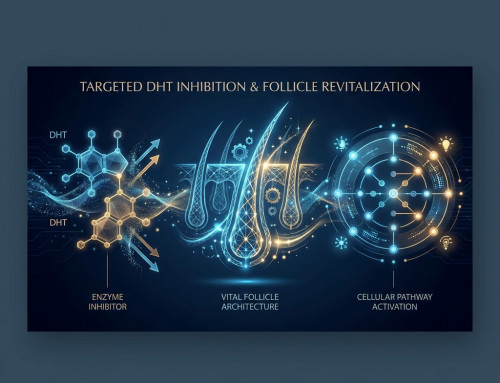
The primary biological driver is dihydrotestosterone, or DHT. This hormone binds to receptors on the hair follicle, triggering a process called miniaturization. Over successive growth cycles, the affected follicle produces thinner, shorter, weaker hairs until it eventually stops producing hair altogether and dies.
Genetics account for approximately 80% of cases. If a man’s family carries a history of significant baldness, his follicles are more likely to be sensitive to DHT. Combined with the early mean onset age of 23.9 years documented in the Journal of Cosmetic Dermatology, this makes early intervention critical rather than optional.
The Temporal Zone: Why This Specific Area Is Most DHT-Vulnerable
The reason the temples go first comes down to receptor density. Follicles in the temporal region carry a higher density of androgen receptors than follicles at the back and sides of the scalp. More receptors mean DHT binds more aggressively in this zone, so the follicles here miniaturize faster and earlier than anywhere else.
Contrast this with the occipital region at the back of the head. Those follicles are genetically DHT-resistant, which is precisely why hair transplant surgeons harvest donor grafts from this area. Those grafts retain their resistance even after being relocated.
The result is the classic “M”-shaped hairline, formed as the corners recede inward while the central hairline holds longer. This is not a cosmetic quirk or a matter of bad luck. It is a predictable biological sequence driven by follicle-level androgen sensitivity. Understanding how DHT causes male pattern baldness is the first step toward addressing it effectively.
Mature Hairline vs. Pathological Recession: How to Tell the Difference
Many men in their early 20s face a genuine dilemma: is this normal maturation, or the start of pattern loss?
A mature hairline is a slight, symmetric recession of roughly 1 to 1.5 cm from the juvenile hairline. It typically occurs between ages 17 and 29 and then stops, with no ongoing progression.
Pathological recession looks different. It is often asymmetric, continues over months, includes visible thinning of the temple hair itself, and frequently comes with a family history of significant baldness.
The distinction matters because approximately 25% to 30% of men naturally stabilize at Norwood Stage 2 without further progression. Accurate self-assessment prevents both panic and inaction. A licensed provider evaluation is the most reliable way to tell the two apart, which is exactly what a telehealth model like Thryve Hair Lab is designed to deliver without the friction of an in-person visit.
Other Causes of Temple Hair Loss Men Should Know
While DHT-driven androgenetic alopecia is the dominant cause, other factors can accelerate or mimic temple loss.
- Traction alopecia: Tight hairstyles such as man-buns, cornrows, and tight hats create mechanical stress on temple follicles. Caught early, this is reversible by simply reducing tension, with no medication required.
- Nutrient deficiencies: Shortfalls in protein, iron, vitamin D, and zinc can worsen thinning and should be addressed alongside medical treatment.
- Lifestyle factors: Chronic stress, poor sleep, and smoking impair follicle health and can accelerate DHT-driven loss.
- Telogen effluvium: Systemic stress or illness can trigger temporary shedding at the temples. It is distinguished from androgenetic alopecia by its sudden onset and diffuse pattern.
The key message is that identifying the correct cause determines the correct treatment. Not all temple loss requires DHT-blocking medication.
Reading the Norwood Scale: Mapping Your Temple Loss to a Stage
The Norwood-Hamilton Scale is the clinical standard for classifying male pattern baldness. Staging matters because treatment protocols, expected outcomes, and the urgency of intervention all shift depending on where a man falls on the scale.
This framework allows men to self-assess and understand not just where they are, but what window of opportunity remains. The urgency is real: once a follicle is completely scarred or destroyed, regrowth from that follicle is no longer possible.
Norwood Stage 1 to 2: The Preventive Window
Stage 1 shows no significant recession, with the hairline at or near its juvenile position. No treatment is required, though monitoring is wise if there is a family history.
Stage 2 shows slight, symmetric temple recession forming the early “M” shape. This is the single highest-value intervention point.
Stage 2 is the preventive window because the follicles are miniaturized but not yet dead. DHT-blocking medication can halt progression and partially reverse miniaturization. Finasteride stabilizes or improves density in roughly 85% to 90% of men when started at early stages.
With a mean onset age of 23.9 years, this window opens far sooner than most men anticipate. The danger is the “waiting trap”: men who delay for months or years lose irreversible follicles before ever seeking help.
Norwood Stage 3 to 4: Active Recession Requiring Combination Therapy
Stage 3 brings deeper temple recession with visible scalp at the corners and a pronounced “M” shape. Medication alone may slow progression, but regrowth becomes less predictable.
Stage 3 Vertex adds early crown thinning to the temple loss, signaling a more aggressive DHT pattern.
Stage 4 involves significant temple and frontal loss with a band of hair separating the front from the crown.
At these stages, monotherapy is insufficient. Combination therapy, pairing a DHT blocker with minoxidil and adjunct treatments, is the clinical standard. The growing clinical consensus is that layered treatments outperform single-agent approaches for temple regrowth. Surgical consultation also becomes relevant here for men who want to restore lost ground rather than only prevent further loss.
Norwood Stage 5 to 7: Advanced Loss and the Surgical Threshold
Stages 5 through 7 show extensive loss connecting the frontal and crown zones. Medical therapy alone cannot restore lost follicles at this point.
That said, medical maintenance with DHT blockers and minoxidil remains essential to protect remaining hair and optimize surgical outcomes. FUE hair transplant becomes the primary restoration tool, but medication must continue after surgery to protect non-transplanted zones. Men at this stage should explore late-stage hair thinning treatment options to understand what remains achievable.
The lesson threaded through every stage is this: men who reach Stage 5 to 7 once had a Stage 2 window where intervention could have changed their trajectory. The focus now shifts to what remains achievable and to preserving every remaining follicle.
Hair Loss at Temples Men Treatment: A Stage-by-Stage Protocol
Diagnosis leads to action. The most effective treatment approach is a hierarchy: begin with the most evidence-backed, least invasive options and escalate based on stage and response. The strongest results come from combination therapy, not isolated single treatments. Realistic expectations matter too, as results begin at 3 to 6 months, with peak improvement at 9 to 12 months.
DHT Blockers: The Foundation of Any Temple Treatment Protocol
Blocking DHT at the follicle is the only way to address the root cause of androgenetic alopecia.
- Finasteride (oral): FDA-approved, it blocks Type II 5-alpha-reductase and reduces serum DHT by approximately 70%, stabilizing or improving density in 85% to 90% of men at early stages.
- Dutasteride (oral): It blocks both Type I and Type II 5-alpha-reductase enzymes, reducing serum DHT by more than 90%. This makes it clinically more potent than finasteride, particularly for men with aggressive progression.
- Topical finasteride: Delivers DHT-blocking action directly to the scalp with reduced systemic absorption, relevant for men concerned about systemic effects.
This is where Thryve Hair Lab’s 4-in-1 formula fits as the foundation layer: dutasteride 0.5 mg combined with minoxidil 2.5 mg, biotin 1 mg, and vitamin D3 600 IU in a single daily capsule. The dutasteride advantage is especially meaningful for the temples, because targeting both DHT-producing enzymes matters most in the zone with the highest androgen receptor density. Notably, only 0.3% of men report side effects, described as mild and temporary. Men considering switching from finasteride to dutasteride will find the upgrade particularly relevant for aggressive temple recession.
Minoxidil: Stimulating Blood Flow and Follicle Activity at the Temples
Minoxidil works through vasodilation, improving blood flow and nutrient delivery to miniaturized follicles while extending the anagen (growth) phase. ISHRS researchers found it to be moderately to very effective in 84% of people.
Oral minoxidil at 2.5 mg, as included in Thryve’s formula, has become a growing clinical preference over topical due to consistent systemic delivery and the elimination of daily scalp application. Topical minoxidil remains effective but requires disciplined twice-daily use.
Men should expect an initial shedding phase in weeks 1 through 8. This is normal and signals that the follicle cycle is resetting. Visible regrowth typically begins around month 3 to 6, and combination therapy case studies have shown baby hair regrowth at the temples within 4 months. Crucially, minoxidil works best paired with a DHT blocker, because it stimulates growth but does not stop the underlying miniaturization.
Microneedling: Amplifying Treatment Absorption at the Temple Zone
Microneedling, often done with a dermaroller, creates micro-channels in the scalp that can increase topical medication absorption by up to four times while stimulating collagen and growth factor production. This is particularly relevant for the temple zone, where the skin is thinner and follicles are already stressed.
Clinical evidence supports microneedling as an adjunct to minoxidil and finasteride, and combination protocols including microneedling have produced some of the strongest real-world results, with visible temple fill-in reported as early as 90 days. Recommended frequency is one to two times per week with a 0.5 to 1.0 mm roller. It is a low-cost, accessible addition to a medical protocol, not a standalone treatment.
PRP and Emerging Therapies: Accelerating Temple Regrowth
Platelet-Rich Plasma (PRP) concentrates growth factors from a man’s own blood and injects them into the scalp to stimulate follicle activity. A 2025 meta-analysis of 43 randomized controlled trials covering 1,877 patients confirmed that activated PRP significantly increases hair density and reduces hair loss compared to placebo. PRP is best used as an adjunct to medical therapy or a bridge to surgery, not a replacement for DHT blockers.
Exosome therapy, using stem cell-derived extracellular vesicles, showed an average 28% improvement in hair density in a 2026 Korean RCT with 12-month follow-up. The evidence remains promising but immature compared to PRP, so exosomes are best used alongside FUE or PRP rather than alone.
Low-Level Laser Therapy (LLLT) uses FDA-cleared caps and combs to stimulate follicle metabolism. A systematic review noted LLLT appeared more efficacious than pharmaceuticals in some comparisons, though combination use remains optimal. These therapies are most relevant for Norwood Stage 3 to 4 men maximizing regrowth alongside medical maintenance. The latest breakthroughs in hair growth research continue to expand what is possible with these adjunct approaches.
FUE Hair Transplant for Temple Restoration: What to Expect
FUE (Follicular Unit Extraction) is the preferred surgical technique for temple restoration because of its precision in placing individual grafts along the natural hairline angle. It accounts for roughly 58% to 66% of all hair transplant procedures globally as of 2025 to 2026.
Graft guidance is stage-dependent: mild temple recession typically needs 150 to 250 grafts per side, while deeper recession requires 300 to 500 grafts per side. The hybrid FUE plus adjunctive therapy protocol, combining PRP, CGF, LLLT, exosomes, and medical maintenance, has become the dominant surgical approach in 2025 to 2026, replacing the surgery-only model.
Timeline expectations: visible improvement within 3 to 6 months post-procedure, with full results at 12 months. Medical therapy must continue after surgery to protect non-transplanted follicles from ongoing DHT-driven loss. FUE is most appropriate for Norwood Stage 3 to 5 men who have stabilized on medication and want to restore lost ground, not a first-line option at Stage 2. For men weighing their options, a detailed hair transplant vs. medication treatment comparison can help clarify the right path. The global hair transplant industry, valued between $9.10 and $12.04 billion in 2025 and projected to grow at a 21.05% CAGR, reflects the surging demand for temple and hairline restoration.
Scalp Micropigmentation: A Non-Surgical Option for the Temples
Scalp micropigmentation (SMP) creates the illusion of fuller temples using precisely placed tattooed dots that mimic hair follicles. It is a cosmetic camouflage solution, not a regrowth treatment. SMP suits men who prefer to avoid medication or surgery, or who want added density illusion alongside medical treatment, and it is particularly effective for men with shaved or very short hairstyles. Results are immediate and long-lasting, holding 3 to 5 years before touch-up with no recovery time. Its limitations are clear: it does not stop ongoing loss and does not restore actual density.
The 2026 Breakthrough: Clascoterone and What It Means for Temple Hair Loss
The treatment landscape is shifting. Clascoterone 5% topical solution (Breezula/CB-03-01 by Cosmo Pharmaceuticals) posted positive 12-month Phase 3 results in April 2026. The SCALP 1 and SCALP 2 trials, covering 1,465 men, showed up to a 539% relative improvement in target-area hair count versus placebo.
Its mechanism is what makes it remarkable. Clascoterone blocks DHT directly at the androgen receptor on the hair follicle without systemic absorption, meaning no reported sexual side effects, a key differentiator from oral finasteride. For the temple zone, where androgen receptor density is highest, targeting the receptor directly at the site of greatest sensitivity is especially significant.
If approved, clascoterone would be the first new FDA-approved mechanism of action for male androgenetic alopecia in over 30 years. The FDA NDA filing is expected in early 2027, with realistic approval mid-to-late 2027. It is not yet available, but it is worth monitoring.
The practical takeaway is this: men who start a proven protocol now will be best positioned to add clascoterone when it arrives. In the meantime, dutasteride or finasteride combined with minoxidil remains the gold standard.
The Combination Protocol: Why Stacking Treatments Wins for Temple Regrowth
The mistake most men make is treating options as either/or choices rather than a coordinated protocol. Each treatment targets a different mechanism: DHT blocking, follicle stimulation, blood flow, and growth factor activation. Stacking them addresses the problem from every angle.
The evidence-backed stacked protocol for temple regrowth looks like this:
- Foundation: DHT blocker (dutasteride or finasteride) to stop the underlying cause.
- Stimulant: Oral or topical minoxidil to activate dormant follicles and extend the growth phase.
- Amplifier: Microneedling to increase absorption and stimulate local growth factors.
- Accelerant (Stage 3+): PRP or LLLT to boost density and follicle survival.
- Surgical restoration (Stage 3 to 5 where indicated): FUE with adjunctive therapy.
Real-world evidence supports this approach. Combination therapy has shown visible temple fill-in as early as 90 days, and topical finasteride plus minoxidil case studies show significant improvement by month 3 to 4.
Thryve Hair Lab’s once-daily hair loss capsule serves as the foundation layer of this protocol, combining dutasteride, minoxidil, biotin, and vitamin D3 in a single daily dose. The convenience is meaningful: one capsule replaces the need to source and manage multiple separate products, delivering the same active ingredients clinicians recommend.
Real Results: What Temple Regrowth Actually Looks Like on a Timeline
Generic 3-to-6-month estimates leave men in the dark. Temple regrowth follows its own timeline.
- Month 1 to 2: Initial shedding phase, a form of treatment-triggered telogen effluvium. This is normal, with no visible regrowth yet.
- Month 2 to 3: Shedding subsides. Some men on combination therapy report early baby hairs along the temple hairline.
- Month 3 to 4: Visible baby hairs and early fill-in appear for men on combination protocols; the hairline looks less sharp and receded. Jason M., 34, reported baby hairs returning at his hairline at 3 months.
- Month 6: Meaningful, measurable density improvement. Marcus G., 29, reported new growth at his temples and praised the discreet process.
- Month 9 to 12: Peak improvement and full assessment of treatment response.
Temple regrowth may run slightly slower than crown regrowth due to the temporal zone’s higher DHT sensitivity, so expectations should account for that. Consistency is non-negotiable: stopping treatment reverses gains within 6 to 12 months as DHT activity resumes. Chris L., 39, saw his hairline filling in at 3 months, and R. Silver, 44, reported less scalp showing at 4 months after 6 years of thinning. The Thryve before and after photos document real patient outcomes across these timelines.
The Waiting Trap: Why Delaying Treatment Costs Follicles That Cannot Be Recovered
Many men delay treatment for months or years before seeking help, often normalizing early recession or assuming it will stop on its own. The biological reality is unforgiving: once a follicle is completely scarred or destroyed, regrowth from it is no longer possible.
The contrast between stages is stark. Stage 2 intervention offers a high success rate with medication alone. Stage 4 to 5 intervention often requires surgery, higher cost, and longer recovery. With a mean onset age of 23.9 years, most men have their best treatment window in their mid-20s, not their 30s or 40s.
Starting treatment early is not an overreaction. It is the most cost-effective, least invasive decision available at Stage 2. Thryve Hair Lab’s telehealth model removes the friction that causes delay: a 2 to 3 minute online questionnaire and next-day provider review replace the scheduling and travel that keep men waiting.
Conclusion: Temple Hair Loss Is Treatable, But the Window Matters
The temples go first because of their high androgen receptor density and DHT vulnerability. This is biology, not bad luck. The Norwood-staged framework makes the path forward clear: where a man stands determines what he needs, and earlier stages respond far better to less invasive treatment.
The treatment hierarchy holds at every stage. A DHT blocker like dutasteride or finasteride forms the foundation. Minoxidil serves as the stimulant. Microneedling and PRP act as amplifiers. FUE handles surgical restoration where indicated. The 2026 clascoterone breakthrough is proof that the landscape keeps improving, meaning men who act now will have more options, not fewer.
The follicles a man protects today are the ones he keeps tomorrow. The men who see results are the ones who started.
Start Protecting Your Temples Today with Thryve Hair Lab
Thryve Hair Lab offers the most convenient way to begin the foundation of a temple treatment protocol. The 4-in-1 daily capsule combines dutasteride 0.5 mg, minoxidil 2.5 mg, biotin 1 mg, and vitamin D3 600 IU: the combination clinicians recommend, delivered in a single daily dose.
The dutasteride advantage matters most here. By blocking both Type I and Type II DHT-producing enzymes, it provides stronger protection for the most DHT-vulnerable zone on the scalp, exactly where the temples need it.
The process is simple:
- Complete a 2 to 3 minute online questionnaire.
- A licensed provider reviews the information, typically within 1 business day.
- Treatment arrives via 2-day FedEx delivery, discreetly packaged.
The value is equally straightforward: $67 per month on the 20-week plan, free shipping, and a 1-year satisfaction guarantee, significantly more affordable than purchasing ingredients separately. The clinical outcomes speak for themselves: 97% to 98% of men stop further hair loss, and 90% see visible improvement in thickness and coverage within 3 to 6 months. Only 0.3% of men report side effects, described as mild and temporary.
Take the 2-minute assessment and get a personalized treatment plan from a licensed provider today.