
Switching From Finasteride to Dutasteride: The Clinician-Backed Transition Guide
Introduction: When Finasteride Stops Being Enough
The reality is sobering: an estimated 30 to 50 percent of men on finasteride fail to see meaningful clinical improvement. This is not a personal failure or a sign of inconsistency. It is a pharmacological ceiling built into the drug itself.
Finasteride only blocks the Type II isoenzyme of 5-alpha reductase. The Type I pathway, which remains active in sebaceous glands and scalp skin, continues producing DHT unchecked. For men who have been consistent with finasteride for 12 months or longer and are still watching their hair thin, this incomplete blockade explains why progress has stalled.
Switching from finasteride to dutasteride represents the clinically validated next step for these men. This guide delivers a clinician-backed, step-by-step transition protocol covering who should switch, why the science supports it, exactly how to execute the transition, and how modern telehealth platforms make the process frictionless. This is an upgrade, not a gamble.
Why Finasteride Plateaus: The Type I Problem Finasteride Cannot Solve
Understanding why finasteride stops working requires understanding the biology it was designed to target.
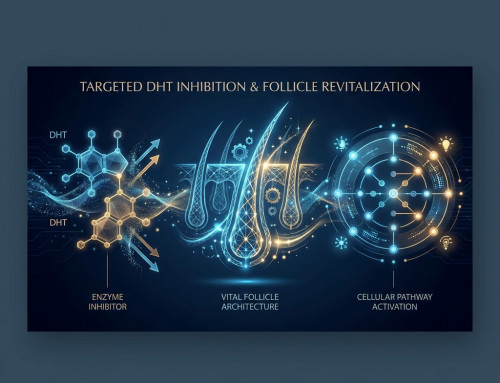
The enzyme 5-alpha reductase exists in two isoforms. Type II is expressed predominantly in hair follicles and the prostate. Type I is expressed in sebaceous glands and scalp skin. Finasteride selectively inhibits only Type II, reducing serum DHT by approximately 70 percent. While this is a meaningful reduction, it leaves the Type I pathway fully operational.
The consequence is straightforward: DHT continues to be produced locally in the scalp environment where follicular miniaturization occurs. This is the mechanistic reason finasteride stops working for many men. It is not tolerance. It is not poor absorption. It is an incomplete blockade of the DHT production system.
For men who have been diligent with their finasteride regimen and still plateaued, this explanation validates their experience. The drug’s mechanism, not their compliance, is the limiting factor. Dutasteride resolves this gap by targeting both isoenzymes simultaneously.
Dutasteride vs. Finasteride: The Quantified Potency Differential
Dutasteride is a dual 5-alpha reductase inhibitor. It blocks both Type I and Type II isoenzymes, addressing the fundamental limitation of finasteride.
According to a 2025 systematic review published in PMC, dutasteride inhibits Type I approximately 100-fold more potently than finasteride and Type II approximately 3-fold more potently. The clinical result is a fundamentally different level of DHT suppression: dutasteride reduces serum DHT by 90 to 98 percent compared to finasteride’s 70 percent.
The head-to-head clinical data confirms this translates to superior hair outcomes:
- The 2022 Choi et al. Multicenter Study compared 295 dutasteride patients to 305 finasteride patients. Dutasteride produced more than twice the improvement in BASP hair growth classification.
- The 2025 JAAD International Randomized Controlled Trial found that thrice-weekly dutasteride 0.5 mg achieved a 35 percent moderate-to-marked improvement rate versus 21 percent for once-daily finasteride.
- Five-Year Korean Long-Term Data demonstrated that 82.2 percent of vertex-type androgenetic alopecia patients showed clinical improvement on dutasteride 0.5 mg, confirming sustained superiority over extended treatment periods.
For a man looking at his hairline in the mirror, these percentages translate to measurably more coverage, density, and thickness over time.
Who Is a Strong Candidate for Switching?
The primary candidate profile is clear: men who have been on finasteride for at least 12 months with consistent daily use and have experienced a plateau or continued thinning despite compliance.
A secondary candidate profile includes men who started finasteride early but want the strongest available oral DHT suppression from the outset, particularly those with an aggressive family history of androgenetic alopecia. Understanding the science behind hair loss causes and evidence-based solutions can help men identify where they fall on the candidacy spectrum.
The data on finasteride non-responders is compelling. One study of 35 finasteride non-responders showed a 10.3 percent increase in hair density and an 18.9 percent increase in thickness after switching to dutasteride for just six months.
Certain men should exercise caution or delay the switch. Men actively trying to conceive should stop dutasteride at least six months before conception attempts due to the drug’s long half-life and documented effects on sperm parameters. Men with known hypersensitivity to 5-alpha reductase inhibitors should not switch.
Candidacy should always be confirmed with a licensed medical provider. Telehealth consultations make this evaluation accessible without requiring in-person appointments.
The Pharmacokinetics Behind the 1 to 2 Day Transition Window
This is where the science becomes practical and reassuring.
Finasteride has a half-life of only 5 to 8 hours. It clears the body rapidly. Within 24 to 48 hours of the last dose, finasteride’s inhibitory effect on 5-alpha reductase is largely dissipated.
Dutasteride operates on an entirely different timescale. Its half-life is approximately 4 to 5 weeks, making it one of the longest-lasting oral medications available. It builds to steady-state concentration over 5 to 6 months.
The practical implication: because finasteride clears so quickly, most men can begin dutasteride within 1 to 2 days of their last finasteride dose. No formal washout period is required.
This matters because stopping finasteride without immediately starting dutasteride risks temporary telogen effluvium as DHT rebounds before dutasteride reaches therapeutic levels. The transition should be seamless, not gapped.
Step-by-Step: The Clinician-Backed Transition Protocol
Step 1: Confirm Candidacy With a Licensed Provider
Before stopping finasteride, men should consult with a licensed medical provider to confirm dutasteride is appropriate for their individual health profile.
Telehealth platforms allow this consultation to happen in minutes via an online questionnaire. No in-person appointment is required. The provider will review medical history, the current finasteride regimen, and any relevant contraindications.
Dutasteride is a prescription-only medication in the United States. Self-prescribing or attempting to source it without a valid prescription is not advisable.
Step 2: Take the Last Finasteride Dose
Once the dutasteride prescription is confirmed and on its way, the last finasteride dose should be taken as normal.
No tapering is required. Finasteride does not require a gradual dose reduction before stopping. Timing should be coordinated so dutasteride arrives within 1 to 2 days of the last finasteride dose to minimize any DHT rebound window.
Step 3: Begin Dutasteride 0.5 mg Daily Within 1 to 2 Days
The standard dose for androgenetic alopecia is dutasteride 0.5 mg once daily, the same dose used in all major clinical trials referenced in this guide.
Because of dutasteride’s long half-life, some physicians prescribe intermittent dosing. The 2025 JAAD randomized controlled trial demonstrated that thrice-weekly dosing still outperformed daily finasteride. The International Society of Hair Restoration Surgery confirms that many hair restoration physicians use dutasteride twice weekly off-label.
A practical advantage: missed doses are far less consequential with dutasteride than with finasteride. The long half-life prevents DHT spikes from a single missed dose.
Step 4: Understand the First 1 to 3 Months
Some men experience a temporary increase in shedding in the first 1 to 3 months after switching. This is not a sign the medication is failing.
The mechanism is straightforward: dutasteride’s stronger DHT suppression prompts more hair follicles to simultaneously enter new anagen growth cycles. This first manifests as shedding of old, miniaturized hairs.
This shedding phase is temporary and self-resolving, typically within 3 months. Documenting baseline photos before switching allows for objective progress tracking over time.
Step 5: Track Progress at the 6, 12, and 18-Month Marks
Because dutasteride takes 5 to 6 months to reach steady-state serum concentrations, meaningful clinical results typically begin appearing at 6 months post-switch.
Most users see significant improvement between 6 and 12 months. Full results may take up to 18 months due to the natural hair growth cycle.
Consistent lighting and camera angle should be used for progress photos. Scalp visibility under direct light is the most reliable self-assessment method. A follow-up consultation with a provider at 6 months allows for response assessment and protocol adjustment if needed.
Side Effects, Safety, and What the 2025 Data Actually Shows
The assumption that a stronger drug means proportionally more side effects is not supported by clinical evidence.
Meta-analyses confirm dutasteride and finasteride have statistically similar rates of sexual adverse effects, including altered libido, erectile dysfunction, and ejaculation disorders, over 24 weeks of treatment.
The 2022 Choi et al. multicenter study found the adverse event rate was actually lower in the dutasteride group (7.6 percent) than the finasteride group (10.5 percent).
The 2025 JAAD randomized controlled trial confirmed comparable sexual adverse events across all dosing groups: daily finasteride, twice-weekly dutasteride, and thrice-weekly dutasteride.
Important considerations regarding dutasteride’s long half-life:
- If side effects occur, they may persist for weeks to months after stopping the drug. This is why provider-supervised use matters.
- Men must refrain from donating blood for at least 6 months after the last dutasteride dose.
- Men planning to conceive should stop dutasteride at least 6 months before trying due to the drug’s long persistence and effects on sperm parameters.
Dutasteride’s Regulatory Status: What Off-Label Actually Means
Transparency matters: dutasteride is not FDA-approved for hair loss in the United States. It is prescribed off-label for androgenetic alopecia.
Context is equally important. Dutasteride is approved for androgenetic alopecia in South Korea (2009), Japan (2015), and Taiwan. It is not an experimental or fringe treatment.
GSK halted its Phase III FDA approval trials for androgenetic alopecia in 2002 for commercial reasons, not due to safety or efficacy concerns. The drug’s safety profile was not in question.
Off-label prescribing is a well-established, legal, and common medical practice in the United States. Physicians routinely prescribe medications off-label when clinical evidence supports it. The International Society of Hair Restoration Surgery recognizes dutasteride as a legitimate treatment option for androgenetic alopecia.
How Thryve Makes the Switch Simple: The Telehealth Advantage
Getting a dutasteride prescription historically required scheduling a dermatologist appointment, waiting weeks, and paying for an in-person visit. All of this to discuss a medication switch that takes minutes to explain.
Thryve Hair Lab eliminates every one of those friction points. A 2 to 3 minute online medical questionnaire, licensed provider review typically within 1 business day, and 2-day FedEx shipping make the transition straightforward.
Thryve’s 4-in-1 daily capsule combines dutasteride 0.5 mg with oral minoxidil 2.5 mg, biotin 1 mg, and vitamin D3 600 IU. Men switching from finasteride are not just upgrading their DHT blocker; they are adding a clinically validated hair growth stimulant in the same single daily dose.
The medical team behind Thryve includes specialists with over 100 years of combined clinical experience in hair restoration, including board-certified hair surgical specialists and transplant surgeons. Discreet packaging, no waiting rooms, and no awkward conversations mean the entire process happens on the patient’s schedule.
The 1-year satisfaction guarantee and flexible subscription model reduce risk for men who are hesitant.
Frequently Asked Questions About Switching From Finasteride to Dutasteride
Do I need to stop finasteride before starting dutasteride?
Yes. The two medications should not be taken simultaneously since dutasteride already covers the Type II pathway that finasteride targets. Because finasteride clears within 1 to 2 days, the transition can happen almost immediately with no washout period. A provider will confirm the exact timing based on the current regimen.
Will switching cause more shedding?
Some men experience temporary increased shedding in the first 1 to 3 months. This reflects follicles entering new growth cycles, not treatment failure. The shedding is temporary and typically resolves within 3 months as dutasteride builds to steady-state concentration.
Is dutasteride stronger and therefore more dangerous than finasteride?
Clinical data does not support the assumption that greater potency equals greater side effect risk. Multiple meta-analyses and head-to-head randomized controlled trials show comparable sexual adverse event rates between the two drugs. The 2022 Choi et al. study found a lower adverse event rate in the dutasteride group. Provider-supervised use is the key safety factor.
How long until results appear after switching?
Dutasteride takes 5 to 6 months to reach steady-state serum concentration, so meaningful results typically begin at 6 months. Most men see significant improvement between 6 and 12 months post-switch. Full results may take up to 18 months due to the natural hair growth cycle.
Can dutasteride be taken by men who are planning to have children?
Men planning to conceive should stop dutasteride at least 6 months before trying due to the drug’s long half-life and documented effects on sperm parameters. This is a critical counseling point that should be addressed during the telehealth consultation.
Conclusion: The Plateau Is Not the End
A finasteride plateau is a diagnostic signal, not a defeat. It identifies exactly which pharmacological gap needs to be addressed.
The case for switching is supported by robust clinical evidence: dutasteride blocks both Type I and Type II 5-alpha reductase isoenzymes, reducing DHT by 90 to 98 percent versus finasteride’s 70 percent. Clinical trial data consistently shows superior hair growth outcomes with a comparable safety profile.
The transition is simpler than most men fear. Finasteride’s short half-life means the switch can happen in 1 to 2 days with no washout period and no complex tapering protocol.
The 2025 clinical data, including the JAAD randomized controlled trial, the Choi et al. multicenter study, and the 5-year Korean long-term data, all point in the same direction. For men who have plateaued on finasteride, dutasteride is the evidence-backed next step.
The men who act on this information today are the ones who will be looking at measurably better results 12 months from now.
Ready to Make the Switch? Start Your Thryve Consultation Today
Thryve’s online consultation takes 2 to 3 minutes, requires no in-person visit, and connects patients with a licensed provider who can approve a dutasteride prescription typically within 1 business day.
The 4-in-1 capsule delivers dutasteride 0.5 mg alongside oral minoxidil 2.5 mg, biotin 1 mg, and vitamin D3 600 IU: a complete hair restoration protocol in a single daily dose.
If visible results do not appear after consistent use, the 1-year satisfaction guarantee provides a full refund or account credit.
Begin the online questionnaire at thryvehairlab.com. Doctor-guided care, clinically backed ingredients, and a treatment plan built around individual needs make this the straightforward path forward.