
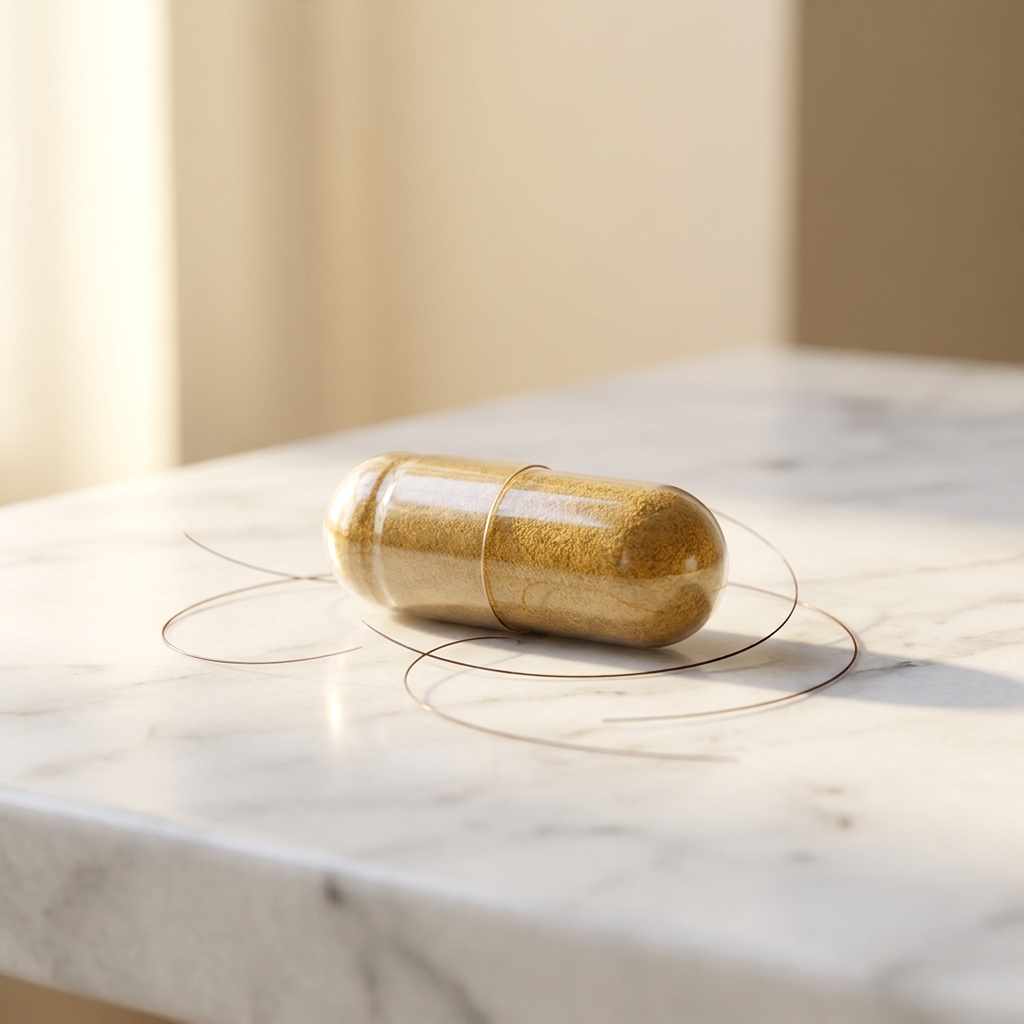
Hair Loss Treatment Without Messy Application: Why the Capsule Wins
Introduction: The Real Reason Most Men Fail at Hair Loss Treatment
Picture a man who finally decides to take his hair loss seriously. He orders topical minoxidil, reads the instructions, and commits. For the first few weeks, he applies it faithfully. Then reality sets in. The dropper takes time. His scalp feels greasy. He cannot style his hair for hours after application. He travels for work and cannot easily pack the bottle. Within a few months, the routine quietly falls apart. He did not stop because the product failed him. He stopped because the application could not fit into his life.
This is the uncomfortable truth at the center of hair loss treatment: the biggest threat to success is not the active ingredient; it is the format. A hair loss treatment without messy application is not just a matter of preference; it is a matter of results. The data makes this undeniable. A PubMed-indexed study of 400 men with androgenetic alopecia found that 86.3% ultimately discontinued topical minoxidil, with messiness and application burden ranking among the primary drivers.
This article reframes the conversation around adherence science rather than efficacy alone. Hair loss affects roughly 50 million American men, and the frustration of a failed treatment is every bit as real as the hair loss itself. The most effective treatment is the one a man will actually stay on. A once-daily oral capsule is increasingly recognized as the medically superior path to results men can sustain.
The Scale of Male Hair Loss and Why Treatment Matters Early
Androgenetic alopecia (AGA) is not a rare condition. Up to 80% of men experience pattern hair loss at some point in their lives, and by age 35, roughly 40% show significant thinning. This is not simply an older man’s problem. Research published in 2025 found the mean onset age for AGA in men to be just 23.9 years, meaning many men begin losing hair in their early twenties.
Early intervention consistently produces the best outcomes. Preserved follicles respond far better than dormant ones, and hair loss is significantly easier to stop than to reverse.
The impact extends well beyond appearance. Studies show men with AGA experience meaningful emotional consequences, including reduced confidence and self-image concerns. This makes consistent, effective treatment a genuine quality-of-life issue rather than a cosmetic afterthought.
Biologically, the primary driver of AGA is dihydrotestosterone (DHT), a hormone that gradually shrinks hair follicles through a process called miniaturization. Blocking DHT is therefore a non-negotiable pillar of any serious treatment plan. With the stakes this high, the worst possible outcome is starting a clinically sound treatment and then abandoning it, which is precisely what most men end up doing.
Why Topical Minoxidil Has a Compliance Crisis
Topical minoxidil is a legitimate, FDA-recognized treatment. The molecule works. The problem is the delivery format, not the drug.
Consider the real-world burden. Topical minoxidil typically requires twice-daily application to a completely dry scalp, followed by a waiting period of up to four hours before washing. It leaves a greasy residue, and many men experience scalp itching, dryness, and dandruff flare-ups. Notably, these irritations are largely caused by carrier ingredients like propylene glycol and alcohol, not by the minoxidil itself. The routine disrupts styling and does not fit into a busy morning.
The consequences show up in the data. That study of 400 patients found an 86.3% discontinuation rate, which stands as the industry’s biggest silent failure. A 2025 cross-sectional study published in the Journal of Drugs in Dermatology added sharper numbers: topical users missed an average of 1.2 treatment days per month compared to just 0.15 for oral users. Most telling of all, 18.8% of topical users discontinued specifically because of difficulty of use, compared to 0% of oral users.
The men most affected are easy to identify: gym-goers who wash their hair daily, professionals who style their hair every morning, frequent travelers who cannot carry dropper bottles through TSA checkpoints, and men who simply cannot build a twice-daily scalp routine into their lives.
The clinical point is straightforward. A treatment that is 100% effective in theory but used only 60% of the time produces far worse outcomes than a slightly less potent treatment used every single day.
What the Science Says About Oral vs. Topical Minoxidil
Oral minoxidil is not a compromise. It is a clinically validated alternative with a robust and growing evidence base.
The expert community agrees. A global Delphi consensus study involving 43 experts from 12 countries found that 93.2% agreed oral tablets were more convenient and caused less scalp irritation, while 95.5% agreed they caused no hair texture change. The International Society of Hair Restoration Surgery (ISHRS) explicitly recommends oral minoxidil as an alternative for individuals who find topical application too inconvenient for long-term use.
A 2025 systematic review and meta-analysis further confirmed that oral and topical minoxidil produce significant improvements in hair density and growth rate with comparable safety profiles. At low doses such as 2.5mg, oral minoxidil is well-tolerated, and the medical community increasingly recognizes it as a first-line option rather than a fallback.
The Adherence Advantage: Why Consistent Use Beats Best on Paper
Adherence science is the missing variable in most hair loss treatment conversations, and the math is unforgiving. If topical minoxidil carries an 86.3% discontinuation rate, the vast majority of men who start it will never reach the 9 to 12 month window where peak results occur.
The contrast with oral capsule data is stark. Oral users miss just 0.15 days per month, and 0% discontinue due to difficulty of use. In plain terms, the treatment actually gets used.
The logical conclusion follows naturally: the medically superior choice is the one a man will actually take every day for years, not the one with the most impressive label. A real-world UK study of 502 patients on combined oral minoxidil plus a DHT blocker found that 92.4% achieved stable or improved outcomes over 12 months. Those results were only possible because patients stayed on treatment.
Consider the analogy of a fitness program. The best workout is not the most extreme one abandoned after two weeks; it is the one a person shows up for consistently. Hair loss treatment follows the same principle, and it points directly to the formulation that solves this problem.
The Case for a Combined Oral Capsule: Dutasteride and Minoxidil as the 2026 Clinical Standard
In 2026, the combination of oral minoxidil plus a DHT blocker has emerged as the clinical gold standard for non-surgical AGA treatment. The reason is mechanistic. Minoxidil stimulates follicle regrowth through improved blood flow, while a DHT blocker addresses the root hormonal cause of follicle miniaturization. Together, they attack hair loss from two distinct biological pathways.
Dutasteride vs finasteride is a meaningful distinction. Dutasteride is the more potent DHT blocker of the two available options. It blocks both Type I and Type II 5-alpha reductase enzymes, lowering serum DHT by approximately 98%, compared to roughly 71% for finasteride. A 2025 network meta-analysis confirmed oral dutasteride 0.5mg as the most effective single agent for AGA.
The real-world evidence is compelling. A retrospective cohort study of 621 men on a combined once-daily oral dutasteride 0.5mg plus minoxidil 2.5mg capsule found that hair loss stabilization was achieved in 95.8% of patients at month 3, rising to 98.5% by month 6.
There is also a timely safety consideration. An April 2025 FDA warning regarding systemic absorption risks from compounded topical finasteride gives men one more clinical reason to favor a fully oral regimen over topical combination sprays. This is precisely the formulation Thryve Hair Lab has built into a single daily capsule.
How Thryve Hair Lab’s 4-in-1 Capsule Solves the Adherence Problem
Thryve Hair Lab’s once-daily oral capsule is the practical embodiment of the adherence-first argument. It combines four active ingredients in one pill:
- Dutasteride 0.5mg to block both Type I and Type II DHT enzymes
- Oral minoxidil 2.5mg to stimulate follicle regrowth through improved blood flow
- Biotin 1mg to support keratin production and hair strength
- Vitamin D3 600 IU to nourish and promote follicle health
The single-capsule format is the point. No dropper bottles. No scalp residue. No four-hour waiting periods before styling. No twice-daily schedule. Just one pill, taken once a day.
The formulation carries serious clinical backing, developed by a team with over 100 years of combined clinical experience in hair restoration, including board-certified hair surgical specialists and transplant surgeons. As Dr. Glenn M. Charles put it: “After 30 years in this field, I’ve never seen a simpler, more effective option than Thryve Hair Lab’s 4-in-1 formula.”
The connection to adherence data is direct. A once-daily oral capsule eliminates every friction point that drives topical discontinuation: the messiness, the styling interference, the scalp irritation, and the twice-daily burden. For travelers, the discreet delivery and TSA-compliant foil-blister packaging removes one more obstacle that makes topical treatment incompatible with an active lifestyle.
What to Expect: Results Timeline and Clinical Outcomes
Setting realistic, evidence-based expectations is essential to staying the course. Hair growth is a slow biological process, and results are not immediate. Understanding the hair regrowth timeline is critical.
The typical progression unfolds as follows. Stabilization of hair loss begins within the first few months. Visible improvement in thickness and coverage usually appears at 3 to 6 months. Peak results occur at 9 to 12 months of consistent use.
Real-world cohort data supports this arc. Among men on combined oral dutasteride plus minoxidil, 95.8% achieved hair loss stabilization by month 3 and 98.5% by month 6. Thryve Hair Lab reports its own outcomes in line with the broader evidence: 97 to 98% of men stop further hair loss, and 90% see visible improvement in thickness and coverage within 3 to 6 months.
Customer experiences reflect these timelines. Chris L., age 39, saw his hairline filling in at 3 months. R. Silver, age 44, noticed less scalp showing in photos after 4 months, following six years of thinning. These outcomes are achievable precisely because oral capsule users stay on treatment. The format makes consistency the path of least resistance.
How Thryve Hair Lab Works: From Consultation to Capsule
Getting started is designed to remove every point of friction.
- Complete the online questionnaire. A 2 to 3 minute medical questionnaire replaces the office visit. No waiting room, no awkward conversations.
- Provider review. A licensed medical provider reviews the submission, typically within 1 business day, and approves the prescription if appropriate.
- Discreet delivery. The capsules are custom-compounded and shipped via 2-day FedEx in discreet packaging with no indication of contents on the outside.
- Ongoing subscription. Automatic delivery ensures there is never a gap in treatment that could set back progress.
The pricing reflects real value. The 20-week plan runs $67 per month with free shipping, significantly more affordable than purchasing the four ingredients separately at roughly $135 per month. Every plan is backed by a 1-Year Satisfaction Guarantee: a full refund or account credit if there are no visible results after consistent use. If treatment is not approved by medical staff, a full refund is issued.
Oral Capsule vs. Topical: A Direct Comparison
| Dimension | Topical Minoxidil | Thryve Oral Capsule |
|---|---|---|
| Application | Twice-daily to a dry scalp | One pill, once daily |
| Mess and residue | Greasy, oily residue on scalp and hair | None |
| Styling | 4-hour wait before washing or styling | No restrictions |
| Scalp side effects | Itching, dryness, redness, dandruff from carriers | Bypasses scalp entirely |
| Travel | Dropper bottles create TSA challenges | TSA-compliant foil-blister packaging |
| Adherence | 86.3% discontinue | 0.15 missed days/month; 0% quit for difficulty |
| Efficacy | Effective | Comparable, with superior vertex results |
This is not a takedown of topical treatment. It is a clear-eyed assessment of which format supports long-term success. The efficacy is comparable, as confirmed by the 2024 JAMA Dermatology RCT. The difference lies in which format a man will actually keep using.
Frequently Asked Questions
Is oral minoxidil as effective as topical minoxidil?
Yes. The 2024 JAMA Dermatology randomized controlled trial found comparable effectiveness between oral minoxidil once daily and topical minoxidil twice daily after 24 weeks, with oral showing superior results at the crown.
Why dutasteride instead of finasteride?
Dutasteride blocks both Type I and Type II 5-alpha reductase enzymes, lowering serum DHT by approximately 98% compared to roughly 71% for finasteride. A 2025 network meta-analysis confirmed oral dutasteride 0.5mg as the most effective single agent for AGA.
Are there side effects?
Less than 0.3% of Thryve users report mild, temporary side effects. The global expert consensus confirmed oral tablets cause less scalp irritation and no hair texture change compared to topical options.
How long before results appear?
Visible improvement typically appears at 3 to 6 months, with peak results at 9 to 12 months. Stabilization (the stopping of further loss) often occurs first, within the early months of treatment.
What if a man travels frequently?
The TSA-compliant foil-blister packaging and the simplicity of a single daily pill with no liquids make travel effortless.
What if it does not work?
Thryve Hair Lab offers a 1-Year Satisfaction Guarantee: a full refund or account credit if there are no visible results after consistent use.
Is a prescription required?
Yes. Thryve’s online hair loss consultation connects users with a licensed provider who reviews and approves the prescription, typically within 1 business day.
Conclusion: Consistency Is the Treatment, So Choose the Format That Makes It Possible
The central argument comes down to one truth: the most effective hair loss treatment is the one a man will actually use every single day for months and years.
The 86.3% topical discontinuation rate is not a failure of minoxidil. It is a failure of format. The molecule works; the delivery method simply does not fit real life. Oral minoxidil users miss just 0.15 days per month versus 1.2 for topical users, and 0% discontinue due to difficulty of use. Those numbers are not trivial statistics; they are the difference between results and regret.
A once-daily oral capsule removes every barrier between a man and his treatment: no mess, no scalp residue, no styling delays, no twice-daily schedule, and no travel hassle. Hair loss is not inevitable for men who act early and stay consistent, and consistency has never been easier than one capsule, once a day.
Start Your Hair Loss Treatment Today: No Mess, No Hassle, No Office Visit
Getting started with Thryve Hair Lab takes less than three minutes and requires no appointment, no waiting room, and no topical application, ever.
One daily capsule combines dutasteride, oral minoxidil, biotin, and vitamin D3, formulated by hair restoration specialists with over 100 years of combined clinical experience. It is backed by a 1-Year Satisfaction Guarantee, meaning a full refund or account credit if there are no visible results after consistent use.
Complete the online medical questionnaire at Thryve Hair Lab to begin. The clinical case for early action is clear: the sooner treatment begins, the more follicles can be preserved. Hair loss is far easier to stop than to reverse. The right time to protect what remains is now, and the format that makes it possible is finally within reach.