Dutasteride vs Finasteride for Hair Loss: Why One Enzyme Changes Everything
Most men researching hair loss treatments arrive at the same crossroads. They have heard of finasteride. They have heard of dutasteride. And they assume the choice comes down to a simple question of “stronger versus weaker.” That framing misses the most important part of the story.
This is not a comparison of dosage or marketing. It is a comparison of biology. The real difference between these two medications comes down to a single enzyme and how completely each drug shuts it down. One drug blocks part of the pathway that destroys hair follicles. The other blocks the entire pathway.
For men facing this decision, the stakes are real. The average age of onset for male hair loss is just 23.9 years, and up to 80% of men will experience androgenetic alopecia at some point in their lives. This is not a minor cosmetic concern. It is a progressive condition where the timing and quality of treatment directly shape the outcome.
This article lays out the full scientific picture: how the two enzymes behind hair loss actually work, what the head-to-head clinical evidence shows, how the regulatory landscape compares, and how the side effect profiles stack up. The goal is clarity, not oversimplification, because this decision deserves the complete story.
The Biology Behind Hair Loss: What DHT Actually Does
Androgenetic alopecia (AGA), commonly called male pattern baldness, is a genetically driven process. In men predisposed to it, a hormone called dihydrotestosterone (DHT) binds to receptors in scalp hair follicles and triggers a slow, relentless shrinking process known as miniaturization. Over time, affected follicles produce thinner, shorter, and weaker hairs until they stop producing visible hair altogether.
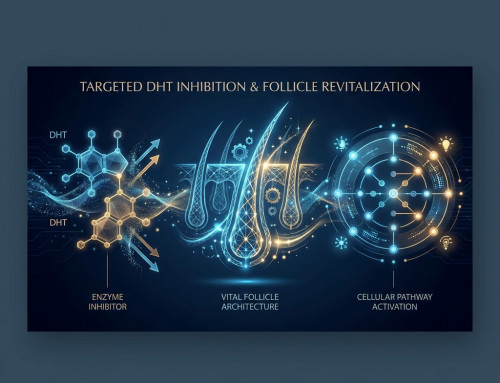
DHT is not testosterone. DHT is a more potent androgen that the body creates from testosterone using an enzyme called 5-alpha reductase. The follicles that are genetically sensitive to DHT are the ones that miniaturize, which is why hair loss often follows a predictable pattern at the hairline, temples, and crown.
The clinical implication is straightforward: to stop follicle miniaturization, DHT must be reduced where it matters most, at the scalp itself. Lowering DHT in the bloodstream is helpful, but the local concentration of DHT at the follicle is what actually drives the damage.
The scale of this condition is enormous. AGA affects an estimated 1.1 to 1.5 billion people worldwide. By age 35, roughly 40% of men show significant hair loss, and by ages 41 to 45, that figure exceeds 73%.
One more critical point deserves emphasis. Neither finasteride nor dutasteride can regrow hair from follicles that are already gone. These medications preserve and revive struggling follicles, but they cannot resurrect dead ones. That is why acting early, before significant follicle loss occurs, is one of the single most important factors in a successful outcome. Understanding the science behind hair loss causes and evidence-based solutions can help men make more informed decisions about when and how to intervene.
The Two Enzymes Most Comparison Articles Ignore
Here is the detail that most comparison guides skip entirely: 5-alpha reductase is not a single enzyme. It exists in two distinct forms, called isoenzymes, known as Type I and Type II. They are not interchangeable, and where they live in the body changes everything.
Type II 5-alpha reductase is concentrated in the hair follicles and the prostate. Type I 5-alpha reductase is expressed in the sebaceous (oil) glands and the skin of the scalp. In other words, the Type I enzyme is directly active at the very site of hair loss.
Both isoenzymes contribute to DHT production in the scalp. This makes the Type I pathway clinically relevant to AGA, not a footnote or a secondary concern. Any treatment that targets only the Type II enzyme leaves the Type I pathway fully operational, allowing scalp DHT production to continue through an entirely unblocked route.
Think of it like a two-lane highway carrying DHT to the follicles. Closing one lane slows traffic, but the cars keep flowing through the open lane. To truly halt the flow, both lanes have to close. This single distinction is the foundation of everything that follows.
How Finasteride Works, and Where It Stops
Finasteride is a selective Type II 5-alpha reductase inhibitor. It was originally developed to target the prostate, where the Type II enzyme dominates, and was later approved at a lower 1mg dose for hair loss. It has a long and genuine track record, having been FDA-approved for male AGA since 1997 under the brand name Propecia.
When taken daily at 1mg, finasteride reduces serum DHT by approximately 70%. That is a meaningful reduction and explains why finasteride helps many men. But it is not a complete reduction, and the reason is structural.
Finasteride does not inhibit the Type I isoenzyme at all. That means the DHT-producing pathway in the sebaceous glands and scalp skin remains entirely active. The drug works well within its limits, but its mechanism has a built-in ceiling.
There is also a regulatory development men should know about. In June 2022, the FDA added a black-box warning, its most serious warning category, to finasteride for suicidality risk. A 2025 analysis of the FDA Adverse Event Reporting System documented significant and growing suicidality safety signals for finasteride among young male hair loss users, peaking in 2022. The European Medicines Agency acknowledged in 2025 that finasteride can cause suicide, a warning that does not currently apply to dutasteride.
For important contrast, a French nationwide cohort study found no elevated self-harm risk with dutasteride compared to finasteride. These findings are not reasons to panic, but they are reasons to have an informed conversation with a licensed provider.
How Dutasteride Works: The Complete Blockade
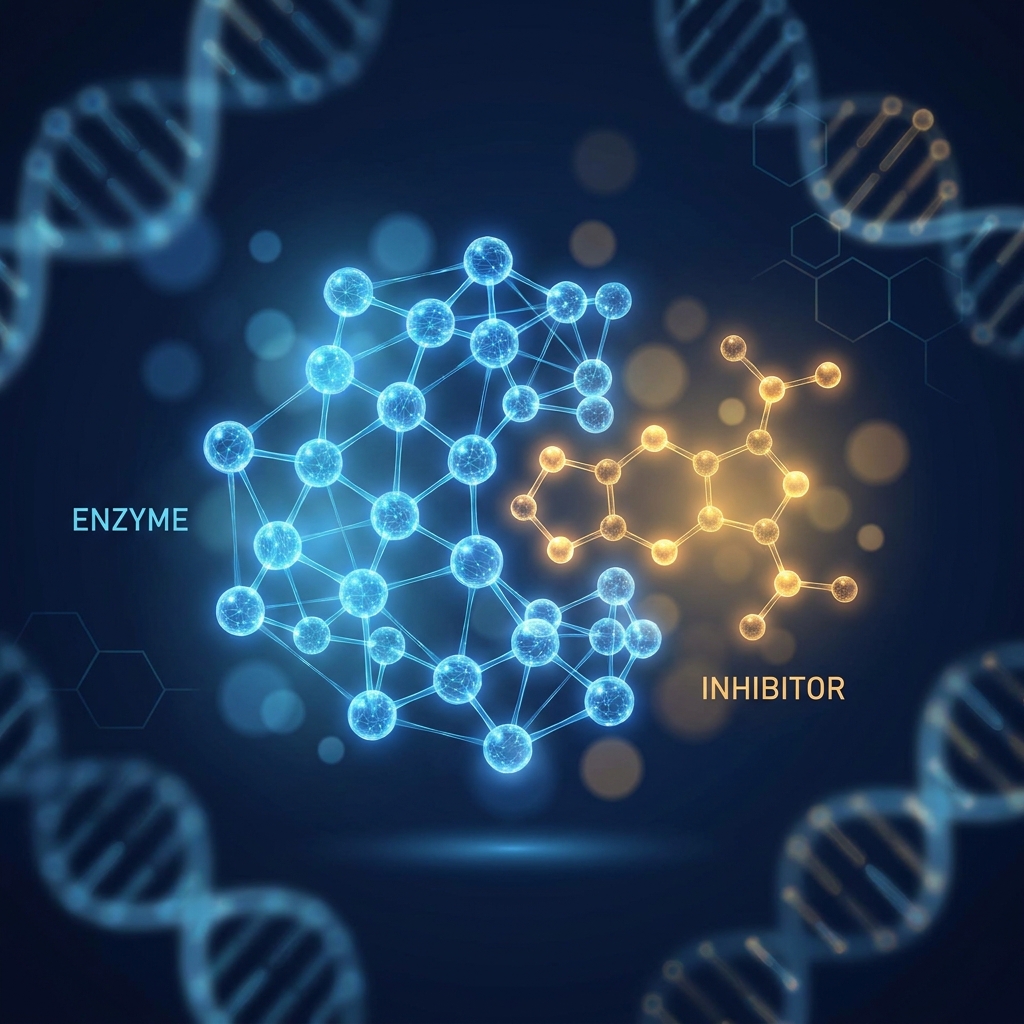
Dutasteride takes a fundamentally different approach. It is a dual 5-alpha reductase inhibitor, meaning it blocks both the Type I and Type II isoenzymes simultaneously. It closes both lanes of the highway, shutting down DHT production through both pathways in the scalp.
The potency difference is striking. Dutasteride is approximately three times more potent than finasteride at inhibiting the Type II enzyme and over 100 times more potent at inhibiting the Type I enzyme. This is not a small edge. It is a categorically more thorough mechanism.
The numbers reflect this. Dutasteride 0.5mg daily reduces serum DHT by approximately 90 to 98%, compared to finasteride’s roughly 70%. At the scalp, the metric that matters most for hair regrowth, dutasteride lowers DHT by approximately 51 to 95% depending on study methodology, versus 65 to 70% for finasteride 1mg.
Scalp DHT matters more than serum DHT for one simple reason: follicle miniaturization is driven by local DHT exposure at the scalp, not by systemic levels in the blood. A treatment that reaches the source more completely has a clearer path to results.
Dutasteride also carries a notably different pharmacokinetic profile. It has a serum half-life of approximately four to five weeks, compared to just six to eight hours for finasteride. As the following sections show, that long half-life has real clinical consequences.
What the Clinical Evidence Actually Shows
The mechanistic advantage of dutasteride is not theoretical. It appears consistently across head-to-head clinical trials, real-world chart reviews, and the most comprehensive comparative analyses available.
The 2025 Bayesian Meta-Analysis: Dutasteride Ranked #1
As of 2026, the most authoritative evidence available is a 2025 Bayesian network meta-analysis covering 33 randomized controlled trials, the most comprehensive comparative analysis of AGA monotherapies to date. Its key finding was clear: dutasteride 0.5mg daily ranked as the single most effective monotherapy for male AGA, with the highest efficacy score for total hair density improvement at 24 weeks.
A network meta-analysis carries particular weight because it allows indirect comparisons across trials that never directly competed against one another, producing a broader evidence picture than any single study. Notably, this finding is largely absent from competitor comparison content, where finasteride is still routinely positioned as the default first-line treatment.
Head-to-Head Trials: The Numbers That Matter
The direct comparisons tell the same story:
- The landmark 2014 JAAD RCT of 917 men found that dutasteride 0.5mg daily significantly increased hair count and improved hair growth at 24 weeks versus finasteride 1mg daily (P=0.003).
- The 2025 JAAD International RCT (60 men, 24 weeks) found that thrice-weekly dutasteride 0.5mg achieved a 35% moderate-to-marked improvement rate versus 21% for daily finasteride, with terminal hair count increases of 17.43 versus 12.81 hairs per square centimeter.
- A South Korean multicentre retrospective chart review of 600 male AGA patients found dutasteride-treated patients had a 2.06 times higher rate of hair growth improvement versus finasteride (adjusted IRR: 2.06; p=0.029).
- A systematic review found dutasteride 0.5mg was more effective than finasteride 1mg at increasing hair counts by up to 1.5-fold.
- An RCT published in the Indian Journal of Dermatology (90 men) found significantly higher total hair count and greater reversal of follicle miniaturization with dutasteride versus finasteride at 24 weeks.
Across different study designs, populations, and methodologies, dutasteride consistently outperforms finasteride. This is not a marginal or contested finding.
The Intermittent Dosing Advantage: Three Times a Week Beats Daily Finasteride
One finding from the 2025 JAAD International RCT deserves special attention: thrice-weekly dutasteride outperformed daily finasteride. Even taken less frequently, dutasteride produced superior results.
The pharmacokinetics explain why. Dutasteride’s four to five week half-life means the drug accumulates and maintains therapeutic levels in tissue even without daily dosing. Finasteride’s six to eight hour half-life requires strict daily adherence to maintain consistent DHT suppression.
This is not just a pharmacology footnote. For men who occasionally miss a dose, dutasteride’s long half-life translates into more forgiving and more consistent suppression, which supports both efficacy and adherence. This dosing flexibility is almost entirely missing from competitor comparison content.
The Regulatory Picture: What FDA Approval Status Really Means
The most common objection to dutasteride is that it is “off-label” for hair loss in the US. Dutasteride is FDA-approved for benign prostatic hyperplasia (BPH) but not formally approved for AGA in the United States. It is worth understanding precisely what that means.
Off-label status in this context reflects the absence of a manufacturer-sponsored FDA submission for the hair loss indication. It does not reflect a lack of evidence, and it does not signal a safety problem. Pursuing a new FDA indication is an expensive commercial decision, and a manufacturer choosing not to file is a business calculation, not a scientific verdict.
The international picture reinforces this. Dutasteride is formally approved for AGA treatment in South Korea (since 2009), Japan (since 2015), and Taiwan. The Japanese market data is especially telling: dutasteride captured 25% of the hair loss market within one month of its 2016 launch and overtook finasteride to become the number one hair loss drug by November 2017. That is a clear signal of physician and patient confidence.
Meanwhile, finasteride, FDA-approved for AGA since 1997, now carries a black-box warning for suicidality risk added in June 2022. The right question, therefore, is not simply “which drug has FDA approval for hair loss?” It is “what does the full regulatory picture, including warnings and international approvals, actually tell us?”
Side Effects: An Honest, Evidence-Based Comparison
Side effects are a legitimate concern with both medications and deserve direct discussion. Because both drugs work through the same hormonal mechanism of reducing DHT, their side effect profiles are broadly similar. Both carry the potential for decreased libido, erectile dysfunction, and reduced ejaculate volume.
The encouraging news is that these events are uncommon and typically resolve on their own. The 2025 JAAD International RCT found that thrice-weekly dutasteride showed no more sexual side effects than daily finasteride, meaning comparable tolerability alongside superior efficacy. A peer-reviewed Georgetown Medical Review confirms that reproductive adverse effects are uncommon for both drugs and tend to resolve spontaneously.
Context matters on the neurological front as well. A 2024 meta-analysis of over 2.2 million patients found no causal link between 5-ARIs, including finasteride, and neurological side effects, which is important to weigh alongside the FDA’s 2022 black-box warning.
There is one honest consideration unique to dutasteride. Its long half-life is a genuine double-edged sword. If side effects do occur, they may persist for weeks to months after stopping the drug because it clears the body slowly. That is a real factor worth discussing with a provider.
On the suicidality question specifically, the 2025 FAERS analysis documented significant signals for finasteride among young male users, while the French cohort study found no elevated self-harm risk with dutasteride. Men with a history of mood disorders should discuss psychiatric risk with their prescribing provider before starting either medication.
Who Should Consider Dutasteride for Hair Loss?
Dutasteride is often framed as a backup plan for men who have failed on finasteride. The evidence suggests a different framing: dutasteride is a scientifically logical first choice for men who want the most complete DHT blockade from the very start.
The ideal candidate is a man in the early to moderate stages of AGA who wants to maximize his treatment response before significant follicle loss occurs. Because the mean onset age is 23.9 years, and because neither drug can restore hair from follicles that are already gone, the window for effective intervention is genuinely time-sensitive.
There is also a clear group that should consider switching: men who have been on finasteride and feel their results have stalled. The mechanistic gap, with the Type I enzyme still fully active in the scalp, provides a clear biological explanation for why finasteride results can plateau.
Dutasteride requires a prescription and licensed provider oversight. It is not a supplement or an over-the-counter product, and medical guidance is appropriate. For men particularly concerned about systemic exposure, topical dutasteride is an evolving option. Phase II RCT data published in 2025 suggests localized delivery with reduced systemic absorption is an area worth watching.
Dutasteride vs Finasteride: Side-by-Side Summary
| Dimension | Finasteride | Dutasteride |
|---|---|---|
| Enzyme targets | Type II only | Both Type I and Type II |
| Serum DHT reduction | ~70% | ~90 to 98% |
| Scalp DHT reduction | ~65 to 70% | ~51 to 95% |
| Clinical efficacy | Effective | Ranked #1 monotherapy (2025 meta-analysis); up to 1.5-fold hair count advantage; 2.06x higher improvement rate in real-world review |
| Dosing flexibility | Daily required (6 to 8 hour half-life) | Intermittent dosing possible (4 to 5 week half-life) while still outperforming daily finasteride |
| US regulatory status | FDA-approved for AGA since 1997 (black-box warning added 2022) | FDA-approved for BPH, off-label for AGA; approved for AGA in South Korea, Japan, and Taiwan |
| Side effect profile | Broadly comparable; specific suicidality black-box warning | Broadly comparable; long half-life means slower clearance if side effects occur; no AGA suicidality warning |
| Cost | Low-cost generic | Low-cost generic (patent expired 2015/2016) |
Both drugs are now available as inexpensive generics, so cost is no longer a meaningful differentiator. The data makes the comparison without needing embellishment.
Why Thryve Hair Lab Uses Dutasteride, Not Finasteride
With the science established, Thryve Hair Lab’s treatment philosophy follows logically. The company’s 4-in-1 daily formula was built around dutasteride 0.5mg specifically because of its dual enzyme inhibition. It was a deliberate clinical choice, not a default to the industry standard.
The formulation combines dutasteride 0.5mg with oral minoxidil 2.5mg, biotin 1mg, and vitamin D3 600 IU in a single daily capsule, addressing multiple pathways of hair loss at once. Minoxidil supports follicle regrowth through improved blood flow, biotin supports keratin production and hair strength, and vitamin D3 nourishes follicle health, while dutasteride does the heavy lifting on DHT.
This formula was developed by hair transplant surgeons and restoration specialists with over 100 years of combined clinical experience: professionals who have seen firsthand what works in practice, not just in theory. As Dr. Glenn M. Charles puts it, “After 30 years in this field, I’ve never seen a simpler, more effective option than Thryve Hair Lab’s 4-in-1 formula.”
The convenience advantage is significant. One capsule replaces multiple separate products, eliminating the complexity of managing fragmented regimens. The entire process runs through a telehealth model with no office visit required: an online consultation, licensed provider review typically within one business day, and 2-day FedEx delivery. A 1-year satisfaction guarantee stands behind the formulation, reducing the risk of getting started.
Conclusion: The Science Points in One Direction
The difference between dutasteride and finasteride is not a matter of degree. It is a matter of mechanistic completeness. Finasteride leaves the Type I DHT-producing pathway in the scalp fully active. Dutasteride closes both pathways, and the clinical outcomes reflect that difference consistently.
Both drugs are legitimate, evidence-based options, and finasteride has helped countless men. But the weight of evidence, including the 2025 Bayesian meta-analysis, multiple head-to-head RCTs, and large real-world chart reviews, consistently favors dutasteride.
On the regulatory question, off-label in the US does not mean unproven. It means the manufacturer has not pursued a US AGA indication, while physicians in South Korea, Japan, and Taiwan have already made dutasteride a standard of care.
Hair loss is progressive, but it is not inevitable. Choosing the most effective intervention early, guided by a licensed provider, gives men the best chance of preserving and restoring what they have.
Ready to Start with the Most Effective DHT Blocker Available?
If the evidence points to dutasteride, the next step is getting started with a treatment plan built around it.
The Thryve Hair Lab process is simple:
- Complete a 2 to 3 minute online health questionnaire.
- Receive a licensed provider review, typically within one business day.
- Get your first shipment via 2-day FedEx, delivered discreetly.
It all comes in one daily capsule combining dutasteride, oral minoxidil, biotin, and vitamin D3, starting at $67 per month with free shipping. It is backed by a 1-year satisfaction guarantee: visible results or a full refund, removing the financial risk from the decision.
Get a personalized treatment plan today. Early action is the single most important factor in hair loss outcomes, and the best time to start is now.