
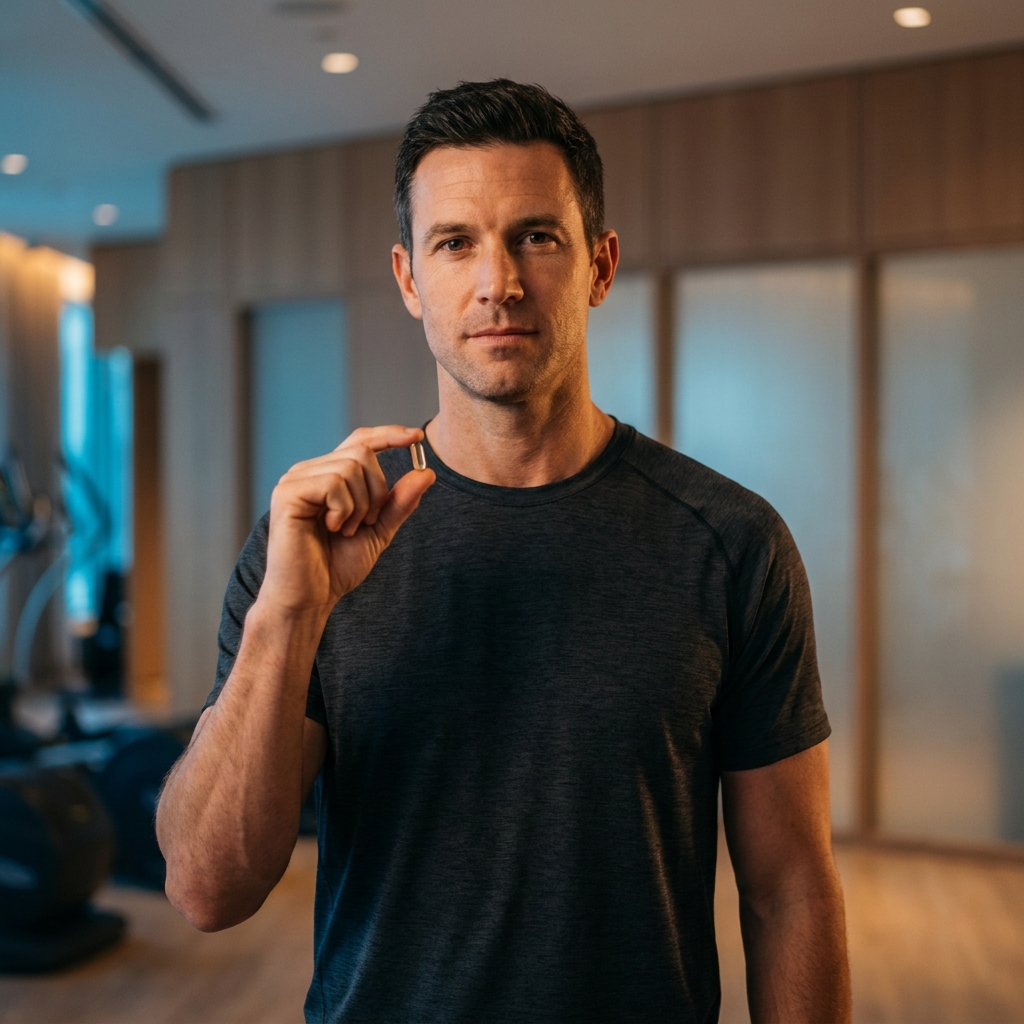
Hair Loss Treatment for Athletes: Why Oral Wins Every Time
Introduction: The Hair Loss Problem Athletes Can’t Outrun
Picture an athlete deep into a morning training session. Sweat is pouring down his forehead, soaking his headband, running across a scalp where, just two hours earlier, he carefully applied his topical hair loss treatment. In that moment, the very effort that keeps him fit is quietly washing away the medication meant to keep his hair. He is working against himself and does not even know it.
This scenario plays out every single day in gyms, on tracks, and across playing fields. Androgenetic alopecia (AGA) affects roughly 30% of men in their 30s, 50% by age 50, and up to 80% of men at some point in their lives. That places a substantial portion of the active male population squarely inside the at-risk window.
Here is the insight that separates this discussion from generic hair loss advice: athletes do not simply face the same DHT-driven hair loss as sedentary men. Their training actively amplifies the problem. The physiology that builds muscle and endurance also elevates the hormone most responsible for pattern baldness.
This leads to a clear conclusion. Topical treatments are not merely inconvenient for athletes; they are structurally incompatible with an active lifestyle. Oral treatment is the only format that aligns with how active men actually live. The following sections explain the dual DHT threat athletes face, why topical protocols fail in practice, and why an oral capsule is the medically superior choice for this population.
Why Athletes Face a Dual DHT Threat
Androgenetic alopecia is driven by dihydrotestosterone (DHT) binding to androgen receptors in the hair follicles. Over time, this binding causes progressive miniaturization: follicles shrink, hairs grow finer and shorter, and eventually they stop producing visible hair altogether. This process is the same in every genetically predisposed man.
For athletes, there is an additional accelerant. High-intensity resistance training, HIIT, and weightlifting raise circulating DHT levels in the blood. In men with a genetic predisposition, elevated DHT speeds up follicle miniaturization. The harder a predisposed man trains, the more he may be feeding the hormonal process working against his hairline.
The research is direct on this point. A 12-month aerobic exercise study found DHT increased 14.5% in exercisers compared to just 1.7% in controls at three months, and levels remained 8.6% above baseline at 12 months. Exercise is a confirmed DHT accelerant for at-risk men.
Timing makes this even more relevant. Male AGA onset averages 23.9 years of age, meaning many men begin losing hair during their peak athletic years. This is not a distant concern for the middle-aged; it is a live, time-sensitive issue for the fitness community.
There is also a direct scalp-level interaction. DHT secreted through apocrine sweat can bind to androgen receptors in the hair follicles when sweat sits on the scalp. In effect, perspiration can act as a topical accelerant of the same process driving pattern baldness.
It is worth clearing up a common fear. Creatine, long blamed for hair loss, was cleared by a 12-week randomized controlled trial that found no significant differences in DHT levels or follicle health compared to placebo. Creatine is not the culprit. Training-induced DHT elevation, however, is very real. For a deeper look at hair loss myths vs facts men commonly encounter, the evidence on creatine is a good place to start.
For men who use anabolic steroids or testosterone, the risk climbs sharply. DHT has approximately five times greater affinity for androgen receptors in hair follicles than testosterone itself, making performance-enhancing drug use a significant accelerant of AGA.
The summary is straightforward: athletes are not experiencing the same hair loss as everyone else. They are often experiencing it faster, earlier, and with greater intensity because of the DHT-amplifying effects of their training.
The Topical Treatment Problem: Why the Standard Protocol Fails Athletes
The core structural argument is this: topical minoxidil is not just inconvenient for athletes. It is clinically undermined by the realities of an active lifestyle.
Topical minoxidil requires at least four hours of dry time before vigorous exercise or sweating. Heavy perspiration within the first two hours can dilute and wash away the unabsorbed active ingredient, significantly reducing the amount of medication that reaches the follicle. For an athlete, protecting that four-hour window is close to impossible.
The product also demands a completely dry, clean scalp at application. For men who train multiple times a day, maintaining a dry, clean scalp on a reliable schedule is a near-impossible condition to meet.
Then there is the hygiene conflict. Frequent washing after workouts strips the scalp of natural oils, causes irritation, and can compound hair loss for men already using topical treatments.
The adherence data confirms what the logistics predict. A 2025 study found topical minoxidil users missed an average of 1.2 treatment days compared to 0.15 for oral users. More telling still, 18.8% of topical users discontinued because of difficulty of use, compared to 0% of oral users. The hair loss treatment adherence benefits of a simpler format are measurable and meaningful.
Equipment adds a final barrier. Topical residue under helmets, caps, and headbands creates scalp irritation and is practically incompatible with contact sports or gear-heavy training.
The conclusion is simple. The topical protocol was designed for sedentary application. It was never built for the athlete’s body or schedule.
The Timing Trap: Breaking Down Why the Application Window Collapses
Consider a realistic multi-session training day.
- Scenario 1, the morning trainer: He applies topical treatment at 6 AM and trains at 7 AM. Sweat washes away unabsorbed medication long before the four-hour window closes.
- Scenario 2, the evening trainer: He applies after his morning shower and trains at 6 PM. To stay on schedule he must reapply post-workout, but his scalp is wet and irritated, violating the dry-scalp requirement.
- Scenario 3, the two-a-day athlete: No viable application window exists that does not conflict with at least one session.
This is not a willpower problem or a discipline problem. It is a structural incompatibility between the product format and the athlete’s daily reality. The solution is not a cleverer workaround. The solution is a treatment format that never requires one.
Why Oral Treatment Is the Only Format Built for Athletes
Oral hair loss treatment is not a compromise for active men. It is the medically superior choice.
One capsule carries no timing constraints. There is no dry scalp requirement, no absorption window to guard, and no post-workout delay. Because oral treatment works systemically, it operates independently of what the scalp is doing at any given moment.
It is also sweat-proof by design. The active ingredients are absorbed through the gastrointestinal system and delivered throughout the body, so perspiration has zero impact on efficacy.
This translates directly into consistency. The simplicity of a single daily capsule closes the adherence gap, with oral users missing just 0.15 treatment days compared to 1.2 for topical users.
The clinical outcomes reinforce the format. Combined oral minoxidil (2.5mg) plus finasteride achieved stable or improved outcomes in 92.4% of 502 men over 12 months in a real-world UK study, as documented in a Cureus retrospective evaluation. A broader meta-analysis found the finasteride plus minoxidil combination exceeds a 90% success rate in stabilizing or reversing hair loss, well above topical monotherapy.
Performance-focused men can also set aside a common concern. Finasteride does not significantly affect muscle mass or strength; inhibiting DHT production does not alter testosterone’s ability to modulate muscle strength. In fact, finasteride can slightly increase circulating testosterone, running 9 to 15% higher than placebo. Critically, finasteride is not a banned substance under WADA rules, so competitive athletes can use it without anti-doping concerns.
In short, oral hair loss medication removes every structural barrier that causes topical treatment to fail for athletes while delivering clinically superior results.
Oral vs. Topical: A Direct Comparison for the Active Man
| Pain Point | Topical Treatment | Oral Treatment |
|---|---|---|
| Sweat interference | Efficacy reduced by perspiration inside the absorption window | Unaffected by sweat |
| Application timing | Requires 4+ hours of dry scalp before exercise | Taken once daily at any time; no timing constraints |
| Scalp condition | Must be applied to a completely dry, clean scalp | No scalp condition requirement |
| Adherence | 1.2 missed days per period; 18.8% discontinuation due to difficulty | 0.15 missed days; 0% discontinuation due to difficulty |
| Helmet/headgear | Residue causes irritation under equipment | No scalp residue |
| Clinical outcomes | 59% improvement with 5% minoxidil monotherapy | 90%+ stabilization or reversal with oral combination therapy |
The Mental Performance Cost of Untreated Hair Loss
For a competitive athlete, hair loss is not only a cosmetic matter. It is a performance issue, because performance depends on confidence and mental focus.
The numbers are significant. Over 70% of men experiencing hair loss consider hair an important feature of their image, and 62% feel hair loss affects their self-esteem, with a psychological impact comparable to living with a chronic disease.
The anxiety data is even more striking. A 2025 meta-analysis of 5,553 patients found nearly 47% of individuals with hair loss meet the clinical criteria for an anxiety disorder. That is a real mental performance concern for anyone who competes.
Anxiety, reduced self-confidence, and a negative self-image directly impair focus, competitive mindset, and the ability to perform under pressure. Treating hair loss, then, is not vanity for an athlete. It is a legitimate investment in mental performance and competitive edge.
There is also a self-reinforcing loop to consider. Psychological stress and hair loss maintain a bidirectional relationship, meaning untreated hair loss can feed a cycle of anxiety and accelerated shedding. The case for acting early, and acting with the right treatment, is both physiological and psychological.
Why Dutasteride Outperforms Finasteride for High-DHT Individuals
For athletes whose training elevates DHT beyond baseline, dutasteride represents the next level of DHT control.
The mechanistic difference matters. Finasteride blocks only Type II 5-alpha reductase. Dutasteride blocks both Type I and Type II enzymes, providing more comprehensive DHT suppression across the pathways that convert testosterone into DHT.
For active men, this alignment is meaningful. Because exercise-induced DHT elevation creates a higher-than-average DHT load, blocking both enzyme pathways offers a more complete defense against follicle miniaturization. A 2026 network meta-analysis identified dutasteride as the most effective single agent for male AGA. Understanding why dutasteride is stronger than finasteride helps explain why this distinction matters for men with elevated DHT loads.
The performance-safety reasoning applies here as well. Like finasteride, dutasteride does not impair testosterone’s muscle-building function. The two hormones operate through different receptor pathways for strength and follicle health.
Dutasteride is therefore not just a stronger drug. For men whose DHT levels are actively elevated by their training, it is a better-matched one.
Thryve Hair Lab: The Oral Capsule Built for How Athletes Actually Live
Thryve Hair Lab’s 4-in-1 hair loss pill is a purpose-built solution for active men. Its format is inherently compatible with the athletic lifestyle.
The capsule combines four active ingredients, each with a defined role:
- Dutasteride (0.5mg): Blocks both Type I and Type II DHT enzymes.
- Minoxidil (2.5mg): Stimulates follicle regrowth via improved blood flow.
- Biotin (1mg): Supports keratin production and hair strength.
- Vitamin D3 (600 IU): Nourishes and promotes follicle health.
The dutasteride choice is a genuine differentiator. Most competitors rely on finasteride. Thryve uses dutasteride, the more comprehensive DHT blocker, which is specifically relevant for men whose training elevates DHT.
The format advantage is equally important. One capsule per day, taken at any time, means no scalp application, no timing around workouts, no sweat interference, and no residue under helmets.
The formula is backed by a team with over 100 years of combined clinical experience in hair restoration, including board-certified hair transplant surgeons and specialists. According to the company, 97 to 98% of men stop further hair loss, and 90% see visible improvement in thickness and coverage within three to six months. Fewer than 0.3% of users report mild, temporary sexual side effects, and neither dutasteride nor finasteride impairs muscle strength or athletic performance.
Practical details matter to athletes as well. The TSA-compliant foil-blister packaging is designed for men who travel for competition or training, so the treatment moves with them without friction. The telehealth model keeps things efficient: a 2 to 3 minute online questionnaire, licensed provider review typically within one business day, and 2-day FedEx shipping, with no clinic visit and no disruption to training. A one-year satisfaction guarantee offers a full refund or account credit if there are no visible results after consistent use.
What to Expect: Timeline and Results for Active Men
Realistic expectations reduce dropout before results appear. Understanding the full hair regrowth timeline for men helps set accurate expectations from the start.
- Months 1 to 3, the stabilization phase: Hair loss slows as DHT suppression takes effect. Some initial shedding may occur as the follicle cycle resets. This is normal and expected.
- Months 3 to 6, early regrowth: Around 90% of men begin to see visible improvement in thickness and coverage. Baby hairs and a filling hairline are common early indicators.
- Months 9 to 12, peak improvement: Full results become visible, with hair density, coverage, and follicle health reaching their optimal state under consistent use.
Consistency is where oral treatment’s adherence advantage pays off. Missing fewer doses means faster, more complete results. This is especially important for active men, because training-induced DHT elevation is ongoing. The DHT threat does not pause on rest days, so daily treatment matters. Real-world outcomes support this: 92.4% of men in a 12-month study achieved stable or improved outcomes with combined oral therapy.
Getting Started: The Thryve Process for Busy Athletes
The onboarding process is built to minimize friction for men who value efficiency.
- Step 1: Complete the 2 to 3 minute online medical questionnaire. No clinic visit and no scheduling conflicts with training.
- Step 2: A licensed provider reviews and approves the prescription, typically within one business day.
- Step 3: The prescription is compounded and shipped via 2-day FedEx with tracking, delivered in discreet packaging.
- Step 4: Take one capsule daily. No timing around workouts, no scalp prep, and no application window to protect.
The subscription model ensures continuity, so there is no risk of running out during competition season or travel. Pricing is straightforward: the 20-week plan runs $67 per month with free shipping, positioned as significantly more affordable than purchasing the ingredients separately, which can cost around $135 per month. For a full breakdown, see how much hair loss medication costs and what is included.
Risk is minimal at every stage. The one-year satisfaction guarantee offers a full refund or account credit if there are no visible results after consistent use, and if treatment is not approved by medical staff, a full refund is issued.
Conclusion: Stop Working Around Your Treatment and Start Using One That Works
Athletes face a dual DHT threat: a genetic predisposition amplified by exercise-induced DHT elevation. That combination demands a treatment format equal to the challenge.
Topical treatment is structurally incompatible with an active life. The absorption window, the dry-scalp requirement, the sweat interference, and the adherence collapse are not problems to manage. They are reasons to choose a different format entirely.
Oral treatment answers each of those problems. One capsule per day, taken at any time, is sweat-proof, performance-safe, WADA-compliant, and clinically proven to stabilize or reverse hair loss in more than 90% of men. Beyond the physical, treating hair loss protects the confidence, focus, and competitive mindset that define an athlete.
Early action matters most. With AGA onset averaging 23.9 years, men who act during the early stages preserve the most hair and achieve the best long-term outcomes. The right treatment does not ask a man to change how he trains. It works while he does.
Take the First Step Toward Stronger Hair Without Slowing Down
Start a free online hair loss consultation with Thryve Hair Lab today. It takes 2 to 3 minutes, requires no clinic visit, and creates no disruption to a training schedule. A licensed provider reviews the request within one business day, a full refund is issued if treatment is not approved, and a one-year satisfaction guarantee stands behind results.
The format advantage holds all the way through: one daily capsule, no timing, no scalp prep, no sweat interference. Consistent, systemic treatment works with the body rather than against the schedule. The formula is developed by a team with over 100 years of combined clinical experience in hair restoration, including board-certified hair transplant surgeons.
Every month of untreated DHT elevation is another month of follicle miniaturization that becomes harder to reverse. The best time to start was early. The second-best time is now.