
Hair Follicle Health Supplements: What Biotin and Vitamin D3 Actually Do
Introduction: Why Most Men With Hair Loss Are Missing a Critical Piece of the Nutrition Puzzle
Hair loss affects approximately 85% of men at some point in their lives, and androgenetic alopecia (AGA), commonly known as male pattern baldness, accounts for roughly 95% of all male hair loss cases. For most men, this is not a distant statistic. It is a slow, visible process that begins with a thinning crown or a receding hairline, and it carries a weight that few discuss openly. Research consistently shows that men experience significant emotional and functional distress from AGA, often far more than they let on.
Yet when men begin researching hair follicle health supplements, they typically encounter one of two things: generic ingredient lists that name-drop biotin and vitamins without explanation, or content clearly written for a female audience that never addresses what these nutrients actually do inside a male follicle. The result is confusion, wasted money, and treatment decisions based on marketing rather than biology.
This article takes a different approach. It offers a biology-first breakdown of what biotin and Vitamin D3 each do at the follicle level, why they serve distinct and complementary roles, and why Vitamin D3 deficiency is both more prevalent and more clinically impactful for men with AGA. This is not a supplement ranking. It is a mechanistic explanation designed to help men make informed, evidence-based decisions about their hair health.
The Biology of Hair Follicles: Why Nutrition Matters More Than Most Men Realize
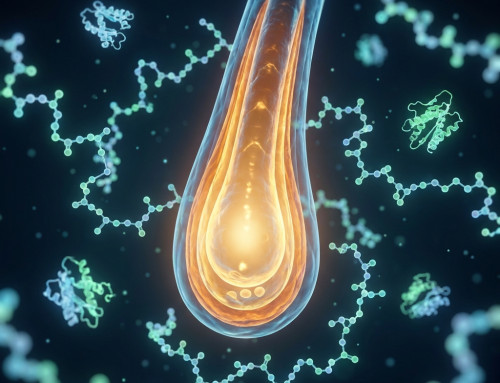
Hair follicles are among the most rapidly dividing cells in the entire human body. To sustain active growth, they require a continuous, high-volume supply of nutrients. When that supply falters, the follicle is one of the first structures to show the strain.
Every hair follicle moves through three distinct phases. Anagen is the active growth phase, during which the follicle produces the hair strand. Catagen is a short transitional phase where growth stops. Telogen is the resting phase, after which the hair sheds and the cycle begins again. In a healthy scalp, the vast majority of follicles are in anagen at any given time. When that balance is disrupted, visible hair loss accelerates.
Nutritional deficiencies can push follicles prematurely out of anagen and into telogen, reducing the proportion of follicles actively growing. The follicle bulb contains matrix cells that are among the most metabolically active in the body, which makes them especially vulnerable to nutritional shortfalls. A foundational NIH-indexed review confirms that micronutrients are major elements in the normal hair follicle cycle, playing a critical role in the cellular turnover of these rapidly dividing matrix cells.
The practical takeaway is important. Supplements work best when hair loss is driven or worsened by nutritional deficiencies, stress, or hormonal shifts. For men with AGA, addressing nutritional gaps is not a cure, but it is a critical adjunct to clinical treatment.
What Biotin Actually Does Inside the Hair Follicle
Biotin, also known as Vitamin B7, is a water-soluble B vitamin. Because the body does not store it long-term, regular intake matters. Its reputation as a hair vitamin is well earned, but its actual role is often misunderstood.
Biotin’s primary function is supporting keratin infrastructure. Keratin is the structural protein that makes up approximately 95% of the hair shaft, and biotin is essential to its synthesis. At the cellular level, biotin acts as a coenzyme for carboxylase enzymes involved in amino acid metabolism. Those amino acids are the building blocks of keratin. Without adequate biotin, the follicle cannot efficiently produce the protein scaffolding that gives each hair strand its strength and integrity.
It is equally important to understand what biotin does not do. Biotin does not directly regulate the hair growth cycle, does not stimulate the formation of new follicles, and does not block DHT. Its role is structural, not regulatory.
This distinction explains the ongoing tension between biotin hype and clinical reality. Biotin is most effective for individuals with a confirmed deficiency. True biotin deficiency is relatively rare in healthy adults, though suboptimal levels have been observed in some men with male pattern baldness. As a B vitamin, biotin also supports red blood cell production, which delivers oxygen and nutrients to the follicles. This is an indirect but meaningful contribution.
One practical caution: high-dose biotin supplementation, generally above 5,000 mcg, can interfere with blood tests for both thyroid function and Vitamin D status. Testing before supplementing is strongly recommended.
In summary: biotin provides the raw structural material the follicle needs to build strong, healthy hair, but only when levels are adequate.
What Vitamin D3 Actually Does Inside the Hair Follicle
Vitamin D3 operates through a fundamentally different mechanism than biotin. It is a regulatory nutrient, not a structural one, and this difference is the key to understanding why the two are not interchangeable.
Vitamin D receptors, known as VDRs, are abundantly expressed in hair follicles. They are concentrated in the outer root sheath, the hair matrix, and the dermal papilla: the precise cellular zones that govern follicle cycling and the initiation of new hair growth. When Vitamin D3 binds to these receptors, it directly influences gene expression related to follicle cycling. In practical terms, it helps initiate the anagen (growth) phase and regulates the transition between growth and rest.
When Vitamin D3 is inadequate, VDR signaling is impaired. Follicles may remain in the resting telogen phase longer than they should, and the initiation of new growth cycles is delayed or disrupted. The growth signal itself weakens.
The clinical relevance here is difficult to overstate. A major 2024 systematic review and meta-analysis published in Frontiers in Nutrition found that 47.38% of men with androgenetic alopecia had Vitamin D deficiency, making it one of the most prevalent nutritional deficiencies among men experiencing hair loss. For context, Vitamin D deficiency already affects an estimated 40 to 50% of the global population, making it far more common than biotin deficiency and a far more statistically likely gap for the average man with AGA.
The evidence extends to outcomes as well. Vitamin D3 supplementation has been shown to improve hair regrowth and follicle cycling, particularly in cases of alopecia areata and telogen effluvium linked to deficiency. A 2025 systematic review in Nutrition Reviews further confirmed that Vitamin D is essential for normal hair follicle development and that deficiency contributes to the onset of alopecia.
In summary: Vitamin D3 determines whether the follicle is actively cycling and initiating new growth at all.
Biotin vs. Vitamin D3: A Side-by-Side Comparison at the Follicle Level
Understanding these two nutrients side by side reveals why both belong in a serious follicle health strategy.
| Dimension | Biotin (Vitamin B7) | Vitamin D3 |
|---|---|---|
| Primary role | Structural | Regulatory |
| What it does | Supports keratin synthesis for the hair shaft | Governs follicle cycling and VDR signaling |
| Where it acts | Hair shaft protein production | Outer root sheath, hair matrix, dermal papilla |
| When deficient | Weaker, more brittle strands | Follicles stuck in resting phase; delayed new growth |
| Deficiency prevalence in AGA | Relatively rare; some suboptimal levels observed | Found in nearly half of men with AGA (47.38%) |
| Evidence for supplementation | Most effective when deficiency is confirmed | Strong evidence for impact on follicle cycling |
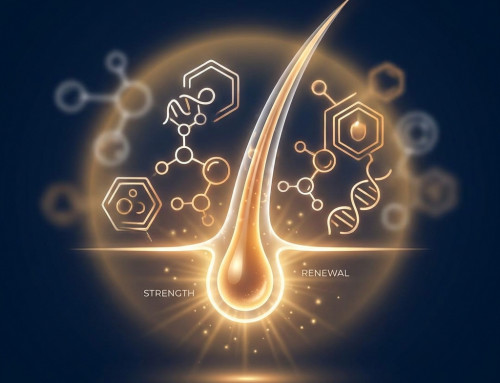
The central insight is that these nutrients are not redundant. They address different failure points in the follicle system. Biotin supports the structural output of the follicle. Vitamin D3 governs whether the follicle is producing anything at all.
A useful analogy: biotin is like the raw materials for building a house, while Vitamin D3 is like the electrical system that determines whether construction is even underway. A pile of quality lumber is worthless if the power to run the tools is off.
For men with AGA, Vitamin D3 deficiency is the more statistically prevalent and clinically urgent gap to address, while biotin provides meaningful structural support when levels are suboptimal.
Why Biotin and Vitamin D3 Work Together, Not Redundantly
Synergy in follicle nutrition means that addressing only one nutrient while ignoring the other leaves part of the follicle system unsupported. The two nutrients complete each other.
Vitamin D3 ensures the follicle is actively cycling and initiating new growth phases. Biotin ensures that once the follicle is cycling, it has the structural protein infrastructure to produce strong, healthy strands. Consider a practical scenario: a man with Vitamin D deficiency who supplements only biotin may support keratin production, yet still experience disrupted follicle cycling because the growth signal remains impaired. Conversely, restoring Vitamin D3 without adequate biotin may restart cycling but yield weaker, more brittle strands.
This is precisely why the research points toward combined approaches. A January 2026 Frontiers in Nutrition systematic review and network meta-analysis recommends multi-component formulas over single-ingredient supplements for androgenetic alopecia. A 2025 randomized, double-blind, placebo-controlled trial published in the Journal of Cosmetic Dermatology similarly demonstrated that a nutraceutical targeting multiple pathways, including nutrition, hormones, metabolism, and stress, was both effective and safe for improving hair growth and quality in men with thinning hair.
Addressing both the structural and regulatory nutritional needs of the follicle is exactly why clinically formulated solutions include both biotin and Vitamin D3 as part of a comprehensive approach.
Vitamin D3 Deficiency and Male Pattern Baldness: The Statistics Men Need to Know
The headline number bears repeating: a 2024 meta-analysis found that 47.38% of men with androgenetic alopecia had Vitamin D deficiency. That is nearly one in two men with AGA.
Set against a general population where deficiency already affects an estimated 40 to 50% of people, men with AGA appear to be at even higher risk. This matters clinically because Vitamin D deficiency is not merely a background nutritional issue. Given the direct role of VDRs in follicle cycling, deficiency in men with AGA creates a compounding effect: genetic susceptibility to DHT-driven miniaturization is worsened by impaired follicle cycling signals, accelerating the visible decline.
This leads to an important recommendation that most supplement content omits: test before supplementing. Men concerned about hair loss should ask their doctor for a 25-OH Vitamin D blood test before starting supplementation, as this is the standard clinical measure of Vitamin D status. Because high-dose biotin can interfere with the accuracy of that test, testing first is doubly wise.
The bottom line is straightforward. While biotin deficiency is relatively rare in healthy adults, Vitamin D deficiency is widespread and statistically likely in men experiencing AGA. That makes D3 the higher-priority nutritional intervention for most men in this group. Medically reviewed guidance from Healthline, updated in September 2025, reinforces this, confirming that Vitamin D helps create new hair follicles and that chronic deficiency may lead to hair loss.
How Long Does It Take for Hair Follicle Health Supplements to Work?
Expectations must be realistic. Consistent supplementation for at least 3 to 6 months is required before visible improvements in hair density and thickness can be expected.
The reason lies in the biology of the growth cycle itself, which takes months to complete. Even when nutritional deficiencies are corrected quickly, the follicle must finish its current cycle and initiate a new anagen phase before regrowth becomes visible. Peak improvement from nutritional supplementation typically aligns with the 9 to 12 month mark when combined with a comprehensive treatment approach.
It is equally important to acknowledge a key limitation. Supplements alone are not sufficient for men whose AGA is driven primarily by DHT. Nutritional support addresses deficiency-related compounding factors, but it does not block the androgen pathway that causes follicle miniaturization. The 2026 Frontiers in Nutrition network meta-analysis makes exactly this point, recommending that dietary supplements are most effective as an adjunct to conventional treatments such as DHT blockers and minoxidil rather than as standalone solutions.
Why Supplements Alone Are Not Enough for Men With Androgenetic Alopecia
For men with AGA, the primary driver of hair loss is DHT-induced follicle miniaturization: a hormonal process that nutritional supplements do not address on their own. This is the critical distinction between deficiency-driven hair loss, where supplements can be highly effective, and genetically driven AGA, where supplements support but cannot replace clinical intervention.
A clinically complete approach works on three layers at once. It addresses DHT at the hormonal level with agents like dutasteride or finasteride. It stimulates follicle blood flow and regrowth with minoxidil. And it supports the follicle’s structural and regulatory nutritional environment with biotin and Vitamin D3. The 2026 Frontiers in Nutrition meta-analysis found that multi-component formulas combined with topical therapy produce superior outcomes for AGA, validating this integrated model.
This is the philosophy behind Thryve Hair Lab. Rather than requiring men to manage multiple separate products, Thryve delivers all of these layers in a single, doctor-formulated daily capsule. The formula includes biotin (1 mg) and Vitamin D3 (600 IU) to support the nutritional dimension, alongside minoxidil (2.5 mg) and dutasteride (0.5 mg) to address the clinical dimension. It is an example of what a complete solution looks like when both nutritional and hormonal factors are treated together.
What to Look for in a Hair Follicle Health Supplement Formula
For men evaluating their options, a few criteria separate credible formulas from marketing-driven products.
- Both biotin and Vitamin D3, not just one. A formula that includes only biotin addresses a single structural dimension and leaves follicle cycling unsupported.
- Clinically relevant dosages. Ingredients should be present at levels supported by evidence, not trace amounts included for label appeal.
- Formulation by qualified medical professionals. Look for hair restoration expertise, not generic wellness branding.
- Combination with proven clinical treatments. For men with AGA, nutrition should sit alongside DHT-blocking and regrowth agents.
Men should be cautious of single-ingredient biotin supplements marketed as complete hair growth solutions. Biotin alone addresses only one structural dimension and is most effective when a deficiency is confirmed. Doctor-guided supplementation is preferable to self-prescribing high doses, particularly given the biotin interference issue with blood testing.
The market context in 2026 makes this scrutiny essential. The global hair supplements market is valued at approximately $3.93 billion and is growing at a CAGR of roughly 11%. With so many products competing for attention, medical credibility and formulation transparency have become the key differentiators. This aligns with the emerging 2026 hair longevity trend in wellness media, which frames follicle health as a 360-degree effort that includes ingestible support feeding follicles at the cellular level. The multi-component formulas recommended by the 2026 Frontiers in Nutrition meta-analysis fit this forward-looking model.
Conclusion: Building a Foundation for Long-Term Hair Follicle Health
Biotin and Vitamin D3 are not interchangeable. They serve distinct, complementary roles at the follicle level that together support both structural integrity and active growth cycling. Biotin provides the keratin infrastructure that determines the quality and strength of each hair strand. Vitamin D3 governs whether the follicle is actively cycling and producing hair in the first place.
The clinical insight men should carry forward is clear: Vitamin D3 deficiency is found in nearly half of men with AGA, making it the more prevalent and urgent nutritional gap, while biotin supports the structural output of the follicle. Both matter, and both work best as part of a multi-modal approach that also addresses the DHT pathway driving male pattern baldness.
Hair loss is not merely a cosmetic concern. It affects confidence and self-perception in ways men rarely voice. Taking informed, evidence-based action is a meaningful step toward reclaiming control. Early action, the right nutritional foundation, and clinically backed treatment together represent the most effective path to long-term hair health.
Take the First Step Toward Stronger, Healthier Hair
For men ready to address hair loss from every angle, nutritional, hormonal, and clinical, Thryve Hair Lab was built for exactly this purpose. Its 4-in-1 daily capsule combines biotin, Vitamin D3, minoxidil, and dutasteride in a single doctor-formulated formula, covering both the nutritional and clinical dimensions of follicle health without the burden of managing multiple products.
The process is straightforward. A 2 to 3 minute online questionnaire is reviewed by a licensed provider, typically within one business day, followed by discreet 2-day FedEx delivery. No office visits are required. Every plan is backed by a 1-year satisfaction guarantee, removing much of the risk from getting started.
Thryve’s formula is developed by a team with over 100 years of combined clinical experience in hair restoration, including board-certified hair surgical specialists and transplant surgeons. Men who take action early consistently see the best results, and the process is far simpler than most expect. Complete a free hair loss assessment today and start building a foundation for stronger, healthier hair.