
Oral Hair Loss Medication 2026: What’s New, What Works, and What Doctors Actually Prescribe
The landscape of oral hair loss medication in 2026 represents the most significant shift in treatment options since finasteride received FDA approval nearly three decades ago. For the 85% of men who will experience hair loss at some point in their lives, this moment matters. The frustration of managing multiple topical treatments, dealing with inconsistent results, and navigating outdated protocols is finally giving way to a new clinical reality.
This article delivers a clear, expert-led breakdown of what has changed in 2026, what the clinical evidence actually supports, and what the strongest available oral options are right now. Three major storylines are reshaping the field: Veradermics’ Phase 3 breakthrough, JAK inhibitors expanding their footprint, and combination oral therapy emerging as the new clinical gold standard. Every claim in this guide is anchored to peer-reviewed research, FDA guidance, and real-world clinical data.
Why 2026 Is a Turning Point for Oral Hair Loss Treatment
The two FDA-approved oral and systemic standards for pattern hair loss have remained essentially unchanged for nearly 30 years. Topical minoxidil received approval in 1988, and oral finasteride followed in 1997. While effective for many men, these treatments have dominated without meaningful disruption until now.
The global hair loss treatment market is valued at approximately $4.02 billion in 2026 and is projected to reach $6.31 billion by 2035. Oral supplements and oral medications represent the fastest-growing category, with oral supplements posting an 8.94% CAGR through 2030, outpacing topical treatments significantly.
Three converging forces are reshaping the field this year. First, new pipeline drugs are advancing to late-stage trials with promising results. Second, JAK inhibitors have gained FDA approval for alopecia conditions, opening new treatment pathways. Third, combination oral therapy is achieving unprecedented clinical success rates that are redefining what men should expect from treatment.
A fourth driver deserves attention: the GLP-1 weight loss drug boom. Nearly 13% of U.S. adults are currently taking medications like Ozempic, Wegovy, or Mounjaro, and hair loss is a documented side effect. This has created a massive new wave of demand for oral hair loss treatments. JPMorgan estimates approximately 25 million Americans will be on a GLP-1 drug by 2030, up from 5 million in 2023.
Over 40% of hair loss product sales now occur through online channels, confirming that telehealth-delivered oral prescriptions have become the dominant delivery model for this generation of patients. For men experiencing hair loss right now, 2026 is the best time in three decades to start treatment. However, it requires knowing what is actually available today versus what remains in trials.
The Current Oral Hair Loss Landscape: What’s FDA-Approved Right Now
Understanding the distinction between FDA-approved treatments and pipeline or investigational drugs is critical for men making decisions today. The foundation remains two FDA-approved oral and systemic treatments: oral finasteride at 1 mg daily for androgenetic alopecia and low-dose oral minoxidil, which is prescribed off-label but widely used.
Three FDA-approved JAK inhibitors now treat severe alopecia areata: baricitinib (Olumiant, approved 2022), ritlecitinib (Litfulo, approved 2023), and deuruxolitinib (Leqselvi, approved 2024). It is important to note that these are specifically approved for alopecia areata, not androgenetic alopecia, which is the most common form of male pattern baldness.
Oral finasteride protects hair follicles from DHT-driven miniaturization and is often more effective than topical treatments alone. Low-dose oral minoxidil (LDOM) is gaining rapid clinical traction. A 2026 Medscape review found measurable increases in frontal hair density by 3 to 6 months, with stabilization thereafter, based on 178 AGA patients at NYU.
Over 25% of dermatologists in Spain and similar numbers in Australia now regularly prescribe LDOM. U.S. adoption is accelerating rapidly.
The FDA has issued a warning about compounded topical finasteride, noting 32 adverse event reports between 2019 and 2024. These reports included depression, erectile dysfunction, suicidal ideation, and persistent brain fog. This development is driving informed patients toward oral formulations as safer, better-regulated alternatives.
What’s New in 2026: The Pipeline Drugs Doctors Are Watching
The breakthrough drugs advancing through trials are not yet available for prescription, but they are reshaping what is coming. Understanding the pipeline helps men make smarter decisions about starting treatment now versus waiting.
Veradermics’ VDPHL01: The First New Oral Hair Loss Pill in 30 Years (Almost)
In April 2026, Veradermics’ extended-release oral minoxidil pill (VDPHL01) hit the primary goal of a Phase 3 trial. This represents a landmark moment for the field.
Phase 3 results showed participants taking the pill twice daily recorded an average increase of 33 new hairs per square centimeter after six months. Side effect rates were similar to placebo, representing a significant safety signal.
Veradermics raised $256 million in its U.S. IPO in February 2026 to fund FDA approval efforts and commercialization. If approved, VDPHL01 would be the first new marketed oral pill for male pattern baldness in 30 years.
The key caveat for readers: it is not yet FDA-approved or commercially available. The FDA review and approval process still lies ahead.
PP405 (Pelage Pharmaceuticals): Reactivating Dormant Follicle Stem Cells
PP405 works via a completely different mechanism: reactivating dormant follicle stem cells rather than blocking DHT or improving blood flow.
Phase 2a results showed 31% of men with advanced hair loss achieved greater than 20% increase in hair density at 8 weeks versus 0% on placebo. This is a striking early signal. Pelage Pharmaceuticals closed a $120 million Series B in October 2025, and Phase 3 trials are planned for 2026.
This represents a potential paradigm shift, offering a treatment that could work even for men with advanced hair loss where DHT-blocking drugs have limited effect. However, PP405 remains in trials and is not commercially available.
Clascoterone: A New Mechanism of Action After 30+ Years
Clascoterone 5% topical solution from Cosmo Pharmaceuticals demonstrated up to 539% relative improvement in hair count versus placebo in Phase 3 trials. The company is expected to submit for FDA approval in spring 2026, representing the first new mechanism of action in over 30 years.
This treatment works by blocking androgen receptors directly at the scalp level, a different approach from finasteride and dutasteride, which block DHT systemically. While this is a topical rather than oral treatment, its advancement signals the broader momentum of new breakthroughs in hair growth research entering the market.
The bottom line for readers: the pipeline is exciting, but none of these drugs are available today. The decision is what to do right now.
The 2026 Clinical Gold Standard: Why Combination Oral Therapy Is Winning
The most important clinical development of 2026 is not a single new drug. It is the evidence that combination oral therapy dramatically outperforms monotherapy.
A peer-reviewed UK study of 502 men found that 92.4% achieved stable or improved hair outcomes over 12 months on combined oral minoxidil and finasteride therapy. This study, published in PubMed/PMC, represents the strongest evidence to date for combination protocols.
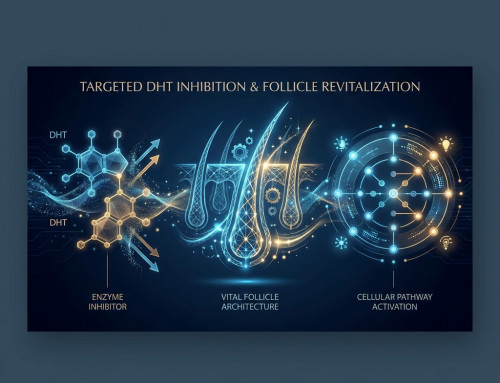
The reason combination works is straightforward: oral minoxidil stimulates follicle regrowth via improved blood flow and follicle enlargement, while finasteride (or dutasteride) blocks DHT-driven miniaturization. These mechanisms are complementary and non-overlapping. Treating only one pathway leaves the other unchecked. Combination therapy closes both doors simultaneously.
This is why leading dermatologists and hair restoration specialists are increasingly prescribing combination protocols rather than single-agent treatments. For men who want to act on this clinical gold standard today, the question becomes: what is the most advanced combination oral option commercially available right now?
Finasteride vs. Dutasteride: Why the Ingredient Choice Matters More Than You Think
Both finasteride and dutasteride are 5-alpha reductase inhibitors that block the conversion of testosterone to DHT, the hormone that miniaturizes hair follicles.
The critical difference lies in their mechanism. Finasteride blocks only Type II 5-alpha reductase. Dutasteride blocks both Type I and Type II enzymes.
Type I 5-alpha reductase is present in the scalp and sebaceous glands. Blocking it provides an additional layer of DHT suppression that finasteride cannot achieve. Clinical studies show dutasteride produces greater reductions in scalp DHT levels compared to finasteride.
Dutasteride is FDA-approved for benign prostatic hyperplasia and is widely prescribed off-label for androgenetic alopecia. It is not a new or experimental drug. For men who have tried finasteride and experienced suboptimal results, dutasteride represents a meaningful clinical upgrade.
This distinction is why Thryve Hair Lab’s 4-in-1 formula uses dutasteride at 0.5 mg rather than finasteride: it is a deliberate, clinically informed formulation choice.
What Doctors Are Actually Prescribing in 2026: The Most Effective Oral Regimens
The prescribing landscape as it stands in mid-2026 reflects the evolving evidence base:
Standard monotherapy (finasteride or minoxidil alone) is still prescribed but increasingly viewed as suboptimal given combination therapy evidence.
Combination oral minoxidil plus finasteride represents the 2026 clinical gold standard based on the 92.4% success rate data. It is increasingly the first-line recommendation from hair restoration specialists.
Combination oral minoxidil plus dutasteride is prescribed for patients who need stronger DHT blockade, particularly those with more advanced AGA or who have not responded adequately to finasteride.
JAK inhibitors (baricitinib, ritlecitinib, deuruxolitinib) are prescribed specifically for alopecia areata, not androgenetic alopecia.
Low-dose oral minoxidil as standalone is increasingly prescribed for patients who cannot tolerate or prefer to avoid 5-alpha reductase inhibitors.
The emerging consensus: for androgenetic alopecia, a multi-mechanism oral approach addressing both DHT blockade and follicle stimulation is the most effective protocol available today. Supportive ingredients like biotin and vitamin D3 play a role in comprehensive hair health protocols, providing follicle support alongside the active pharmaceutical ingredients.
The Most Advanced Oral Hair Loss Solution Available Today: Thryve Hair Lab’s 4-in-1 Capsule
Given everything known about combination oral therapy in 2026, the strongest commercially available option is Thryve Hair Lab’s 4-in-1 daily capsule. This doctor-formulated, prescription-required oral solution embodies the 2026 combination therapy gold standard.
This is not a supplement. It is a prescription medication requiring licensed provider approval, formulated by a team with over 100 years of combined clinical experience in hair restoration. The team includes board-certified hair surgical specialists, hair transplant surgeons, and dermatology specialists.
Dr. Glenn M. Charles, a hair transplant surgeon with over 20 years of experience, states: “After 30 years in this field, I’ve never seen a simpler, more effective option than Thryve Hair Lab’s 4-in-1 formula.”
Inside the Formula: Four Clinically Active Ingredients in One Daily Capsule
Dutasteride 0.5 mg blocks both Type I and Type II 5-alpha reductase enzymes, providing more comprehensive DHT suppression than finasteride. This is the formula’s most significant differentiator from competitors.
Oral Minoxidil 2.5 mg stimulates follicle regrowth by improving blood flow and enlarging miniaturized follicles. This is the same mechanism validated in the 92.4% combination therapy study and Veradermics’ Phase 3 trial.
Biotin 1 mg supports keratin production and hair strand strength, addressing the structural integrity of existing hair while the active ingredients work on follicle health.
Vitamin D3 600 IU nourishes follicle health. Vitamin D receptor activity is associated with hair follicle cycling.
The combination addresses hair loss through multiple mechanisms simultaneously: DHT blockade (dutasteride), follicle stimulation (minoxidil), structural support (biotin), and follicle nourishment (vitamin D3).
One capsule, once daily, replaces what would otherwise require managing multiple separate prescriptions and supplements. The claimed savings reach $816 per year compared to purchasing these ingredients separately.
What to Expect: A Month-by-Month Timeline for Oral Hair Loss Treatment
Setting realistic expectations is one of the most important conversations in hair loss treatment.
Months 1 to 2: The adjustment phase. Some men experience a temporary shedding phase (telogen effluvium) as the treatment pushes resting hairs out to make way for new growth. This is normal and expected, not a sign the treatment is failing.
Months 3 to 6: Early results begin. Clinical data shows 90% of men see visible improvement in thickness and coverage within this timeframe. The 2026 Medscape review of LDOM confirms measurable increases in frontal hair density by this point.
Months 6 to 9: Continued improvement. Hair density continues to increase as follicles that were miniaturized begin to recover and produce thicker, stronger strands.
Months 9 to 12: Peak improvement window. Most men reach their maximum visible results between 9 and 12 months of consistent treatment.
Long-term: 97 to 98% of men on Thryve’s formula stop further hair loss. Maintenance requires continued treatment, as stopping allows DHT to resume its effect on follicles.
Real patient results demonstrate the timeline in action. Chris L., age 39, reported his hairline filling in at 3 months. Jason M., age 34, saw baby hairs returning at his hairline at 3 months. R. Silver, age 44, reported less scalp showing in photos after 4 months following 6 years of thinning. More before and after results from real patients are available to review.
The men who see the best results are the ones who start early and stay consistent.
How the Thryve Process Works: From Consultation to Delivery
The process begins with a 2 to 3 minute online medical questionnaire. No office visit, no waiting room, and no scheduling required.
A licensed medical provider reviews the questionnaire and approves the prescription, typically within 1 business day. The prescription is then dispensed and shipped via FedEx 2-day delivery with tracking in discreet, unmarked packaging.
Monthly subscription delivery ensures treatment continuity with no gaps, no running out, and no pharmacy trips. TSA-compliant foil-blister packaging means treatment travels easily with no disruption to routine.
A full refund is issued if treatment is not approved by medical staff, creating zero financial risk at the consultation stage. The 1-Year Satisfaction Guarantee provides a full refund or account credit if no visible results appear after consistent use.
Pricing starts at $67 per month for the 20-week subscription or $78 per month for the 12-week subscription, both with free shipping. Subscriptions can be cancelled or modified at any time with no contracts and no lock-in.
Is Oral Hair Loss Medication Right for You? Key Considerations
Oral hair loss medications are most effective when started early. The earlier treatment begins, the more follicles can be preserved and the better the long-term outcome. Between 35% and 40% of individuals aged 18 to 30 are already seeking professional treatment, reflecting the reality that hair loss causes and onset often begin earlier than expected.
Oral treatment is particularly well-suited for men who prefer not to deal with topical applications, want a single daily routine, have tried topical treatments without adequate results, or are experiencing early-to-moderate AGA.
Dutasteride-based formulas like Thryve’s are especially relevant for men who have tried finasteride and seen limited results or who have a strong family history of aggressive AGA.
For men on GLP-1 drugs experiencing hair thinning, low-dose oral minoxidil is specifically recommended by dermatologists for GLP-1-related telogen effluvium. Thryve’s formula includes this component.
Side effects remain minimal: only 0.3% of Thryve users report mild, temporary sexual side effects. This low incidence rate is consistent with published clinical data on dutasteride and low-dose oral minoxidil.
Frequently Asked Questions About Oral Hair Loss Medication in 2026
What is the most effective oral hair loss medication available in 2026?
Combination oral therapy (minoxidil plus dutasteride or finasteride) represents the current clinical gold standard, with the 92.4% success rate data supporting this approach.
Is dutasteride better than finasteride for hair loss?
Dutasteride blocks both Type I and Type II 5-alpha reductase enzymes, while finasteride blocks only Type II. This results in greater scalp DHT reduction with dutasteride.
When will Veradermics’ new oral hair loss pill be available?
Phase 3 success in April 2026 is a major milestone, but FDA approval and commercialization are still ahead. No confirmed availability date exists yet.
Are JAK inhibitors used for male pattern baldness?
FDA-approved JAK inhibitors (baricitinib, ritlecitinib, deuruxolitinib) treat alopecia areata specifically, not androgenetic alopecia.
How long does oral hair loss medication take to work?
Expect 3 to 6 months for early visible results and 9 to 12 months for peak improvement. Consistent daily use is essential.
Can men on GLP-1 drugs use oral hair loss medication?
Yes. Dermatologists specifically recommend low-dose oral minoxidil for GLP-1-related telogen effluvium.
Do men need a prescription for Thryve’s 4-in-1 capsule?
Yes. It is a prescription medication requiring licensed provider approval, which is completed online through Thryve’s telehealth process. Visit our frequently asked questions page for more details.
Conclusion: The Best Time to Start Is Now
2026 is the most consequential year for oral hair loss treatment in three decades. The breakthrough pipeline drugs are not yet available, and the window to act on today’s proven gold standard is now.
Combination oral therapy achieves 92.4% success rates. Dutasteride outperforms finasteride on DHT suppression. Low-dose oral minoxidil is gaining rapid clinical adoption. JAK inhibitors are transforming alopecia areata treatment.
Hair follicles that are preserved are far easier to maintain than follicles that have been lost. Every month of inaction allows DHT to continue its work.
Thryve Hair Lab’s 4-in-1 capsule represents the most advanced commercially available oral solution that embodies the 2026 combination therapy standard. With dutasteride (not finasteride), oral minoxidil, biotin, and vitamin D3 in a single daily prescription capsule, it delivers what the clinical evidence supports.
Hair loss affects confidence, self-image, and how men feel about themselves. The men who take action are the ones who get their confidence back. The science has never been stronger, the access has never been easier, and the results have never been more predictable. The only variable is when treatment begins.
Ready to Start? Get Your 4-in-1 Oral Hair Loss Treatment Today
Begin Thryve’s 2 to 3 minute online consultation. It takes less time than reading this article.
Full refund if not approved by medical staff. 1-year satisfaction guarantee if no visible results appear after consistent use.
The formula includes dutasteride (stronger than finasteride), combination oral therapy, and is doctor-formulated by hair restoration specialists. Pricing starts at $67 per month with free shipping and 2-day FedEx delivery in discreet packaging.
The pipeline drugs are coming, but they are months or years away from availability. The men starting treatment today will be ahead of the curve when the field evolves further.
Results begin at 3 to 6 months. The sooner treatment starts, the sooner results follow.