
Why Hair Loss Gets Worse Before Better on Treatment: The Dread Shed Explained
If a man starts a hair loss treatment and notices more hair falling out a few weeks later, his first instinct is usually panic. It feels like the worst possible outcome: he committed to a solution, and his hair is leaving faster than ever. But here is the counterintuitive truth that defines why hair loss gets worse before better on treatment: that early shedding is often a sign the treatment is working, not failing.
Watching more hair collect in the shower drain or on the pillow is genuinely unsettling. The concern is valid, and no man should feel foolish for worrying about it. But this phase has a name, a biological explanation, and a growing body of clinical evidence behind it. It is called the “dread shed,” and it is a well-documented, temporary, and clinically recognized stage of hair restoration. It is not a side effect to fear.
This becomes especially clear in light of a landmark 2025 study by Bi et al., published in the Journal of Dermatological Treatment. Researchers found that in the 5% minoxidil group, heavier early shedding was positively correlated with better long-term treatment outcomes. In other words, the men who shed more tended to achieve stronger results.
This article delivers a clear biological explanation, a realistic month-by-month timeline, and evidence-based reassurance so that any man facing the dread shed can make an informed decision to stay the course.
What Is the Dread Shed?
The dread shed is a temporary, treatment-induced spike in daily hair fall that occurs in the first weeks to months after starting finasteride, minoxidil, or a combination of both. It is one of the most misunderstood stages of hair loss treatment.
Critically, this is not hair loss caused by medication damaging the follicles. The hairs being shed were already in the resting (telogen) phase and were going to fall out regardless. The treatment simply accelerates the turnover of old, weak hairs to make room for new, healthier growth. It is a biological reset, not a regression.
Normal daily hair fall ranges from 50 to 100 hairs. During the synchronized telogen release triggered by treatment, men can temporarily shed 1.5 to 3 times that amount. Seeing 150 to 300 hairs come out in a day understandably feels alarming, but it reflects a coordinated cycling event, not a loss of follicles.
This phenomenon is well-documented in peer-reviewed literature and recognized by board-certified dermatologists and hair restoration specialists. It is not anecdotal, and understanding it changes everything about how a man interprets those early weeks.
The Science Behind Why Hair Loss Gets Worse Before Better on Treatment
To understand the dread shed, it helps to understand the hair growth cycle, which moves through three phases:
- Anagen (active growth): the phase where hair grows steadily over several years
- Catagen (transition): a brief phase where growth slows and the follicle prepares to rest
- Telogen (resting/shedding): the phase where the old hair is released and the follicle prepares to start again
How minoxidil triggers the dread shed: Minoxidil shortens the telogen phase, forcing resting follicles to prematurely exit their rest and re-enter the anagen phase. This creates a synchronized mass shedding event as old hairs are pushed out before new, thicker growth begins.
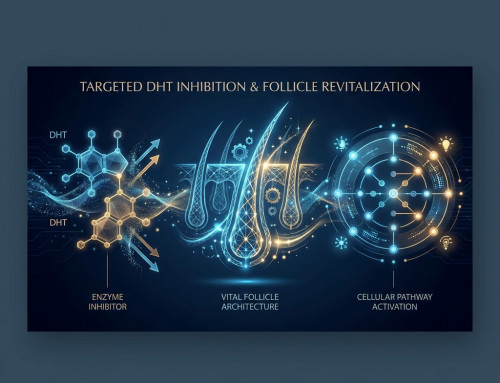
How finasteride and dutasteride trigger the dread shed: By lowering DHT levels, these medications cause follicles that were producing miniaturized hairs to synchronize their cycle and shed simultaneously as they reset toward healthier growth.
Combination therapy: When oral minoxidil and a DHT blocker like dutasteride are taken together, as in Thryve Hair Lab’s 4-in-1 daily capsule, both mechanisms are active at once. This can make early shedding more pronounced. However, the combination also produces stronger long-term thickening than either treatment alone.
The core message is simple: the follicle is not being destroyed. It is being retrained.
The 2025 Research Finding That Changes Everything
The most important recent evidence on this topic comes from the 2025 Bi et al. study published in the Journal of Dermatological Treatment, which found a significant positive correlation between the severity of initial shedding and treatment efficacy in the 5% minoxidil group.
The key finding is direct and remarkable: in the 5% minoxidil group, there was a significant positive correlation between the severity of initial shedding and treatment efficacy. The men who shed more in the early phase achieved better long-term outcomes.
For the average man, this reframes the entire experience. Heavier early shedding is not a warning sign. It is a signal that the treatment is actively engaging the follicles and driving a meaningful biological response.
The same study added useful timeline detail: 5% minoxidil users experienced elevated shedding for 4 to 8 weeks, while 2% minoxidil users shed for a longer period of 8 to 12 weeks before returning to baseline. A JAAD 2025 multicenter prospective cohort study further confirmed that this temporary shedding increase is a real, characterizable, and manageable phase.
Clinical coverage of the Bi et al. study by HCPLive noted that understanding the temporary nature of shedding can directly improve patient compliance and therapeutic outcomes. The dread shed is not a red flag. It is evidence of treatment working at the follicular level.
Month-by-Month Shedding Timeline: What to Expect
Every man’s experience varies, but this evidence-based roadmap reflects what clinical data and patient reports consistently show.
Weeks 1–4: Treatment Begins, Follicles Respond
Shedding may begin within 2 to 6 weeks of starting minoxidil or 1 to 4 weeks of starting finasteride or dutasteride. Many men notice nothing unusual in the first two to three weeks, because the follicle cycling shift begins internally before it becomes visible.
Toward the end of this window, some men start to notice slightly more hair in the shower drain or on the pillow. This is the early signal that treatment is engaging the hair cycle. It is not damage. It is the first stage of the reset.
Months 2–3: Peak Shedding Phase
This is typically the most alarming period and the point at which most men consider stopping treatment. Daily hair fall can temporarily double or triple, climbing from the normal 50 to 100 hairs per day to potentially 150 to 300.
Men on combination therapy may experience a more pronounced peak because both mechanisms are simultaneously influencing follicle cycling. Critically, this is the very phase the 2025 Bi et al. study found to be predictive of better outcomes. The men who shed most heavily here went on to achieve the strongest long-term results.
Stopping treatment at this point means abandoning the process exactly when the follicles are most actively responding. It is the worst possible time to quit.
Months 3–6: Shedding Stabilizes, New Growth Begins
Shedding gradually returns toward baseline as the synchronized telogen release completes. Early signs of new growth, often described as fine “baby hairs” or peach fuzz, may begin to appear at the hairline and temples.
This is the phase where patience is rewarded. The follicles that shed their old hairs are now entering the anagen growth phase with renewed capacity. Thryve Hair Lab customers reflect this timeline: Chris L. (39) reported his hairline filling in at 3 months, Jason M. (34) noticed baby hairs returning at the hairline at 3 months, and Marcus G. (29) saw new growth at the temples.
Not every man experiences obvious shedding. Approximately one-third of men on finasteride notice a clear shedding phase; the other two-thirds either shed minimally or transition directly to new growth, with equivalent long-term outcomes.
Months 6–12: Visible Improvement and Peak Results
By month 6, most men have stabilized and are seeing measurable improvement in density and coverage. Thryve’s clinical data shows 90% of men see visible improvement in thickness and coverage within 3 to 6 months. Peak improvement typically occurs between months 9 and 12 as newly grown hairs mature through full anagen cycles.
The long-term data is compelling. The 5-year Finasteride Male Pattern Hair Loss Study Group trial found that 83% of treated men with vertex hair loss experienced no further hair loss after 2 years, with many achieving mild-to-moderate visible regrowth. A 5-year Korean study found 85.7% of patients showed improvement after 5 years of treatment.
The conclusion is clear: the men who stayed the course achieved durable, long-term results. The shedding phase was temporary. The regrowth is not.
Does Everyone Experience the Dread Shed?
No. Not every man on treatment will experience a noticeable shedding phase.
Approximately one-third of men on finasteride notice an obvious shedding phase. The remaining two-thirds either shed minimally or transition directly to new growth without a dramatic spike. Transient shedding incidence with oral minoxidil is estimated at 16 to 22% based on adverse event data, meaning the majority of oral minoxidil users do not experience dramatic shedding.
For men who are not shedding: the absence of a dread shed does not mean treatment is failing. Long-term results are equivalent regardless of whether a shedding phase occurs.
For men who are shedding heavily: based on the 2025 Bi et al. data, this is a positive prognostic indicator, not a cause for alarm.
Both groups are on the right path. The timeline and experience vary, but the destination is the same.
When Should You Actually Be Concerned?
Transparency builds trust, so it is important to be clear about genuine red flags.
- Red flag 1: Shedding persists beyond 6 months with no sign of stabilization or new growth. This may indicate the treatment is not working as expected or that another underlying cause is present.
- Red flag 2: Shedding is accompanied by other symptoms such as fatigue, weight changes, or widespread hair loss across the body. This may suggest an underlying condition such as thyroid dysfunction, iron deficiency, or stress-induced telogen effluvium unrelated to treatment.
- Red flag 3: Shedding began well before starting treatment and has not changed in character. This warrants evaluation for a separate cause.
If any of these red flags are present, consulting a licensed medical provider is recommended. Thryve Hair Lab’s licensed providers are available to assess individual situations. Treatment-induced shedding is localized to the scalp, temporary, and follows the predictable timeline outlined above, which distinguishes it from pathological hair loss.
Why Early Dropout Is the Number One Reason Men Fail Treatment
There is an adherence crisis in hair loss treatment. A 2024 Journal of Cosmetic Dermatology study of 1,545 patients found full treatment adherence in only 74.4% of patients, with lower adherence linked to early adverse events, including shedding occurring in the first weeks or months. A separate PMC compliance study confirmed that early discontinuation driven by shedding anxiety is a primary adherence barrier, with better adherence observed after 6 months of use.
Here is the painful irony: most men who quit do so during the dread shed, precisely the phase the 2025 Bi et al. study identified as predictive of the best outcomes. They quit right when success was most likely.
Staying on treatment through the shedding phase is not merely recommended. It is the defining factor between men who see results and men who do not. The 5-year trial data shows durable, compounding improvement for men who stay consistent. The follicles reset during the shedding phase continue producing healthier hair for years.
Thryve Hair Lab’s 1-Year Satisfaction Guarantee is designed specifically to give men the confidence to stay the course without financial risk.
5 Practical Ways to Manage the Shedding Phase
- Document with photos. Take consistent photos in the same lighting every 4 weeks. Progress is often invisible day-to-day but unmistakable month-to-month. This is the most powerful tool against shedding anxiety.
- Use a gentle shampoo. Avoid harsh sulfates and aggressive scalp scrubbing. Minimize mechanical stress on follicles while they are in transition.
- Avoid tight hairstyles. Pulling hair back tightly adds traction stress to follicles already in a sensitive transitional state. Opt for looser styles during months 1 through 4.
- Manage stress actively. Elevated cortisol can trigger a separate, additive telogen effluvium on top of treatment-induced shedding. Regular exercise, adequate sleep, and stress management protect the hair cycle.
- Set a 4-month minimum evaluation window. Commit to staying on treatment through at least month 4 before judging efficacy. The shedding phase must complete before new growth becomes visible. Evaluating results at week 6 is like judging a harvest before the seeds have germinated.
Keeping a simple shedding log by counting hairs in the shower drain weekly can also provide objective data that counters the subjective anxiety of seeing more hair fall. For additional guidance on supporting your hair through this phase, top hair care tips for healthy, strong hair can help minimize unnecessary stress on follicles during the transition.
Why a Combined Oral Treatment Approach Matters for the Shedding Phase
Thryve Hair Lab’s 4-in-1 oral capsule combines minoxidil (2.5 mg) and dutasteride (0.5 mg), both of which influence follicle cycling. This addresses hair loss through complementary mechanisms simultaneously.
Dutasteride blocks both Type I and Type II DHT enzymes, compared to finasteride’s single-enzyme blockade, providing more comprehensive DHT suppression. This means the follicle reset is more thorough, which may contribute to a more pronounced early shedding phase in some men.
A 2026 PMC retrospective study evaluating real-world 12-month efficacy of combined oral minoxidil and finasteride found the combination produces stronger long-term outcomes than either treatment alone. There is also a clear adherence advantage: a single daily capsule is significantly easier to maintain consistently than a multi-product topical regimen, and consistency is the single most important variable in treatment success.
If a man experiences a more intense early shedding phase on a combined oral formula, this is consistent with the biology of combination therapy and, per the 2025 Bi et al. data, may predict a stronger long-term response.
Conclusion: The Dread Shed Is Not the Enemy. Quitting Is.
The dread shed is not a sign of treatment failure. It is biological evidence that the follicles are responding to treatment and resetting for healthier growth.
The evidence is consistent: the 2025 Bi et al. finding shows heavier shedding predicts better outcomes; the 5-year trial data shows 83 to 85.7% of men who stayed on treatment achieved durable improvement; and the adherence data shows that early dropout is the primary reason men fail.
The men who see results are not the ones who had the easiest early experience. They are the ones who understood what was happening and stayed the course. The anxiety is real, but the science is clear and the timeline is finite. By month 6, the shedding phase is behind them. By month 12, the results speak for themselves.
Ready to Start Treatment With a Team That Prepares You for Every Stage?
Thryve Hair Lab is built on transparency. It tells men the truth about what to expect, including the dread shed, because honesty is the foundation of trust and long-term results.
The approach is straightforward and built for confidence: a doctor-formulated 4-in-1 oral capsule, licensed provider review within 1 business day, no office visit required, 2-day FedEx delivery, and a 1-Year Satisfaction Guarantee. That guarantee is a deliberate risk-removal mechanism. A full year is more than enough time to see results, and the only thing standing between a man and those results is staying consistent through the early phase.
Getting started takes less than 3 minutes. Complete the brief online medical questionnaire, and a licensed provider will review the case within one business day.
The hardest part of treatment is not the shedding. It is starting.