
Thryve Hair Lab Results: Real Data, Timelines & What to Expect
Men searching for hair loss solutions face a relentless barrage of bold claims and exaggerated promises. The skepticism is justified. The hair loss industry has a long history of overpromising and underdelivering, leaving countless men frustrated, financially drained, and no closer to reclaiming their confidence.
Hair loss is not merely a cosmetic concern. It carries significant psychological weight. Men experiencing thinning hair, receding hairlines, or visible scalp often report reduced self-confidence, lower body image satisfaction, and decreased quality of life. The emotional toll makes the search for effective treatment deeply personal.
This article exists to cut through the noise. It provides a timeline-organized breakdown of what Thryve Hair Lab results actually look like, grounded in clinical data on the individual ingredients and real customer experiences. Thryve Hair Lab is a telehealth-based, doctor-formulated 4-in-1 oral capsule combining Minoxidil (2.5mg), Dutasteride (0.5mg), Biotin (1mg), and Vitamin D3 (600 IU). Results vary by individual, but the clinical data behind each ingredient provides a reliable framework for what most men can realistically expect.
Understanding What You’re Actually Taking: The 4-in-1 Formula Explained
Before examining timelines, men deserve to understand exactly what they are putting into their bodies and why each ingredient matters.
Minoxidil (2.5mg) stimulates follicle regrowth by improving blood flow to the scalp. Clinical data shows that 62% of men experienced hair regrowth in affected areas after one year of using 5% topical minoxidil. The oral formulation in Thryve Hair Lab delivers the active ingredient systemically, eliminating the inconvenience of topical application.
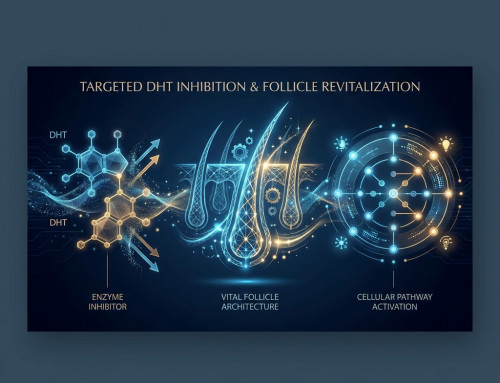
Dutasteride (0.5mg) is the cornerstone of the formula. It blocks both Type I and Type II 5-alpha reductase enzymes, preventing the conversion of testosterone to DHT (dihydrotestosterone). A 2024 PMC systematic review confirms that Dutasteride reduces serum DHT levels by up to 92%, compared to Finasteride’s approximately 70% reduction. A 2025 Phase III clinical trial published in the Annals of Dermatology confirmed Dutasteride’s superiority over Finasteride for androgenetic alopecia at the 0.5mg dose.
Biotin (1mg) supports keratin production and hair strength, addressing the structural integrity of hair strands.
Vitamin D3 (600 IU) nourishes follicles and supports overall scalp health.
The combination matters because each ingredient targets a different mechanism of hair loss. Up to 30 to 50% of patients on Finasteride alone may not show satisfactory clinical improvement, according to a 2025 study in the Journal of Contemporary Clinical Practice. This positions the combination formula as a logical upgrade for men who need more comprehensive intervention.
Importantly, Thryve Hair Lab is a prescription medication reviewed and approved by a licensed provider, not an over-the-counter supplement. This adds a meaningful layer of medical credibility.
Why DHT Blocking Is the Foundation of Any Effective Hair Loss Treatment
Androgenetic alopecia (AGA) is the most common form of hair loss in men. It occurs when DHT binds to hair follicles, causing them to shrink (miniaturize) and eventually stop producing visible hair. Understanding the science behind hair loss causes and evidence-based solutions helps clarify why targeting DHT is so critical.
The scale of the problem is significant. AGA affects approximately 50 million men in the United States alone. By age 50, roughly half of men experience it. By age 70, nearly 70% are affected. Perhaps most striking: 25% of men with hair loss begin the process before age 21, with mean AGA onset at approximately 23.9 years.
Without stopping the underlying cause, any regrowth effort is undermined by continued follicle miniaturization. This is why DHT blocking is step one in any effective treatment protocol. Dutasteride’s dual-enzyme blocking (Type I and Type II) provides a more thorough approach than Finasteride’s single-enzyme inhibition, which explains its superior clinical performance.
Thryve Hair Lab Results by Timeline: What to Expect at Each Stage
This section provides a structured, honest timeline that sets realistic expectations rather than overpromising. Individual results vary based on the extent of hair loss, age, genetics, and consistency of use. The treatment works in phases, and understanding each phase prevents premature discontinuation.
Days 1 to 30: The Foundation Phase (What’s Happening Beneath the Surface)
Most men will not see visible results in the first 30 days. This is normal and expected.
Biologically, significant activity is occurring beneath the surface. Dutasteride begins suppressing DHT production. Minoxidil starts improving blood flow to follicles. The treatment begins halting further miniaturization.
Some men experience a temporary increase in shedding during the first 4 to 8 weeks. This phenomenon, called telogen effluvium, occurs as Minoxidil pushes resting follicles into an active growth cycle. It is a sign the treatment is working, not failing.
The most common reason men fail to see results is discontinuation during this phase. Thryve Hair Lab’s formula begins working immediately to halt further loss, even before visible regrowth appears.
Days 30 to 60: Early Signals (Reduced Shedding, Scalp Changes)
By weeks 4 to 8, many men begin noticing a reduction in daily shedding. This is a meaningful early indicator that the treatment is working.
Some users report early “baby hairs” or fine vellus hairs appearing at the hairline. This is consistent with customer testimonials from Jason M. (age 34), who noted baby hairs returning at his hairline at 3 months.
Reduced shedding is clinically significant. It means follicle miniaturization is being slowed or stopped, which is the primary goal of DHT-blocking treatment. Scalp health may visibly improve as Vitamin D3 and Minoxidil support the follicle environment.
Visible density improvements are not yet typical at this stage for most men.
Days 60 to 90: The Turning Point (Visible Improvements Begin)
The 3-month mark is when the majority of men begin noticing visible changes. This aligns with Thryve Hair Lab’s stated timeline of 3 to 6 months for visible improvement.
Customer testimonials support this timeline. Chris L. (age 39) reported his hairline filling in at 3 months. Jason M. (age 34) noted baby hairs returning at the hairline at 3 months. Marcus G. (age 29) reported new growth at temples.
Clinical context reinforces these expectations: 62% of men experienced hair regrowth after one year of 5% topical minoxidil. Thryve’s oral formula combines Minoxidil with Dutasteride, which clinical data suggests produces superior outcomes.
At this stage, visible improvement typically looks like reduced scalp visibility, thicker-looking existing hair, and early new growth at the hairline or temples.
Days 90 to 180: Measurable Progress (Density, Coverage, and Confidence)
The 3 to 6 month window is where most men experience the most noticeable and motivating changes. Increased hair density, improved coverage of thinning areas, and reduced scalp visibility in photos become apparent.
R. Silver (age 44) provides a compelling example. After 4 months and 6 years of thinning, he reported less scalp showing in photos. This represents a meaningful result for someone with a longer history of loss. More accounts like this can be found in Thryve Hair Lab success stories from real users.
Thryve Hair Lab claims 90% of users see visible improvement in thickness and coverage within 3 to 6 months. This compares favorably to the clinical norm of 62% regrowth with minoxidil alone after 12 months.
The combination formula may accelerate results because Dutasteride’s superior DHT suppression removes the primary obstacle to regrowth while Minoxidil actively stimulates follicle activity simultaneously.
Men in this phase often report restored confidence and reduced anxiety about their appearance. This emotional payoff sustains long-term adherence.
Days 180 to 365+: Peak Results (Full Regrowth Potential Realized)
Thryve Hair Lab states that peak improvement occurs at 9 to 12 months of consistent use. This aligns with the biological timeline of the hair growth cycle.
Follicles that have been miniaturized need multiple growth cycles to fully recover. The anagen (growth) phase lasts 2 to 6 years, but follicle recovery takes time. This is why results continue improving beyond the 6-month mark.
Clinical context supports these expectations: oral Finasteride stops AGA progression in 80 to 90% of men and leads to an average 10% increase in hair count over two years. Dutasteride’s superior DHT suppression suggests the potential for greater long-term outcomes.
Thryve Hair Lab’s headline claim is that 97 to 98% of men stop further hair loss with consistent use.
Maintaining results requires continued treatment. Hair loss will resume if treatment is discontinued, as the underlying DHT-driven process resumes. The 1-year satisfaction guarantee offers meaningful commitment: if no visible results occur after consistent use, Thryve Hair Lab offers a full refund or account credit.
The Clinical Evidence Behind the Claims: What the Research Actually Shows
Thryve Hair Lab’s marketing statistics (“98% effective”) are brand-reported figures. This section grounds those claims in independent peer-reviewed research.
Dutasteride vs. Finasteride: The 2024 PMC systematic review confirms Dutasteride outperforms Finasteride and placebo in multiple studies for AGA. The 2025 Annals of Dermatology Phase III clinical trial confirms 0.5mg Dutasteride as the most effective dose.
Minoxidil efficacy: 62% of men experienced hair regrowth after one year of 5% topical minoxidil. Oral Minoxidil at 2.5mg is the dose used in Thryve’s formula, consistent with clinical practice.
Combination therapy advantage: A 2025 network meta-analysis in the Journal of Cosmetic Dermatology evaluated the comparative efficacy of Minoxidil and 5-alpha reductase inhibitors. Combination approaches consistently outperform monotherapy.
The Finasteride limitation: Up to 30 to 50% of patients on Finasteride alone may not show satisfactory clinical improvement. Thryve’s Dutasteride-based formula addresses this gap.
One important distinction: Thryve Hair Lab’s specific formula has not been the subject of published peer-reviewed clinical trials. The evidence base is drawn from the individual ingredients, which have extensive independent research support. For a deeper look at the research, visit the Thryve science page.
Addressing the Skepticism: Common Concerns About Thryve Hair Lab Results
Skepticism is reasonable. Men searching “Thryve Hair Lab results” are specifically looking for honest answers.
“Are the Before/After Photos Real?”
Independent reviewers have raised concerns that before/after content may involve transplants, lighting tricks, or concurrent use of other treatments. This is a legitimate concern across the entire hair loss industry.
The focus should be on ingredient-level clinical evidence. The results are plausible because each ingredient has independent clinical support, not because of any single brand’s marketing photos.
Customer testimonials from Chris L., Jason M., Marcus G., and R. Silver describe specific, modest, and realistic outcomes. They do not describe dramatic overnight transformations.
Men considering treatment should document their own baseline with photos before starting in order to objectively track their own progress. Thryve before and after documentation can serve as a useful reference point.
“Is 98% Effectiveness a Realistic Claim?”
The “98% effective at stopping hair loss” claim refers to halting further progression, not necessarily achieving full regrowth. This is an important distinction.
Oral Finasteride stops AGA progression in 80 to 90% of men. Dutasteride’s superior DHT suppression (92% vs. 70% reduction) supports the plausibility of a higher efficacy rate for stopping loss.
The “90% see visible improvement” claim is more ambitious. Contextualized against the 62% regrowth rate seen with minoxidil alone, the combination formula may produce better outcomes. These are brand-reported statistics, not independently verified clinical trial data for this specific formulation.
“What About Side Effects?”
Thryve Hair Lab reports that less than 0.3% of users experience mild, temporary sexual side effects that resolve upon stopping treatment.
Sexual side effects are the primary concern with DHT-blocking medications. Studies on Dutasteride do report a slightly higher incidence of sexual side effects compared to Finasteride in some analyses, though the 2025 Annals of Dermatology clinical trial confirms the safety profile at 0.5mg.
The telehealth model includes licensed provider review. The medical questionnaire screens for contraindications before prescribing. Men with pre-existing concerns about sexual side effects should discuss this with the reviewing provider before starting treatment. The frequently asked questions page addresses many of these concerns in detail.
“How Does Thryve Compare to Other Options?”
Thryve Hair Lab’s combination of Dutasteride (rather than the more commonly used Finasteride), single-pill convenience, doctor-formulated credibility, and $67/month pricing positions it competitively in the mid-market. The use of Dutasteride offers stronger DHT suppression by targeting both Type I and Type II enzymes, compared to treatments that rely on Finasteride alone. Oral administration eliminates the inconvenience of topical treatments such as greasy residue and scalp irritation. For men who want simplicity, the single daily capsule replaces the complexity of managing multiple separate products.
Who Is Most Likely to See the Best Results with Thryve Hair Lab?
Ideal candidates are men in the early to moderate stages of AGA with receding hairlines, crown thinning, or diffuse thinning where follicles are miniaturized but not yet permanently lost.
Early action matters. Hair follicles that have been dormant for extended periods are less likely to recover. Men who start treatment earlier in the hair loss process consistently achieve better outcomes.
Most male AGA patients are 20 to 39 years old. This is not a condition that only affects older men.
Men who are consistent with daily dosing will see the best results. The subscription model ensures continuous supply to support adherence.
Men who prefer oral over topical treatment may find the oral capsule format more sustainable long-term, particularly those who have struggled with the inconvenience or side effects of topical Minoxidil.
Less ideal candidates are men with advanced hair loss where follicles are permanently lost (smooth, shiny scalp with no visible follicles). These cases may require surgical intervention rather than medical treatment.
The Thryve Hair Lab Process: From Questionnaire to First Capsule
The process is straightforward:
- Complete the 2 to 3 minute online medical questionnaire designed to screen for contraindications and ensure the treatment is appropriate.
- Licensed provider review is typically completed within 1 business day. A prescription is issued if approved.
- Prescription dispensed and shipped via FedEx 2-day delivery with tracking. Discreet packaging protects privacy.
- Begin daily treatment with one capsule per day. Consistent timing is recommended for best results.
Pricing is $67/month for the 20-week subscription with free shipping. Compared to purchasing ingredients separately at approximately $135/month, this represents claimed annual savings of $816.
The 1-year satisfaction guarantee provides a full refund or account credit if no visible results occur after consistent use. A full refund is also issued if treatment is not approved by medical staff.
Conclusion: What Thryve Hair Lab Results Actually Look Like
The evidence-based timeline is clear: treatment begins halting loss immediately. Visible improvements in shedding and early growth typically appear at 60 to 90 days. Meaningful density and coverage improvements occur at 3 to 6 months. Peak results are achieved at 9 to 12 months with consistent use.
The ingredient-level credibility is strong. Dutasteride’s 92% DHT reduction, Minoxidil’s established regrowth record, and the clinical support for combination therapy provide a solid foundation for the brand’s efficacy claims.
Published peer-reviewed clinical trials on Thryve Hair Lab’s specific formulation are not yet available. However, the individual ingredients have extensive independent research support.
The results are plausible. The ingredients are clinically validated. The 1-year satisfaction guarantee reduces the financial risk of trying.
Hair loss is progressive. The men who see the best results are those who start treatment before significant follicle loss has occurred.
For men experiencing early to moderate hair loss who want a convenient, medically credible, single-pill solution, Thryve Hair Lab represents a well-structured approach backed by the strongest DHT-blocking ingredient currently available.
Ready to See Your Own Results? Start Your Thryve Hair Lab Assessment Today
The 2 to 3 minute medical questionnaire determines if Thryve Hair Lab is appropriate for each individual. No office visit is required. There is no commitment until approval is granted. A full refund is issued if a prescription is not provided.
The 1-year satisfaction guarantee means results or a full refund.
At $67/month all-in-one versus $135/month purchasing ingredients separately, the value proposition is clear.
Hair loss does not pause, and neither should treatment.