
Thryve Hair Lab Ingredients: What’s Inside the 4-in-1 Capsule
Is this formula actually backed by science, or is it just clever marketing?
For men researching hair loss treatments, that question is not just reasonable; it is essential. Most men have encountered products that overpromise and underdeliver. The supplement aisle is filled with bottles making bold claims about hair regrowth, yet the results rarely match the marketing. Skepticism is not just understandable in this space. It is warranted.
This article takes a different approach. Rather than promotional language, the focus here is transparency and evidence. Each of the four ingredients in the Thryve Hair Lab 4-in-1 capsule will be examined individually. The clinical evidence behind each dose will be assessed. The science of how these ingredients work together will be explained. And the formula will be compared to what competitors offer.
The four ingredients are Minoxidil (2.5 mg), Dutasteride (0.5 mg), Biotin (1 mg), and Vitamin D3 (600 IU). These are not obscure botanical extracts or trendy wellness additives. Two of them are prescription-grade pharmaceuticals with decades of clinical research behind them.
That distinction matters. Thryve Hair Lab is a telehealth prescription service, not an over-the-counter supplement. Every capsule requires approval from a licensed medical provider before dispensing. That alone separates it from most products on the market.
Why a 4-in-1 Formula Makes Clinical Sense
Androgenetic alopecia, commonly known as male pattern baldness, is not caused by a single factor. It is a multi-mechanism condition. DHT sensitivity causes follicle miniaturization. Poor blood flow starves follicles of oxygen and nutrients. Nutritional deficiencies disrupt the hair growth cycle. Each of these mechanisms contributes to progressive hair loss.
Targeting only one mechanism leaves the others unaddressed. This is why single-ingredient approaches often plateau after initial results. A man taking only a DHT blocker may slow hair loss but struggle to stimulate regrowth. A man using only a growth stimulant may see new hairs emerge only to have them miniaturized by unchecked DHT.
The logic of a stacked formula is straightforward: address multiple pathways simultaneously, and the combined effect becomes greater than any single ingredient alone.
Within the Thryve Hair Lab formula, Minoxidil and Dutasteride serve as the primary active ingredients. They do the heavy lifting. Biotin and Vitamin D3 play supportive roles, ensuring the body has the raw materials needed to produce structurally sound hair as the primary ingredients drive new growth.
The formula is custom-compounded and requires a licensed provider’s approval. This is not a product purchased off a shelf. It is a medically supervised treatment. Learn more about the science behind hair loss causes and evidence-based solutions to understand why a multi-mechanism approach matters.
Ingredient #1: Minoxidil (2.5 mg) — The Regrowth Driver
Minoxidil was originally developed as an oral medication for high blood pressure. Its hair regrowth properties were discovered as a side effect when patients taking it for hypertension began growing hair in unexpected places.
The mechanism is well understood. Minoxidil is a vasodilator. It widens blood vessels, improving blood flow and oxygen delivery to hair follicles. This stimulates follicles out of the resting phase (telogen) and into active growth (anagen). Follicles that had gone dormant begin producing hair again.
Topical Minoxidil at 2% and 5% concentrations is FDA-approved for androgenetic alopecia. Oral Minoxidil is FDA-approved for hypertension but used off-label for hair loss at low doses, typically ranging from 0.25 mg to 5 mg.
The 2.5 mg dose in the Thryve Hair Lab formula falls within this established low-dose range. It balances efficacy with a favorable side effect profile. A Phase 2/3 trial of extended-release oral Minoxidil presented at the 2026 AAD meeting showed robust hair growth outcomes, positioning oral Minoxidil as a potential first-in-class FDA-approved oral therapy for pattern hair loss in nearly three decades. This validates the oral route.
The most common side effect of oral Minoxidil is hypertrichosis, which is unwanted hair growth in other areas such as the face or body. This is a real consideration, though it is generally manageable and dose-dependent.
Many men prefer oral Minoxidil over topical formulations. There is no greasy residue, no scalp irritation, and no variability in application technique. Systemic delivery is consistent, and adherence tends to be higher when treatment involves a single daily pill rather than twice-daily scalp applications.
Ingredient #2: Dutasteride (0.5 mg) — The DHT Blocker That Goes Further Than Finasteride
DHT (dihydrotestosterone) is the primary hormonal driver of androgenetic alopecia. It binds to receptors in hair follicles and causes progressive miniaturization. Over time, affected follicles shrink until they stop producing visible hair entirely.
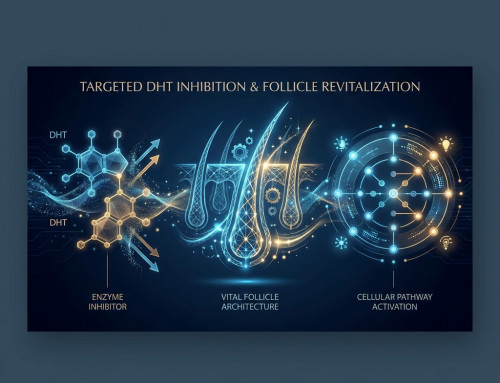
Dutasteride addresses this problem at its source. It inhibits both Type 1 and Type 2 5-alpha reductase enzymes, which are responsible for converting testosterone into DHT.
This dual-enzyme inhibition is what distinguishes Dutasteride from Finasteride. Finasteride blocks only Type 2 5-alpha reductase, reducing DHT by approximately 70%. Dutasteride blocks both types, reducing DHT by up to 90 to 98%.
A 2025 network meta-analysis published in the Journal of Cosmetic Dermatology confirmed that oral Dutasteride 0.5 mg per day is significantly more effective than oral Finasteride 1 mg per day and oral Minoxidil 5 mg per day for male androgenetic alopecia. A 2025 systematic review further confirmed Dutasteride’s superiority in efficacy for both male and female pattern hair loss.
Dutasteride is FDA-approved for benign prostatic hyperplasia (BPH), not hair loss, in the United States. It is used off-label for hair loss here, though it is approved for this indication in South Korea and Japan. Off-label use with strong clinical evidence is standard medical practice and should not be viewed as a red flag.
Side effects require honest discussion. 5-alpha reductase inhibitors carry risks of sexual dysfunction in a small percentage of users. Reduced libido, erectile dysfunction, and ejaculatory disorders have been reported. In May 2025, the European Medicines Agency confirmed suicidal thoughts as a side effect associated with Finasteride, and similar concerns have been raised for Dutasteride. Men with a history of depression or mental health conditions should discuss this with their provider before starting treatment.
Thryve Hair Lab states that less than 0.3% of men report side effects, described as mild and temporary. Independent clinical literature suggests the rate may be higher in some populations. The telehealth consultation process is designed to identify men for whom this medication may not be appropriate.
For men with significant DHT-driven hair loss, the clinical evidence supporting Dutasteride is strong. The dual-enzyme inhibition represents a meaningful clinical advantage over Finasteride.
Ingredient #3: Biotin (1 mg) — Structural Support, Not a Miracle Cure
Biotin (Vitamin B7) is the most overhyped ingredient in the hair loss supplement industry. Standalone biotin supplementation has weak evidence for hair regrowth in men without a biotin deficiency.
That said, Biotin does have a legitimate role. It is a coenzyme essential for keratin production, the protein that makes up hair strands. Without adequate Biotin, hair structure becomes brittle and prone to breakage.
The evidence is stronger in polytherapy regimens. When combined with Minoxidil and other active ingredients, Biotin has shown benefit in supporting normal hair growth in androgenetic alopecia. A review in the Journal of Clinical and Aesthetic Dermatology noted Biotin’s role in compounded multi-ingredient formulas.
The 1 mg dose is clinically appropriate. It is not a megadose. It ensures follicles have the raw material needed to produce structurally sound hair as Minoxidil and Dutasteride drive new growth.
Biotin alone will not stop hair loss or reverse miniaturization. In this formula, it plays a supporting role. Thryve Hair Lab is transparent about that hierarchy.
Ingredient #4: Vitamin D3 (600 IU) — The Overlooked Follicle Regulator
Vitamin D deficiency is significantly more common than most people realize, and it has a direct, clinically documented relationship with hair loss.
The Vitamin D Receptor (VDR) plays a crucial role in normal hair cycling, specifically in regulating the transition between growth phases. VDR mutations are associated with hereditary alopecia, and reduced VDR levels have been found in scalp tissue of men with androgenetic alopecia.
A 2024 systematic review and meta-analysis in Frontiers in Nutrition confirmed growing evidence that VDR plays a crucial role in normal hair cycling. Research published in PubMed shows an inverse relationship between serum Vitamin D levels and non-scarring alopecias including androgenetic alopecia and telogen effluvium. A February 2026 Dermatology Times article confirmed that patients with alopecia often show reduced VDR levels in scalp tissue.
The Hair Transplant Forum International has published advisories recommending routine serum Vitamin D level checks in hair loss patients as a common and correctable contributor.
The 600 IU dose is conservative and safe. It is not a therapeutic megadose but rather consistent daily replenishment designed to maintain adequate Vitamin D status. For men who are deficient, which is more common than most expect, this is a meaningful inclusion.
If a man already has optimal Vitamin D levels, this dose will not dramatically accelerate hair regrowth. The benefit is most pronounced in men with deficiency or insufficiency.
Vitamin D3 is the most underappreciated ingredient in this formula.
How the Four Ingredients Work Together: Synergy, Not Coincidence
Hair loss in men is driven by at least three distinct biological mechanisms: DHT-driven follicle miniaturization, reduced blood flow and nutrient delivery to follicles, and disrupted hair cycling from nutritional deficiencies.
Each ingredient in the Thryve Hair Lab formula maps to a specific mechanism:
- Dutasteride addresses DHT suppression
- Minoxidil addresses follicle blood flow and growth stimulation
- Vitamin D3 addresses hair cycle regulation via VDR
- Biotin addresses keratin production and structural integrity
The Dutasteride and Minoxidil synergy is particularly important. These two ingredients target completely different mechanisms, meaning they do not compete. Dutasteride stops the hormonal attack on follicles while Minoxidil simultaneously stimulates those same follicles to grow. Bauman Medical has observed that combining dutasteride with minoxidil synergizes their positive effects.
As Dutasteride and Minoxidil drive new follicle activity, the body needs adequate Vitamin D for proper hair cycling and adequate Biotin for producing structurally strong hair strands. Without these co-factors, new growth may be weaker or slower.
While the Dutasteride and Minoxidil combination has strong clinical support, more controlled studies specifically examining all four ingredients together are needed. The synergy of the primary ingredients is well-supported; the addition of Biotin and Vitamin D3 is clinically rational and supported by individual ingredient evidence.
Taking all four ingredients in a single daily capsule ensures consistent co-administration, which matters for synergistic effects that depend on all ingredients being present simultaneously. You can review the full 4-in-1 hair loss pill details to understand exactly how the formula is structured.
How Thryve Hair Lab’s Formula Compares to Competitors
Thryve Hair Lab vs. Hims and Keeps: The Finasteride vs. Dutasteride Difference
Hims and Keeps primarily use Finasteride as their DHT blocker. Finasteride reduces DHT by approximately 70% through Type 2 inhibition only. Dutasteride reduces DHT by up to 90 to 98% through Type 1 and Type 2 inhibition.
The 2025 network meta-analysis confirmed Dutasteride 0.5 mg per day is significantly more effective than Finasteride 1 mg per day for male androgenetic alopecia.
Hims offers a broader product ecosystem including foams, sprays, supplements, and shampoos. Thryve Hair Lab’s single-pill simplicity is a deliberate design choice. Finasteride is FDA-approved for hair loss while Dutasteride is off-label in the U.S., but off-label use with strong clinical evidence is standard medical practice.
Thryve Hair Lab vs. Ro (Roman): Topical vs. Oral Delivery
Ro offers a topical spray combining Minoxidil, Finasteride, and Tretinoin but does not include Biotin or Vitamin D3 in its core formula.
Oral delivery provides consistent systemic delivery without scalp irritation, greasy residue, or application technique variability. Thryve Hair Lab’s use of Dutasteride represents a meaningful clinical upgrade in DHT suppression compared to Finasteride.
Thryve Hair Lab vs. Happy Head: Closest Competitor in Dutasteride Use
Happy Head is among the competitors that offer Dutasteride-based formulas, though at a higher price point and with more formula complexity, requiring more decisions from the patient.
Thryve Hair Lab’s single standardized formula at a lower price point is designed for men who want clinical-grade treatment without the complexity of customization.
Thryve Hair Lab vs. Natural Supplement Brands
Important clarification: “ThryveLabs” (trythryvelabs.com) and “Thryve Aura” (thryveaura.com) are completely separate companies from Thryve Hair Lab (thryvehairlab.com). Do not confuse them.
Natural supplement brands like Nutrafol use non-prescription botanical and nutritional ingredients. They cannot include prescription-grade DHT blockers like Dutasteride or Finasteride. The clinical efficacy gap is significant. No natural ingredient stack has the same level of clinical evidence as Dutasteride plus Minoxidil for androgenetic alopecia.
What the Clinical Evidence Actually Says About Efficacy
Thryve Hair Lab states that 97 to 98% of men stop further hair loss and 90% see visible improvement in thickness and coverage within 3 to 6 months. These figures align with broader clinical data on Dutasteride and Minoxidil combination therapy, but they are the company’s own figures. Independent clinical trials on this specific four-ingredient combination have not yet been published.
The individual ingredient evidence is strong. The 2025 network meta-analysis and systematic review both confirm Dutasteride’s superiority. The 2026 Phase 2/3 trial of oral Minoxidil confirms robust hair growth outcomes.
Realistic expectations matter. Most users should expect to see initial changes at 3 to 6 months, with more significant regrowth between 6 to 12 months of consistent use. Hair loss treatment requires patience. Browse Thryve before and after results to see what real users have experienced over time.
Results vary based on the extent of hair loss, age, genetics, and consistency of use. Men with advanced hair loss will see less dramatic results than men catching it early. The sooner treatment begins, the more follicles can be preserved and reactivated.
Side Effects and Safety: An Honest Assessment
Any prescription medication carries potential side effects.
Minoxidil at 2.5 mg: Hypertrichosis is the most common side effect. Fluid retention and mild blood pressure changes are possible at higher doses but less likely at this dose.
Dutasteride: Sexual dysfunction is the primary concern with 5-alpha reductase inhibitors. These effects are reported in a minority of users and are typically reversible upon discontinuation. Men with a history of depression or mental health conditions should discuss the 2025 EMA findings with their provider before starting treatment.
Thryve Hair Lab states that less than 0.3% of men report side effects, described as mild and temporary. Independent clinical literature suggests the rate of sexual side effects with 5-alpha reductase inhibitors may be higher in some populations. The telehealth consultation process is designed to screen for contraindications.
Biotin and Vitamin D3 at these doses have excellent safety profiles with no significant side effects expected.
The prescription process exists to screen for contraindications and ensure the formula is appropriate for each individual. The side effect profile is manageable for most men, but informed consent matters.
Is the Formula Worth the Cost? A Transparent Value Assessment
Thryve Hair Lab’s 20-week subscription is $67 per month with free shipping. The company claims buying all four ingredients separately costs approximately $135 per month, representing annual savings of $816.
The convenience of a single daily capsule, the telehealth consultation, the licensed provider oversight, and 2-day FedEx delivery are included in that price.
A single in-person dermatology consultation for hair loss can cost $150 to $300 without insurance, before the cost of any prescriptions.
The 1-year satisfaction guarantee offers a full refund or account credit if no visible results occur after consistent use. This meaningfully reduces the financial risk. There are no contracts, and subscriptions can be canceled or modified anytime.
Hair loss treatment is a long-term investment. Men who stop treatment typically see hair loss resume. This is not a one-time purchase but a subscription to ongoing treatment.
Conclusion: A Formula Built on Science, Not Marketing
Minoxidil and Dutasteride are the clinical workhorses of this formula, backed by strong and growing evidence. Biotin and Vitamin D3 play legitimate supporting roles with honest limitations.
This formula is not four random ingredients thrown together. It addresses DHT suppression, follicle blood flow, hair cycle regulation, and structural keratin production simultaneously.
Honest limitations exist. Dutasteride is off-label in the U.S. for hair loss. The specific four-ingredient combination has not been studied in a single controlled trial. Results vary by individual. Side effects, while uncommon, are real and should be discussed with a provider.
What makes this formula stand out is Dutasteride’s superior DHT suppression compared to Finasteride, the oral delivery advantage, the all-in-one convenience, and the medical oversight built into the telehealth model.
For men experiencing androgenetic alopecia who want a clinically serious, medically supervised treatment rather than a supplement shelf product, Thryve Hair Lab’s 4-in-1 formula represents a deliberate, evidence-based approach to hair restoration.
Ready to Verify Whether Thryve Hair Lab Is Right for You?
The next step is not a purchase. It is a medical consultation.
The online questionnaire takes 2 to 3 minutes and is reviewed by a licensed provider, typically within one business day. If treatment is not approved, a full refund is issued. The 1-year satisfaction guarantee applies to all subscribers, and cancellation is available anytime.
The longer hair loss goes untreated, the more follicles are permanently lost. Starting sooner preserves more options.
Complete the free medical questionnaire at Thryve Hair Lab and find out if this formula is clinically appropriate for you.