
Simply Revival DHT Blocker Reviews: What Saw Palmetto Can’t Do That Dutasteride Can
Let’s start with what most reviews get wrong. Simply Revival is not a scam. It is a legitimate supplement containing real botanical ingredients, backed by real customer reviews and a genuine money-back guarantee. But legitimacy and efficacy are two different questions, and confusing them can cost men something they cannot buy back: their hair follicles.
Androgenetic alopecia (AGA), the medical term for male pattern hair loss, is progressive and, at the follicle level, irreversible. Once a follicle miniaturizes permanently, no supplement, no prescription, no procedure can bring it back. The window for effective intervention is finite, and it closes a little more with each passing month of insufficient treatment.
So the real question is not whether Simply Revival works at all. It clearly does something for some people. The question is whether its level of DHT suppression, roughly 30 to 38 percent, is sufficient to actually halt hair loss in men with meaningful pattern baldness. Because if it is not, the three to six months a man spends trialing it may be three to six months of follicles quietly disappearing while a more potent treatment could have preserved them.
This is not an affiliate review. It is a clinical comparison built on published data, designed to help men make an informed, evidence-based decision.
Who Is Simply Revival DHT Blocker Designed For?
Simply Revival DHT Blocker is a multi-botanical supplement containing over 25 ingredients, including Saw Palmetto, Stinging Nettle, Bamboo Extract, Biotin, Zinc, Spirulina, Horsetail, Plant Sterols, Fo-Ti, and Pumpkin Seed Oil. It is delivered as two capsules daily in a proprietary blend of 350mg or more.
The product is marketed to both men and women experiencing hair thinning. It is sold on Amazon and at simplyrevival.com as a 30-day supply of 60 capsules. The brand positions itself squarely as a natural, side-effect-free alternative to finasteride, which appeals to men who are supplement-curious or concerned about prescription side effects.
The typical buyer is a man in the early-to-moderate stages of AGA who is researching options, prefers a natural approach, and has not yet spoken with a medical provider about prescription treatment. Commercially, the brand carries real credibility signals: a 4.3 out of 5 rating from 129 reviews on its own website, a 365-day money-back guarantee, and a visible Amazon presence.
These are legitimate trust signals. They are also exactly why so many men buy the product without understanding what it can and cannot deliver.
What the Ingredients Actually Do: A Closer Look at the Formula
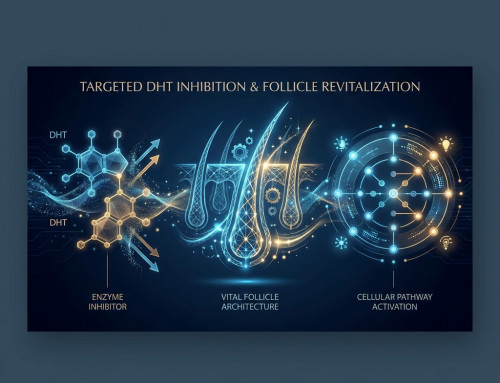
To understand the formula, one must first understand the underlying mechanism. DHT (dihydrotestosterone) is produced when the enzyme 5-alpha reductase converts testosterone. In genetically predisposed men, DHT binds to receptors in the hair follicle and triggers progressive miniaturization: the follicle shrinks, the hair grows finer, and eventually stops growing altogether.
Blocking hair loss therefore means inhibiting 5-alpha reductase. The only meaningful question for any DHT blocker is how effectively it does that.
Saw Palmetto, the anchor ingredient in Simply Revival, does have a legitimate mechanism. It genuinely inhibits 5-alpha reductase and has been studied in human trials. This is not pseudoscience. But there is a ceiling. Prostatic tissue studies show Saw Palmetto reduces DHT concentrations by approximately 30 to 38 percent, and definitive scalp DHT reduction data is lacking, which suggests real-world potency at the follicle may be even lower.
The supporting ingredients play a different role. Biotin, Zinc, and Bamboo Extract support hair structure, keratin production, and general scalp health. They are useful nutrients, but they do not meaningfully block DHT. Calling them DHT blockers in any clinical sense is inaccurate.
There is also a safety concern that most mainstream reviews never mention. Fo-Ti, also known as He Shou Wu, is listed by the NIH’s LiverTox database as a cause of drug-induced liver injury, with documented case reports of hepatitis requiring hospitalization. An independent analysis in July 2026 flagged this exact issue in Simply Revival’s formula. The assumption that “natural” automatically means “safer” does not hold up here.
The honest summary: the formula has a plausible mechanism and a helpful cast of supportive nutrients, but its core DHT-blocking action is capped by the inherent potency ceiling of botanical 5-alpha reductase inhibitors.
What Real Users Are Saying: Reviewing the Simply Revival Reviews
The customer reviews paint a split picture, and that split is telling. Some users report reduced shedding and improved density. Others report no visible improvement after finishing a full bottle. This is exactly what the clinical data on saw palmetto’s modest efficacy would predict.
The 4.3 out of 5 rating needs context. Many positive reviews describe reduced shedding rather than actual regrowth. These are not the same outcome. Reduced shedding is a real, plausible benefit of partial DHT suppression. Regrowth of visibly thicker, denser hair is a much higher bar, and one that partial suppression rarely clears in men with meaningful hair loss.
Simply Revival claims most users notice less hair loss in three to six weeks and new growth after six to twelve weeks. Its own FAQ, to the brand’s credit, acknowledges that results may vary.
Why do some men respond and others do not? Men with very early, mild thinning, or those whose hair loss is not primarily DHT-driven, may see a benefit. Men with moderate-to-significant AGA driven by high DHT sensitivity are far less likely to respond to 30 to 38 percent suppression. A positive review of reduced shedding confirms the product had an effect. It does not confirm whether that effect is strong enough to halt AGA progression. Those are two very different clinical questions.
The Efficacy Gap: What the Clinical Data Actually Shows
This is where opinion ends and published evidence begins.
Start with saw palmetto. A 2020 systematic review by Evron and colleagues in Skin Appendage Disorders, drawing on five randomized controlled trials and two prospective cohort studies, showed a 60 percent improvement in overall hair quality and a 27 percent improvement in total hair count. Respectable numbers on their own, until compared against the alternatives.
In a 2012 clinical study, roughly 70 percent of finasteride users reported clinical improvement, compared with about 40 percent for oral saw palmetto. That is a meaningful, clinically significant gap.
Now consider the gold standard. Dutasteride 0.5 mg suppresses serum DHT by 90 to 98 percent by inhibiting both Type I and Type II 5-alpha reductase enzymes. It is the only widely available treatment that blocks the full enzymatic pathway.
The evidence backing dutasteride is the strongest in the field:
- A 2025 Bayesian network meta-analysis of 33 RCTs (Gupta et al., Journal of Cosmetic Dermatology) ranked oral dutasteride 0.5 mg as the most effective monotherapy for male AGA, achieving the highest SUCRA score of 96.3 percent for total hair density improvement at 24 weeks.
- A landmark 2014 RCT of 917 men found dutasteride 0.5 mg per day significantly increased hair count and improved hair growth at 24 weeks compared with finasteride 1 mg per day (P=0.003).
- A 2025 JAAD International RCT found that even twice- or thrice-weekly dutasteride outperformed daily finasteride in hair density and diameter improvements, underscoring its superior potency even at reduced dosing frequency.
In plain terms: saw palmetto delivers around 30 to 38 percent DHT reduction. Dutasteride delivers 90 to 98 percent. This is not a marginal difference. It is a 2.5 to 3 times difference in the exact mechanism that drives hair loss.
Saw Palmetto vs. Finasteride vs. Dutasteride: A Side-by-Side Clinical Comparison
| Factor | Saw Palmetto (Simply Revival) | Finasteride 1 mg | Dutasteride 0.5 mg |
|---|---|---|---|
| DHT suppression | ~30–38% | ~70% | 90–98% |
| Enzymes inhibited | Weak, partial 5-alpha reductase | Type II only | Type I and Type II |
| Clinical evidence | Limited RCT data | FDA-approved, extensive trials | Highest-ranked monotherapy, 33 RCTs |
| Hair count improvement | ~27% total hair count | ~70% show clinical improvement | 28.57 more hairs/cm² vs. finasteride |
| Regulatory status | Not FDA-regulated for efficacy | FDA-approved | Prescription, clinically validated |
| Maintenance rate | Modest | ~83% | Highest available |
The regulatory distinction matters more than most buyers realize. Supplements are not FDA-regulated for efficacy. Their quality, dosing consistency, and efficacy claims are not independently verified. Prescription treatments like finasteride and dutasteride have undergone rigorous, controlled clinical trials.
It is also worth noting that many ingredients in multi-botanical formulas, including green tea extract, reishi mushroom, and pygeum, show 5-alpha reductase inhibition in laboratory settings but have zero human hair loss RCTs. Laboratory activity is not the same as a proven result on a real scalp.
The Opportunity Cost of Choosing a Supplement Over a Prescription
Here is the part almost no supplement review addresses.
AGA is progressive. Follicles do not vanish overnight. They miniaturize incrementally with each DHT exposure cycle. Once a follicle is permanently miniaturized, no DHT blocker, prescription or supplement, can restore it.
The scale of the problem is significant. AGA affects up to 50 percent of men by age 50 and up to 80 percent by age 80. A US survey reported moderate or severe AGA in 53 percent of men aged 40 to 49.
Consider the time cost. If a man spends three to six months trialing a supplement at 30 to 38 percent DHT suppression before escalating to a prescription, he has allowed three to six months of continued, DHT-driven miniaturization at a level a more potent treatment would have largely prevented.
That is the real risk: not that Simply Revival is fraudulent, but that the efficacy ceiling of supplement-based DHT blockers may be insufficient to halt AGA in men with moderate-to-significant loss, and the months spent discovering this are months of irreversible follicle loss.
The “natural is safer” objection also collapses under scrutiny. The documented Fo-Ti liver injury risk in Simply Revival’s own formula is a real safety concern. The idea that supplements are inherently safer than prescription medications is not supported by the evidence here.
For men with very mild, early-stage, or diffuse thinning not primarily driven by DHT, a supplement may offer some benefit. But that is a narrow use case, and most men searching for DHT blocker reviews have more meaningful hair loss than that.
Why Dutasteride Represents the Evidence-Based Upgrade
The dual-enzyme advantage is the whole story. Dutasteride inhibits both Type I and Type II 5-alpha reductase, while finasteride only inhibits Type II. That is precisely why dutasteride reaches 90 to 98 percent DHT suppression versus finasteride’s 70 percent.
The 2025 network meta-analysis of 33 RCTs, with dutasteride’s SUCRA score of 96.3 percent for total hair density at 24 weeks, represents the strongest available evidence base for any single hair loss treatment.
The most common objection to prescription DHT blockers is sexual side effects, and that concern deserves an honest answer rather than a dismissal. Thryve Hair Lab reports that fewer than 0.3 percent of users experience mild, temporary side effects. That figure sits in sharp contrast to the documented, potentially serious liver injury risk associated with Fo-Ti in the Simply Revival formula.
Access is no longer a barrier. Prescription dutasteride no longer requires an in-person dermatology visit. Men can get a hair loss prescription online through a licensed provider, with the same medical oversight as an office visit. For men who have done their research and understand the efficacy gap, dutasteride is the logical next step: the clinically superior option for those with meaningful AGA who need maximum DHT suppression.
How Thryve Hair Lab Delivers Prescription-Grade Dutasteride Without the Complexity
This is where the evidence meets a practical, accessible solution. Thryve Hair Lab is a telehealth platform that makes prescription-grade hair loss treatment as simple as taking a single daily capsule. No office visits. No juggling multiple products. No greasy topicals.
The flagship product is a doctor-formulated 4-in-1 daily capsule combining four active ingredients:
- Dutasteride 0.5 mg: the most potent DHT blocker available, targeting both Type I and Type II 5-alpha reductase
- Minoxidil 2.5 mg: stimulates follicle regrowth through improved blood flow
- Biotin 1 mg: supports keratin production and hair strength
- Vitamin D3 600 IU: nourishes and promotes follicle health
The formula was developed by hair transplant surgeons and restoration specialists with over 100 years of combined clinical experience, a team that has cared for hundreds of thousands of patients. As Dr. Glenn M. Charles, a hair transplant surgeon with more than 20 years in the field, noted: “After 30 years in this field, I’ve never seen a simpler, more effective option than Thryve Hair Lab’s 4-in-1 formula.”
The process is straightforward. A man completes a 2 to 3 minute online medical questionnaire. A licensed provider reviews it, typically within one business day. If approved, the treatment ships via 2-day FedEx in discreet, TSA-compliant packaging. The entire journey, from consultation to delivery, happens online.
On cost, the 20-week plan runs $67 per month with free shipping, compared to an estimated $135 per month buying the ingredients separately, a claimed annual saving of $816. The commitment is backed by a 1-year satisfaction guarantee: a full refund or account credit if there are no visible results after consistent use, and a full refund if the medical team does not approve treatment in the first place.
Founder Aaron Feldman began losing his hair at 15 and received his first transplant at 20. The brand is built on genuine understanding of what men with hair loss experience, not clinical detachment.
Who Should Consider Simply Revival, and Who Should Not
Fairness matters, so here is the balanced view.
Simply Revival may be appropriate for:
- Men with very early, mild, diffuse thinning who want a low-commitment first step
- Men who are not candidates for prescription medication due to specific health conditions
- Women experiencing hair thinning, since the product is marketed to both sexes
Simply Revival is unlikely to be sufficient for:
- Men with moderate-to-significant AGA
- Men with a strong family history of pattern baldness
- Men who have been losing hair for more than 12 months
- Men whose primary goal is halting further loss rather than supporting general hair health
The treatment escalation framework is straightforward. If a man has tried a supplement-based DHT blocker for three to six months without meaningful results, the clinical evidence strongly supports escalating to prescription-grade treatment. Waiting longer risks permanent follicle loss that no future treatment can reverse.
Simply Revival does carry genuine commercial strengths: a 365-day money-back guarantee, no prescription required, and a broad botanical formula that supports overall hair and scalp health beyond DHT blocking. For the right user, those are real benefits.
The decision is not ultimately about natural versus synthetic. It is about whether 30 to 38 percent DHT suppression is enough for a given level of hair loss. For most men with meaningful AGA, the clinical evidence answers that question clearly.
Conclusion: The Real Question Is Not Whether Simply Revival Works, It’s Whether It Works Enough
Simply Revival is a legitimate product with a plausible mechanism, real customer reviews, and a credible money-back guarantee. None of that is in dispute. But its efficacy is defined by the inherent limitations of botanical DHT blockers, and that ceiling is low.
Thirty to 38 percent DHT suppression from saw palmetto versus 90 to 98 percent from dutasteride is not a marginal difference. It is the difference between slowing a progressive condition and meaningfully halting it.
The opportunity cost is unforgiving. The months spent on a supplement that may not be potent enough are months of continued follicle miniaturization. Follicles lost to AGA do not come back.
Men who have done their research now have the clinical context to make an informed decision. For those with meaningful hair loss, the evidence points clearly toward prescription-grade dutasteride as the most effective available option. The best time to start effective treatment was at the first sign of thinning. The second best time is now.
Ready to Go Beyond Supplements? Start With Thryve Hair Lab Today
Taking the next step is simpler than most men expect. The Thryve Hair Lab online consultation takes just 2 to 3 minutes, requires no office visit, and results in a licensed provider review typically within one business day.
The treatment is a single daily capsule combining dutasteride 0.5 mg, minoxidil 2.5 mg, biotin, and vitamin D3: the most potent DHT blocker available paired with proven regrowth support, at $67 per month with free shipping.
The 1-year satisfaction guarantee means a full refund or account credit if no visible results appear after consistent use. If the medical team does not approve treatment, a full refund is issued.
Hair loss does not pause while a decision is being made. Every month of insufficient treatment is another month of follicle miniaturization that cannot be undone. The consultation is free and takes minutes.
The clinical evidence is in place. The medical team is in place. The treatment is in place. Men who act early protect more of their hair, and the sooner that action begins, the more there is left to save.