
Is Dutasteride Safe for Hair Loss? Real Risk Rates, Clinical Data & Medical Oversight Explained
For many men researching dutasteride for hair loss, the experience follows a predictable arc. A few search queries lead to forum threads, anecdotal horror stories, and side effect warnings that feel disproportionate to the actual evidence. By the time most men ask the question “is dutasteride safe for hair loss,” they are already primed to fear the answer. That fear, while understandable, rarely reflects what the clinical data actually shows.
This article exists to replace assumption with evidence. Drawing on a body of research that includes 47 randomized controlled trial arms covering more than 6,300 men, multiple five-year safety studies, and formal regulatory approvals across several countries, the goal is to present the real risk rates and clinical reality of dutasteride.
Here is the central tension worth understanding upfront: dutasteride is one of the most clinically validated hair loss treatments available, yet it remains one of the most misunderstood. That gap exists largely because of how side effect information is typically presented, not because of what the science demonstrates. The sections that follow cover the real risk rates, the regulatory approvals, the long-term safety data, and the reason licensed medical oversight is the mechanism that makes dutasteride safe in practice.
What Is Dutasteride and How Does It Work for Hair Loss?
Androgenetic alopecia (AGA), commonly known as male pattern baldness, is the most common form of hair loss after puberty, affecting up to 50% of men worldwide. It is a progressive condition, meaning that without intervention, thinning tends to continue over time. This is the scale of the problem dutasteride is designed to address.
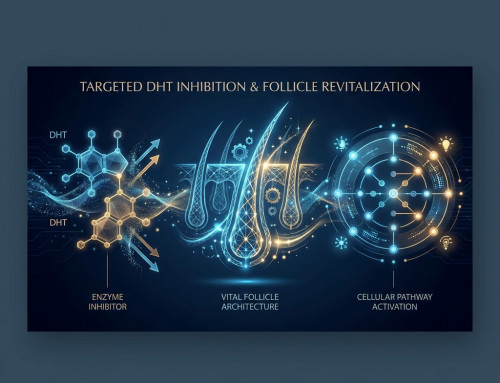
Dutasteride is a dual 5-alpha reductase inhibitor. It blocks both the Type I and Type II enzymes responsible for converting testosterone into dihydrotestosterone (DHT). DHT is the hormone primarily responsible for miniaturizing hair follicles in men predisposed to AGA. As follicles shrink, hair becomes finer, shorter, and eventually stops growing. Blocking DHT is therefore the most direct pharmacological approach to halting this process.
This is where dutasteride distinguishes itself from finasteride, the more familiar option. Finasteride inhibits only the Type II enzyme, suppressing serum DHT by roughly 70%. Dutasteride, by inhibiting both enzyme types, suppresses serum DHT by approximately 90 to 95% at the standard 0.5 mg daily dose. That is a mechanistically meaningful difference, and it translates into measurably better outcomes for many men.
In the United States, dutasteride is FDA-approved for benign prostatic hyperplasia (BPH) and is prescribed off-label for AGA. It is important to be clear about what “off-label” means: it does not mean experimental or unsafe. It simply means the drug is being used for a purpose other than its original FDA-registered indication, a common and accepted practice in medicine. Dutasteride is formally approved specifically for male AGA in South Korea (2009/2010), Japan (2015), and Taiwan, which establishes international regulatory credibility for this exact use.
The Evidence Base: What 47 Clinical Trials and 6,300 Men Tell Us
The most authoritative way to evaluate any treatment is to look at the totality of high-quality evidence rather than isolated studies. For dutasteride, that evidence is substantial. A large 2024 network meta-analysis examined 47 RCT arms covering 6,300 men, making it the largest comparative analysis of AGA treatments to date.
The efficacy finding was decisive. Dutasteride 0.5 mg daily delivered a mean increase of 23 terminal hairs per square centimeter at 24 weeks, approximately 30% better than finasteride 1 mg, which produced an increase of 17 hairs per square centimeter. Dutasteride ranked as the most effective monotherapy for AGA in the analysis.
Safety data is equally robust. A five-year efficacy and safety study of dutasteride 0.5 mg in Korean men with AGA demonstrated sustained clinical improvement alongside a favorable long-term safety record. A separate 52-week multicenter study of dutasteride 0.5 mg in Japanese men found that drug-related adverse events occurred in 17% of patients, none of which led to study withdrawal, and most of which were mild.
What matters here is breadth. This volume of evidence spans multiple countries, ethnicities, and study designs. A drug studied this extensively, under this level of regulatory scrutiny, is not an unknown quantity. The safety question is not whether dutasteride has been tested, but whether men are seeing the test results.
The Real Side Effect Numbers: Separating Fear from Statistical Reality
The most common fear associated with dutasteride involves sexual side effects: erectile dysfunction, decreased libido, and ejaculatory disorders. These concerns are legitimate and deserve honest treatment rather than dismissal.
Here is the statistic that rarely makes it into mainstream content: at the standard 0.5 mg dose, one analysis found only a 1.3% overall risk of sexual side effects. For context, finasteride’s sexual side effect risk ranges from 2% to 13% depending on the study. This means dutasteride at 0.5 mg compares favorably even to the more commonly prescribed alternative.
Honesty requires acknowledging variability. Some analyses report different figures, such as approximately 4.8% for dutasteride versus 1.8% for finasteride. Study results differ based on population, methodology, and how side effects are measured. Presenting that variability openly builds a more credible picture than cherry-picking a single number. Across studies, however, two findings remain consistent: the absolute rates are low, and the adverse events reported in clinical trials are generally mild and transient, with most resolving within one to three months after stopping the medication.
There is also a documented phenomenon worth understanding. Research on 5-alpha reductase inhibitors suggests that some reported side effects are driven by the nocebo effect, meaning they stem from expectation rather than pharmacology. When men anticipate a side effect, they are more likely to report it, regardless of the drug’s actual action. This does not mean side effects are imaginary; it means the full picture is more nuanced than alarming headlines suggest.
Understanding the Risk Profile: What You Actually Need to Know
Responsible evaluation of any medication includes the practical details that affect how it is managed. Dutasteride has a long half-life of approximately five weeks. The practical implication is straightforward: if side effects occur, they may persist for several weeks after stopping the drug. This is precisely why medical oversight and early communication with a provider matter.
On fertility, the evidence deserves a direct answer. One study found a 28.6% decrease in sperm count at 26 weeks; however, sperm parameters showed gradual recovery by the end of a 24-week follow-up period. Men actively considering having children should factor this into their planning and discuss timing with a provider.
Dutasteride is contraindicated in women who are pregnant or may become pregnant, due to the risk of harm to a male fetus. For this reason, women should not handle crushed or broken capsules.
Certain rare but serious signals also warrant prompt medical review: mood changes, depression, allergic symptoms, or new breast lumps. These are noted not to alarm, but to establish that they are known, documented, and monitored. The reason these risks are manageable is that dutasteride is a prescription medication reviewed by licensed providers, not an over-the-counter supplement purchased without guidance.
International Regulatory Approvals: Why South Korea, Japan, and Taiwan Matter
International approvals are a meaningful safety signal that is frequently overlooked. Regulatory agencies in South Korea, Japan, and Taiwan each conducted independent safety and efficacy reviews before approving dutasteride 0.5 mg specifically for AGA. South Korea approved it in 2009/2010, Japan followed in 2015, and Taiwan has also granted approval. These are rigorous pharmaceutical regulatory bodies, not rubber stamps.
Real-world usage reinforces the trial data. Dutasteride was the 236th most commonly prescribed medication in the United States in 2023, with over one million prescriptions written. Widespread clinical use adds a layer of real-world safety evidence that extends beyond controlled trials.
So why is dutasteride still off-label for AGA in the United States? The answer reflects economics, not safety. Pursuing a new FDA indication for an existing generic compound is expensive and offers limited commercial return for manufacturers. The absence of a U.S. AGA approval reflects the economics of drug development, not a regulatory concern about the drug’s safety. Notably, the International Society of Hair Restoration Surgery (ISHRS) formally recognizes dutasteride’s efficacy and safety for AGA in its patient resources.
Emerging Research: Lower-Risk Approaches Backed by 2025 Clinical Data
A sign of scientific maturity is that the field continues to refine how dutasteride is delivered, actively working to optimize the benefit-to-risk ratio. Recent research points to several promising directions.
- Lower-dose oral dosing: A 2025 Phase III multicenter RCT found that low-dose 0.2 mg dutasteride showed significant efficacy for male AGA with a favorable safety profile, suggesting that lower doses may reduce side effect risk while maintaining meaningful hair growth.
- Intermittent dosing: A 2025 JAAD International RCT found that twice- or thrice-weekly 0.5 mg dutasteride increased hair growth and was well-tolerated, with sexual adverse events similar across all groups, including those on daily finasteride.
- Intralesional (scalp-injected) dutasteride: A 2025 systematic review and meta-analysis found consistent improvement in hair density and thickness with minimal adverse events, primarily mild scalp irritation, and no significant systemic effects.
- Topical formulations: Emerging topical dutasteride solutions aim to minimize systemic DHT suppression while delivering localized efficacy directly to the scalp.
These developments demonstrate that dutasteride’s safety profile is not static. Researchers are continually expanding the range of options to suit different patient needs. For a broader look at where hair loss science is heading, new breakthroughs in hair growth research offer additional context on the evolving treatment landscape.
Why Licensed Medical Oversight Is the Safety Mechanism, Not Just a Formality
Dutasteride is prescription-only for a reason. It affects hormone levels systemically and therefore requires proper screening, monitoring, and individualized dosing. This requirement is a feature of safe treatment, not a barrier to it.
A proper medical review should include a complete diagnostic assessment, screening for contraindications such as fertility goals, medication interactions, and relevant health history, and a plan for ongoing monitoring. That ongoing element is critical. It is not just the initial prescription that protects patients; it is the continued ability of a provider to identify side effects early, adjust dosing, or modify treatment before any problem escalates.
The source of the prescription matters enormously. The American Hair Loss Association has warned that compounded “mashup” products combining dutasteride with other agents have typically not been tested for safety or efficacy by third-party organizations. The difference between a reputable, medically supervised telehealth platform and an unregulated online source is not merely legal compliance; it is actual patient safety. Licensed provider oversight is the mechanism that converts dutasteride’s clinical potential into a treatment that is safely administered for an individual patient.
How Thryve Hair Lab Ensures Safe, Medically Supervised Dutasteride Treatment
Thryve Hair Lab is built around responsible telehealth prescribing for dutasteride-based hair loss treatment. The process begins with a 2 to 3 minute online medical questionnaire, followed by review from a licensed provider, typically within one business day. No prescription is issued until contraindications have been screened and the treatment is deemed appropriate.
The medical team behind that review carries real weight. It includes board-certified hair surgical specialists, hair transplant surgeons, and a nationally certified physician associate with more than 15 years of clinical experience, representing over 100 years of combined experience in hair restoration. As hair transplant surgeon Dr. Glenn M. Charles puts it: “After 30 years in this field, I’ve never seen a simpler, more effective option than Thryve Hair Lab’s 4-in-1 formula.”
The formulation itself is clinically reasoned. Thryve’s once-daily 4-in-1 capsule combines dutasteride 0.5 mg with oral minoxidil 2.5 mg, biotin 1 mg, and vitamin D3 600 IU, addressing multiple pathways of hair loss in a single product. If the medical team does not approve treatment, a full refund is issued, a policy that signals medical integrity takes precedence over a sale. The company also backs its product with a one-year satisfaction guarantee, reflecting confidence in both safety and efficacy. This licensed provider oversight model directly addresses the AHLA’s caution about unsupervised compounded products.
Who Should Not Take Dutasteride: Honest Contraindications
Transparency requires being direct: dutasteride is not appropriate for everyone, and a reputable provider will screen for the factors that matter.
- Women who are pregnant or may become pregnant should not take dutasteride or handle crushed or broken capsules, due to the risk of harm to a male fetus.
- Men with known hypersensitivity to dutasteride or other 5-alpha reductase inhibitors should avoid it.
- Men with certain liver conditions require careful evaluation before starting.
- Men actively trying to conceive should discuss timing and sperm count implications with their provider before beginning treatment.
- Men who donate blood should be aware that dutasteride’s long half-life means it can remain in the bloodstream for months after stopping, which carries implications for blood donation eligibility.
These are screening criteria, not reasons to avoid the medication outright. They are exactly what a licensed provider review is designed to identify and address. Clear discussion of contraindications is a hallmark of responsible prescribing, not a cause for alarm.
Dutasteride vs. Finasteride: A Safety Comparison Worth Understanding
Many men arrive at dutasteride after first researching finasteride, the more commonly discussed option. A side-by-side comparison clarifies the trade-offs.
On efficacy, the difference is mechanistic. Dutasteride achieves approximately 90 to 95% DHT suppression compared to finasteride’s roughly 70%, and that pharmacological gap translates into measurably better hair growth outcomes.
On safety, the profiles are broadly comparable, and in several analyses dutasteride compares favorably. The 1.3% sexual side effect rate reported for dutasteride 0.5 mg sits at the low end of finasteride’s 2% to 13% range across studies. The 2025 JAAD RCT offered a direct head-to-head comparison, finding sexual adverse events similar across intermittent dutasteride regimens and daily finasteride.
The most notable practical difference is half-life. Finasteride clears in roughly six hours, while dutasteride remains active for approximately five weeks. Finasteride therefore leaves the system faster if stopped, but dutasteride’s longer action also delivers more consistent DHT suppression. For most men, dutasteride offers superior efficacy with a side effect burden that is comparable to, and in some analyses lower than, the most commonly prescribed alternative.
Conclusion: The Evidence Supports Dutasteride, When Properly Prescribed
The conclusion that emerges from the data is consistent. Evidence from 47 RCT arms, more than 6,300 men, five-year safety studies, and independent international regulatory approvals supports dutasteride as a safe and effective treatment for male androgenetic alopecia.
The key statistical reality bears repeating: a 1.3% sexual side effect rate at the standard 0.5 mg dose, with most adverse events mild and transient, paints a very different picture from the fear-based narrative many men encounter online. The safety of dutasteride is not only about the molecule; it is about how it is prescribed, monitored, and managed by licensed medical providers.
No medication is entirely risk-free, and individual responses vary. That variability is precisely why medical oversight exists. For men experiencing hair loss, the meaningful question is not whether dutasteride is safe in the abstract, but whether it is appropriate for them specifically. That is a question a licensed provider is equipped to answer. Understanding the science behind hair loss causes and evidence-based solutions can also help men approach that conversation with greater confidence.
Ready to Find Out If Dutasteride Is Right for You?
For men ready to take action, the path forward is straightforward. The Thryve Hair Lab process starts with a 2 to 3 minute online questionnaire, followed by a licensed provider review within one business day. If approved, treatment ships via 2-day FedEx delivery directly and discreetly to the door.
The safety net is built in. If the medical team does not approve treatment, a full refund is issued, meaning there is no risk to taking the first step. Every plan is also backed by a one-year satisfaction guarantee. Thryve’s 4-in-1 formula combines dutasteride 0.5 mg, oral minoxidil 2.5 mg, biotin, and vitamin D3 in a single daily capsule, formulated by specialists with over 100 years of combined hair restoration experience. Early action matters when it comes to preserving and restoring hair.
Start Your Free Consultation Today.