
How to Stop Hair Loss Naturally vs Medically: The Evidence Gap Men Need to See
Introduction: The Question Every Man With Thinning Hair Is Asking
Androgenetic alopecia affects approximately 40% of men by age 35, 65% by age 50, and up to 85% by age 70. This condition accounts for roughly 95% of all male hair loss cases, making it the most common form of hair loss men will encounter in their lifetime.
The emotional weight of this condition extends far beyond appearance. Research confirms high rates of depression and anxiety among men with androgenetic alopecia, particularly those experiencing early onset. This is a quality-of-life issue, not merely a cosmetic concern.
Men searching for solutions face a core tension: natural remedy content floods the internet, presenting rosemary oil and saw palmetto as near-equals to finasteride and minoxidil. This article corrects that narrative with data.
The promise here is simple. A DHT suppression hierarchy framework and an honest examination of the evidence gap between natural and medical treatments will provide clarity. The question of how to stop hair loss naturally vs medically deserves precision, not marketing language.
The key revelation from 2025 meta-analyses shows combination medical therapy achieves 90 to 94% improvement rates. No natural remedy comes close to matching that number.
Why Hair Loss Happens: The DHT Problem at the Root
Understanding androgenetic alopecia requires understanding DHT (dihydrotestosterone). DHT binds to androgen receptors in hair follicles, causing progressive miniaturization. Terminal hairs shrink into vellus hairs over time, eventually disappearing entirely.
This is a genetic, androgen-driven condition. Stress, poor diet, and lifestyle factors can accelerate the process, but they do not cause androgenetic alopecia on their own.
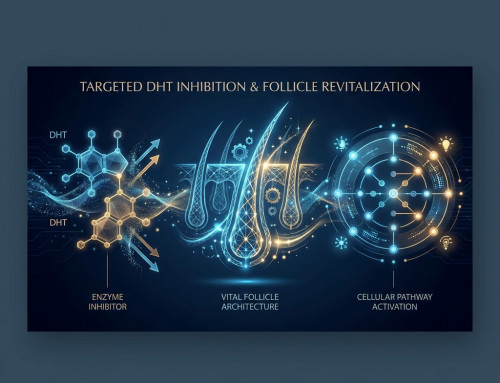
The enzyme responsible for this process is 5-alpha reductase, which converts testosterone into DHT. Two types exist: Type I and Type II. This distinction becomes critical when comparing treatments.
DHT suppression is the central mechanism any effective treatment must address. Both natural remedies and medical treatments attempt to address DHT, but with dramatically different levels of effectiveness.
According to the NIH’s Endotext reference on male androgenetic alopecia, twin studies establish the genetic basis of this condition, confirming its androgen-dependent nature and the progressive miniaturization pattern. For a deeper look at the science behind hair loss causes and evidence-based solutions, the mechanisms driving follicle miniaturization are worth understanding before evaluating any treatment.
The Natural Remedies: What the Evidence Actually Shows
Natural remedies are not worthless, but their evidence base is narrow, inconsistent, and limited to early-stage or nutritional-deficiency-related hair loss.
A 2025 Springer systematic review of 16 randomized controlled trials on herbal remedies examined rosemary, green tea, ginseng, aloe vera, and saw palmetto. The findings showed “promising efficacy” but were limited by small sample sizes, short durations, and lack of long-term follow-up.
Promising is not the same as proven.
Saw Palmetto: The Most Popular Natural DHT Blocker
Saw palmetto at 320 mg per day of standardized extract reduces serum DHT by approximately 30%, according to a 2020 meta-analysis of 10 trials involving 502 participants. That same meta-analysis found saw palmetto improved hair density in 83.3% of patients. This sounds impressive until compared to the effect size and evidence volume behind medical options.
The limitations remain significant: small sample sizes, short treatment durations, and no large-scale long-term randomized controlled trials exist.
Saw palmetto is appropriate for early-stage hair thinning, men who cannot tolerate prescription medications, or as a complement to medical treatment. It is not a standalone solution for moderate-to-advanced androgenetic alopecia.
Pumpkin Seed Oil: Promising but Preliminary
Pumpkin seed oil at 400 mg per day reduced scalp DHT by approximately 40% in a small 2014 Korean randomized controlled trial over 24 weeks. This remains the only significant RCT of its kind.
Phytosterols in pumpkin seed oil inhibit 5-alpha reductase, the same mechanism as prescription 5-alpha reductase inhibitors. The potency and evidence base, however, are far weaker.
The study authors noted that patients seek natural alternatives due to side effect concerns with finasteride and minoxidil. A 40% DHT reduction from a single small study cannot be treated as equivalent to decades of clinical data on prescription options.
Rosemary Oil: The Most Overhyped Natural Remedy
The rosemary oil vs. minoxidil narrative originates from a single study: Panahi et al., 2015, with 100 participants over 6 months.
The critical detail almost universally omitted: this study compared rosemary oil to 2% minoxidil, not the 5% concentration that is standard for men.
Minoxidil 5% is significantly more effective than 2% for men. Comparing rosemary oil to the weaker formulation and declaring it “comparable to minoxidil” is a misleading extrapolation.
Minoxidil has over 30 years of large-scale clinical data behind it. Rosemary oil has one RCT with 100 patients. The evidence quality gap is not subtle; it is enormous. Men deserve to know this before making treatment decisions.
Rosemary oil may have a role as a supportive adjunct for scalp stimulation and antioxidant effects, but it is not a replacement for clinically validated treatment.
The DHT Suppression Hierarchy: A Framework That Changes Everything
The DHT suppression hierarchy provides the clearest, most honest way to compare natural and medical treatments.
The hierarchy in plain terms:
- Saw palmetto: approximately 30% DHT reduction
- Pumpkin seed oil: approximately 40% DHT reduction
- Finasteride: approximately 70% DHT reduction
- Dutasteride: approximately 90% DHT reduction
The mechanistic difference matters. Finasteride blocks only Type II 5-alpha reductase. Dutasteride blocks both Type I and Type II, which is why it achieves approximately 90% DHT suppression versus finasteride’s 70%.
This is not a marginal difference. It represents a fundamentally different level of intervention.
The Georgetown Medical Review peer-reviewed analysis confirms dutasteride’s dual-enzyme inhibition advantage. This hierarchy should serve as the lens men use when evaluating any hair loss treatment claim. The question to ask: how much does this actually suppress DHT, and what is the evidence behind that number?
Medical Treatments: What the Clinical Evidence Supports
Only two treatments are FDA-approved for hair loss in the United States: topical minoxidil (approved 1988) and oral finasteride 1mg. Dutasteride is approved for androgenetic alopecia in South Korea and Japan but remains off-label in the US, though it is increasingly used and studied.
Search interest in finasteride rose 88% between 2020 and 2025, reflecting a major cultural shift toward medical treatment acceptance.
Minoxidil: The Foundation of Hair Loss Treatment
Minoxidil works differently from DHT blockers. It stimulates follicle growth via improved blood flow and KATP channel activation, independent of DHT suppression.
Available in topical (2% and 5%) and low-dose oral forms, the 5% topical formulation is standard for men. Low-dose oral minoxidil at 2.5 to 5 mg per day for men has emerged as a widely used off-label treatment, included as a first-line therapy in Spanish Trichology Group guidelines.
A 2026 review from Weill Cornell Medicine confirms low-dose oral minoxidil’s mechanisms include KATP channel activation and Wnt/β-catenin signaling. The most frequent side effect is hypertrichosis, occurring in approximately 15% of patients. Fluid retention occurs in 1.3 to 10% of patients.
Finasteride: The Clinical Standard for DHT Suppression
Finasteride 1mg per day is FDA-approved for male androgenetic alopecia and reduces DHT by approximately 70% by blocking Type II 5-alpha reductase.
Decades of large-scale clinical trials support finasteride. The evidence base is vastly larger than any natural remedy. Sexual side effects are uncommon and often resolve spontaneously, according to the Georgetown Medical Review.
A 2025 randomized controlled trial found daily finasteride 1mg achieved 21% moderate-to-marked improvement. This is meaningful but outperformed by dutasteride.
Dutasteride: The Most Effective Monotherapy Available
Dutasteride 0.5 mg per day blocks both Type I and Type II 5-alpha reductase, reducing DHT by approximately 90%. This represents the highest suppression of any current treatment.
A 2025 randomized controlled trial found thrice-weekly dutasteride 0.5 mg achieved 35% moderate-to-marked improvement versus 21% for daily finasteride 1 mg, with comparable sexual adverse events across all groups.
For men seeking the most effective single-agent treatment, the 2025 evidence consistently points to dutasteride. The Thryve 4-in-1 hair loss pill uses dutasteride as its core DHT-blocking ingredient, aligning with this evidence.
The Combination Therapy Revelation: Where the Real Numbers Live
Individual treatments are effective. Combination therapy is transformative.
Combining finasteride and minoxidil yields improvement rates of up to 94% versus 59 to 80% for single treatments alone.
A 2025 meta-analysis of 7 randomized controlled trials with 396 participants confirmed topical minoxidil-finasteride combination significantly outperforms minoxidil monotherapy in hair density, hair diameter, and global photographic assessment.
A 2025 real-world study of 280 participants found combined oral minoxidil, oral dutasteride, and mesotherapy produced the best outcomes at 12 months, with 66.3% achieving excellent results.
No natural remedy, alone or in combination, comes close to the 90 to 94% improvement rates documented for combination medical therapy. This is not a marginal difference. It is the difference between managing hair loss and stopping it.
Natural vs. Medical: A Direct Evidence Comparison
A structured comparison provides men with a clear, honest picture.
Natural Remedies:
- Saw palmetto: approximately 30% DHT reduction (10 trials, 502 participants)
- Pumpkin seed oil: approximately 40% DHT reduction (1 RCT, 76 participants)
- Rosemary oil: 1 RCT versus 2% minoxidil only
Best suited for early-stage loss, nutritional deficiencies, or as adjuncts.
Medical Treatments:
- Finasteride: approximately 70% DHT reduction (decades of large-scale RCTs)
- Dutasteride: approximately 90% DHT reduction (multiple 2025 RCTs and meta-analyses)
- Minoxidil: over 30 years of clinical data
Effective for moderate-to-advanced androgenetic alopecia.
Natural remedies are not entirely without value for early-stage or nutritional-deficiency-related loss. They are insufficient for moderate-to-advanced androgenetic alopecia.
The hybrid approach offers a practical middle ground. Natural remedies like scalp massage, rosemary oil, and nutrition optimization can serve as supportive adjuncts alongside evidence-based medical treatment. They are not replacements.
The evidence gap between natural and medical treatments is not a matter of opinion. It is quantifiable, and men deserve to see those numbers.
When to Choose Natural, When to Choose Medical, and When to Combine
Early-stage thinning or nutritional deficiency: Natural remedies may slow progression and are low-risk. Worth trying, but results should be monitored carefully with realistic expectations.
Moderate-to-advanced androgenetic alopecia: Natural remedies alone are insufficient. Medical treatment with finasteride, dutasteride, or minoxidil is the evidence-based standard of care.
For maximum results: Combination medical therapy with minoxidil plus finasteride or dutasteride is supported by the strongest 2025 evidence, with improvement rates of 90 to 94%.
The hybrid approach: Men on medical treatment can add scalp massage, rosemary oil, and nutritional optimization as low-risk adjuncts. These should not substitute for proven treatments.
Natural remedies typically require 3 to 6 months to show visible results versus 2 to 4 months for medical treatments. Hair follicles that have fully miniaturized cannot be revived. Early action matters.
Given the documented impact of androgenetic alopecia on mental health, choosing an effective treatment promptly is not vanity. It is a quality-of-life decision.
What’s Coming Next: The Future of Hair Loss Treatment
Breezula (topical clascoterone) has achieved positive Phase III results with US and EU submissions underway. This topical anti-androgen may offer DHT-blocking benefits without systemic effects.
PP405, targeting follicle stem cell reactivation, has Phase 3 initiation planned for 2026. This approach targets dormant follicle stem cells rather than DHT suppression.
ABS-201, an anti-PRLR antibody, is in Phase 1/2a trials. This novel mechanism targets prolactin receptor signaling.
For a comprehensive look at new breakthroughs in hair growth research and what the science says, the pipeline of emerging treatments offers important context for men planning their long-term approach.
The pipeline is promising, but these treatments are years from availability. Men who start effective treatment today will be in a significantly better position when next-generation options arrive. Early intervention preserves follicles that future treatments could potentially reactivate. Waiting is not a neutral choice.
Conclusion: The Evidence Has Spoken
The DHT suppression hierarchy provides clarity: saw palmetto at approximately 30%, pumpkin seed oil at approximately 40%, finasteride at approximately 70%, dutasteride at approximately 90%.
The rosemary oil narrative requires correction. The only RCT compared it to 2% minoxidil, not the 5% concentration prescribed to men. The claim that natural remedies equal medical treatments is not supported by evidence.
Combination medical therapy achieves 90 to 94% improvement rates according to 2025 meta-analyses. This represents the strongest evidence in the space.
Natural remedies have a role as adjuncts and for early-stage loss. They cannot replace medical treatment for moderate-to-advanced androgenetic alopecia.
Hair loss is not inevitable progression. For most men, it is a treatable condition. The evidence exists. The treatments exist. The only variable is when to act.
Take the First Step Toward Clinically Backed Hair Restoration
For men ready to act on this evidence, Thryve Hair Lab offers a 4-in-1 daily capsule combining oral minoxidil (2.5 mg), dutasteride (0.5 mg), biotin (1 mg), and vitamin D3 (600 IU). This combination approach aligns with the strongest 2025 clinical evidence.
Thryve uses dutasteride rather than finasteride, the ingredient the 2025 Gupta et al. network meta-analysis identified as the most effective monotherapy for male androgenetic alopecia.
The process is straightforward: a 2 to 3 minute online questionnaire, licensed provider review within 1 business day, no office visit required, and 2-day FedEx delivery.
A 1-year satisfaction guarantee provides a full refund or account credit if no visible results appear after consistent use. Full refunds are issued if treatment is not approved.
The formula is backed by a team with over 100 years of combined clinical experience in hair restoration, including board-certified hair transplant surgeons.
Start a free consultation today and get a doctor-reviewed treatment plan delivered to your door.