
Hair Loss Treatment for Receding Hairline Men: Why the Hairline Is the Hardest Zone to Recover and How to Win There
Introduction: The Line on Your Face That Changes Everything
Most men do not notice it in the mirror first. They notice it in a photo taken under harsh overhead lighting, or in a video call where the camera angle reveals more scalp than expected. Sometimes someone else mentions it before they ever register the change themselves. That moment, when the receding hairline becomes undeniable, lands harder than almost any other form of hair loss.
A receding hairline is not simply “thinning hair.” It is the most visible, face-framing, identity-altering form of hair loss a man can experience. Unlike loss at the crown, which sits out of direct sight, the hairline defines the upper boundary of the face. It shapes how a man sees himself and how others perceive him.
The emotional weight is well documented. In a landmark multinational European study, more than 70% of men with hair loss reported their hair as an important feature of their image, and 62% agreed that hair loss affected their self-esteem. These are not vanity statistics. They reflect a genuine psychological burden.
Yet most hair loss content treats a receding hairline as a generic symptom of a broader problem. This article takes a different position. The hairline is a biologically distinct, clinically specific zone that demands a targeted strategy. The goal here is to explain precisely why the hairline is the hardest area to recover and to lay out the only treatment approach that is clinically sound for this presentation. For any man searching for an effective hair loss treatment for receding hairline men, understanding the biology behind the recession is the first step toward winning the fight.
Why a Receding Hairline Is Not the Same as General Hair Loss
A receding hairline and diffuse thinning may both be classified as “hair loss,” but they are different presentations driven by different biology, and they carry different treatment implications.
Male pattern baldness, clinically known as androgenetic alopecia, accounts for approximately 95% of all hair loss in men. A receding hairline is typically its earliest visible sign. The characteristic M-shaped or V-shaped recession begins at the temples and works backward, driven by DHT binding to genetically sensitive follicles in the frontal scalp zone.
Clinicians measure this progression using the Norwood Scale, the gold standard for classifying male pattern baldness. Recession begins at Stage 2 and becomes clinically significant at Stage 3. Importantly, early intervention at these stages offers the best treatment outcomes, because the follicles in question have not yet been fully lost.
The face-framing nature of the hairline is what makes it so distinct. Crown loss can be hidden by angle, by styling, or simply by the fact that a man rarely sees the back of his own head. The hairline offers no such mercy. It is visible to everyone, and to the man himself, every single time he looks in a mirror.
The scale of the problem is substantial. Roughly 50 million males are affected by androgenetic alopecia in the United States alone, and two out of three men will experience some form of male pattern baldness by age 35. Nor is this strictly a middle-age concern. Between 16% and 20% of men in their twenties already show noticeable signs, and a 2025 PubMed study found that 44% of college-aged men reported a receding hairline.
The Biology Behind the Recession: Why DHT Attacks the Hairline First
To understand why the hairline recedes first, men need to understand DHT.
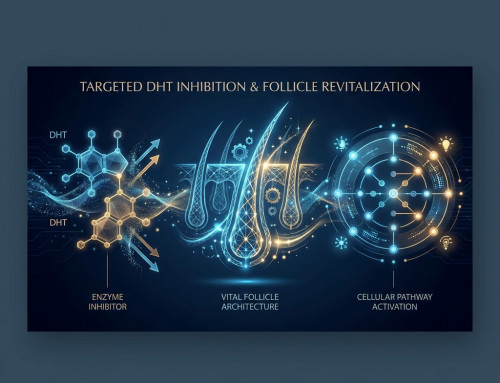
Dihydrotestosterone, or DHT, is a potent androgen converted from testosterone by an enzyme called 5-alpha reductase. Once formed, DHT binds to androgen receptors in genetically susceptible hair follicles. The hairline and temples are the first targets for a clear reason: follicles in the frontal scalp zone carry a higher density of androgen receptors and greater genetic sensitivity to DHT than follicles elsewhere on the scalp.
When DHT binds to these follicles, it triggers a process called miniaturization. Over successive growth cycles, the follicle shrinks. Each cycle produces a thinner, shorter, weaker hair until the follicle eventually becomes dormant and stops producing visible hair altogether.
Two forms of the enzyme drive this process. Type I 5-alpha reductase is active in the sebaceous glands and across the scalp. Type II 5-alpha reductase is the primary enzyme found in hair follicles. Both contribute to DHT production, which becomes a critical detail when evaluating treatment options.
Genetics largely determine who is vulnerable. Hereditary factors account for roughly 80% of susceptibility to male androgenetic alopecia. For many men, the hairline is a predetermined target from birth. To understand the full picture of the science behind hair loss causes and evidence-based solutions, the DHT pathway is the essential starting point.
The treatment logic follows directly from this biology. To protect the hairline, a man must block DHT at its source. Blocking only one enzyme leaves the other pathway open to continue the damage.
Why the Hairline Is Harder to Recover Than the Crown
The hairline is not only the first area lost; it is also the most difficult area to restore, for several compounding reasons.
Reason 1: Earlier and longer exposure to DHT. Because the hairline recedes first, those follicles have typically been miniaturizing for far longer by the time a man seeks treatment. That leaves fewer viable follicles to rescue.
Reason 2: Lower follicle density at the hairline. The frontal hairline zone naturally has a lower follicle density than the crown. There is less redundancy, which means every follicle lost has an immediate visible impact.
Reason 3: The point of no return. Once a follicle is fully miniaturized and dormant, neither oral nor topical treatments can revive it. This is precisely why early action is not optional; it is the entire game.
Reason 4: Psychological delay. Paradoxically, the emotional distress of noticing a receding hairline often causes men to deny or delay treatment, allowing further miniaturization to occur during the very window when intervention matters most.
The governing clinical principle is simple: it is significantly easier to slow and stop hair loss than to stimulate new growth from miniaturized or dead follicles. Prevention is the most powerful treatment strategy available.
Finasteride prevents further hairline recession in approximately 70% of men after one year, but is less effective at the hairline than at the crown, where it prevents loss in roughly 80% of men. That gap illustrates the biological stubbornness of this zone.
The Window of Opportunity: Why Timing Defines the Outcome
The single most important variable in treatment success is not the product a man chooses; it is when he begins.
Men who start treatment at Norwood Stage 2 or 3 have the most treatment options available and the highest probability of preserving and recovering hairline density. The 2025 PubMed study on college-aged men found that more than half would consider taking treatments indefinitely. Young men clearly understand the urgency. What they need is guidance on what to take.
The cost of waiting compounds. Each month of inaction allows additional follicles to miniaturize past the point of recovery, permanently narrowing the treatment window. The common rationalization, “it’s not that bad yet,” misreads the situation entirely. A hairline that looks slightly receded today is the result of months or years of miniaturization that was already underway. The visible change is always a lagging indicator.
Realistic expectations matter here as well. Results from clinically backed treatments typically begin appearing between 3 and 6 months, with peak improvement at 9 to 12 months. Starting now is the only way to see results sooner.
Why Generic Hair Loss Treatments Fall Short at the Hairline
Most hair loss treatments are designed for general androgenetic alopecia. They are not specifically calibrated for the unique biological demands of the hairline.
Single-mechanism approaches reveal the problem. Finasteride blocks only Type II 5-alpha reductase, leaving Type I active and free to continue producing DHT. In a zone as androgen-sensitive as the hairline, that residual DHT can be enough to sustain miniaturization.
Topical minoxidil alone has its own limitation. While effective at stimulating blood flow and follicle activity, it does nothing to address the underlying DHT-driven miniaturization. It treats the symptom, not the cause.
Supplements alone fall short as well. Natural DHT blockers like saw palmetto reduce DHT by only 10% to 30%, compared to finasteride’s 60% to 70% reduction. That is insufficient as a standalone strategy for active hairline recession.
The clinical consensus points elsewhere. A 2025 Frontiers in Medicine network meta-analysis found that finasteride combined with minoxidil was the most effective treatment for men, with a SUCRA score of 80.18%, outperforming either treatment used alone. The dual-mechanism logic is validated. The remaining questions are which combination, at what doses, and through which delivery method.
The Dual-Mechanism Strategy: How to Actually Win at the Hairline
The clinically sound answer for hairline-specific hair loss is a dual-mechanism approach: simultaneously blocking DHT production at both enzymes while stimulating follicle blood flow and activity.
Blocking both Type I and Type II 5-alpha reductase is critical for the hairline specifically. Because the frontal scalp zone has higher androgen receptor sensitivity, any residual DHT slipping through a single-enzyme block can continue driving miniaturization.
Follicle blood flow stimulation plays the complementary role. Even when DHT is suppressed, miniaturized follicles need active circulatory support to re-enter and sustain the anagen (growth) phase. This is where minoxidil’s mechanism becomes essential.
The synergy is straightforward. DHT suppression stops the attack. Follicle stimulation rebuilds the defense. Together they address both the cause and the recovery simultaneously.
The real-world evidence is compelling. A 2025 study published through PMC found that combined oral minoxidil (2.5mg) and finasteride (1mg) achieved stable or improved outcomes in 92.4% of 502 men over 12 months, with 57.4% showing marked improvements. Oral delivery of minoxidil provides systemic follicle stimulation that topical application cannot replicate at the same consistency, which matters greatly for a hairline zone where topical absorption is often inconsistent.
Dutasteride vs. Finasteride: Why the Hairline Demands the Stronger Block
Finasteride blocks only Type II 5-alpha reductase. Dutasteride blocks both Type I and Type II, making it a more complete DHT suppressor.
The clinical implication for the hairline is significant. Because the frontal scalp zone is more androgen-sensitive, the residual DHT allowed through by finasteride’s single-enzyme block may be enough to continue miniaturization in this exact area. Dutasteride represents the logical upgrade for men with active hairline recession. It is not necessarily a replacement for finasteride in all cases, but it is the superior choice for the most DHT-sensitive zone. The clinically established dose used in hair restoration contexts is 0.5mg.
Side effects deserve honest acknowledgment. Both dutasteride and finasteride carry potential side effects, and a 2025 systematic review linked finasteride to suicidality risk in younger men. This is a relevant consideration that any man should discuss with a licensed provider. Any prescription treatment, including dutasteride, requires licensed medical provider approval, which is built directly into the Thryve Hair Lab telehealth process.
Oral Minoxidil at 2.5mg: The Follicle Activation Component
Oral minoxidil is a vasodilator. It improves blood flow to hair follicles, extends the anagen growth phase, and supports follicle recovery from miniaturization.
The distinction from topical minoxidil matters. Oral delivery provides consistent systemic exposure, eliminating the application inconsistency, scalp irritation, and messiness associated with topical formulations. For context, topical minoxidil 5% reduced hair loss in 62% of men after one year, with nearly 85% experiencing at least some benefit. Oral delivery at 2.5mg is positioned to deliver a comparable or superior systemic effect.
The 2.5mg dose is appropriate for hair loss because it is sufficient for follicle stimulation without the cardiovascular effects associated with the higher doses used for blood pressure management. Improved scalp circulation is particularly valuable for the frontal hairline, where the blood supply to follicles may already be compromised by miniaturization.
The combination logic completes the picture. Oral minoxidil without DHT suppression leaves the underlying cause unaddressed. Dutasteride without follicle stimulation suppresses the attack but does not actively rebuild. Together, they form a complete protocol.
Thryve’s 4-in-1 Formula: Built Specifically for This Challenge
Thryve Hair Lab’s 4-in-1 daily capsule is engineered precisely for the dual-mechanism strategy described above. It is not a general hair loss product; it is a formula built for the specific biology of hairline recession.
The four active ingredients each address a different layer of the problem:
- Dutasteride (0.5mg): blocks both Type I and Type II DHT enzymes
- Oral Minoxidil (2.5mg): stimulates follicle blood flow and extends the growth phase
- Biotin (1mg): supports keratin production and hair strand strength
- Vitamin D3 (600 IU): nourishes follicle health and supports the hair growth cycle
Combining all four in a single capsule matters because hair loss is a multi-layered problem. DHT suppression, follicle activation, structural support, and nutritional foundation are all addressed in one daily dose, creating a comprehensive protocol that is simple to maintain.
The clinical credibility behind the formula is substantial. It was developed by a team with over 100 years of combined experience in hair restoration, including board-certified hair surgical specialists and hair transplant surgeons. As Dr. Glenn M. Charles, a hair transplant surgeon with more than 20 years of experience, stated: “After 30 years in this field, I’ve never seen a simpler, more effective option than Thryve Hair Lab’s 4-in-1 formula.”
That endorsement carries particular weight because it comes from surgeons who have seen the outcomes of men who waited too long. Their support for early medical intervention is informed by decades of consequence. The oral format also offers a practical advantage: one capsule replaces multiple separate products, eliminating the complexity and inconsistency that cause many men to abandon treatment before results appear.
What to Expect: A Realistic Timeline for Hairline Recovery
Honest, milestone-based expectations help men stay consistent through the treatment window.
Months 1 to 2: The stabilization phase. Shedding may temporarily increase as the growth cycle resets. This is normal and expected. The primary goal in this phase is stopping further miniaturization, not yet seeing new growth.
Months 3 to 4: Early signals. Reduced shedding in the shower and the early appearance of fine baby hairs at the hairline and temples. Thryve customer Chris L., age 39, reported his hairline filling in at 3 months. Jason M., age 34, reported baby hairs returning at the hairline at 3 months.
Months 5 to 6: Visible density improvement. Hair in the hairline zone becomes noticeably thicker and more defined. Marcus G., age 29, reported new growth at the temples.
Months 9 to 12: Peak improvement. The full benefit of the dual-mechanism approach becomes visible. R. Silver, age 44, reported less scalp showing in photos after 4 months of use following a 6-year history of thinning.
The clinical data aligns with these milestones: 90% of men see visible improvement in thickness and coverage within 3 to 6 months, with peak improvement at 9 to 12 months. Consistency is non-negotiable. Hair loss treatments are most successful when taken daily without interruption, because missing doses allows DHT to resume its miniaturization activity. To remove the financial risk, Thryve offers a 1-Year Satisfaction Guarantee: a full refund or account credit if there are no visible results after consistent use.
The Thryve Process: From Decision to Delivery in Under 48 Hours
The path from reading this article to having treatment in hand is designed to remove friction at every step.
- Complete a 2 to 3 minute online medical questionnaire. No office visit, no waiting room, no awkward conversations.
- A licensed medical provider reviews and approves the prescription, typically within 1 business day.
- The prescription is filled and shipped via FedEx 2-day delivery with tracking, in discreet packaging that respects privacy.
- One capsule per day, every day. No complicated regimen, no topical application, no multiple products to manage.
The subscription model ensures treatment continuity, with automatic delivery so men never run out, and the freedom to cancel or modify at any time. Pricing is $67 per month on the 20-week plan with free shipping, compared to roughly $135 per month purchasing the same ingredients separately, representing claimed savings of $816 per year.
There is no financial risk to starting. A full refund is issued if treatment is not approved by medical staff, and the 1-Year Satisfaction Guarantee protects men if results are not visible after consistent use. For men concerned about privacy or travel, discreet packaging and TSA-compliant foil-blister sheets address those needs directly.
Who This Treatment Is Right For
This treatment is built for clearly identifiable candidates.
- Men at Norwood Stage 2 to 3, whose hairline is visibly receding at the temples into an M-shaped pattern. This is the optimal intervention window where the dual-mechanism approach delivers the highest return.
- Men in their 20s and 30s experiencing early hairline recession. The 2025 PubMed study confirms this is a large, underserved audience, and early action produces the most durable long-term outcomes.
- Men who have tried topical minoxidil alone with limited results. The addition of dutasteride’s dual-enzyme block addresses the root cause that topical treatment cannot resolve.
- Men concerned about finasteride’s side effect profile, who want a medically supervised alternative. Thryve reports a side effect rate of less than 0.3% in its user base.
- Men who want a simple, consistent protocol they can maintain long-term. The single daily capsule is designed for adherence, and abandonment, not inefficacy, is the most common reason treatments fail.
- Men who prefer to avoid in-person clinic visits. The fully online process removes every logistical barrier to starting.
Conclusion: The Hairline Is Worth Fighting For, But Only If Action Starts Now
A receding hairline is not a cosmetic inconvenience. It is a visible, daily reminder of a biological process that accelerates without intervention.
The hairline is the hardest zone to recover because it is attacked first, miniaturized longest, and most visible. That is precisely why it demands the most targeted, aggressive treatment strategy from day one. Blocking DHT at both enzymes with dutasteride while simultaneously stimulating follicle blood flow with oral minoxidil is the only approach that addresses both the cause and the recovery at the same time.
The window of opportunity is real and closing. The follicles that are still viable today may not be viable in six months. The decision to act now is the most important hair loss decision a man can make.
Thryve Hair Lab’s formula was built by hair transplant surgeons who have spent decades seeing what happens when men wait too long. They designed this protocol specifically so men do not have to find out. This is not about vanity. It is about taking control of something that is biologically within a man’s power to influence, before that window closes.
Start Treatment Today: Before the Window Closes
The first step is simple and carries no obligation: complete Thryve’s 2 to 3 minute online medical questionnaire. This is the beginning of a doctor-guided process, not a purchase decision.
The entry point is low-risk by design. A licensed provider reviews the questionnaire within 1 business day, a full refund is issued if treatment is not approved, and the 1-Year Satisfaction Guarantee protects men if results are not visible after consistent use.
Consider the timeline. Men who start today will be in the stabilization phase within weeks and seeing early hairline signals within 3 to 4 months. Men who wait are simply starting that clock later. With discreet packaging, no office visits, and the freedom to cancel at any time, the remaining objections to taking the first step fall away.
Thryve Hair Lab is the answer built for this exact moment: not a general hair loss product, but a formula designed for the man who is watching his hairline move and is ready to do something about it. Men who want to see real outcomes before committing can explore Thryve before and after results from verified customers who started where they are now.