
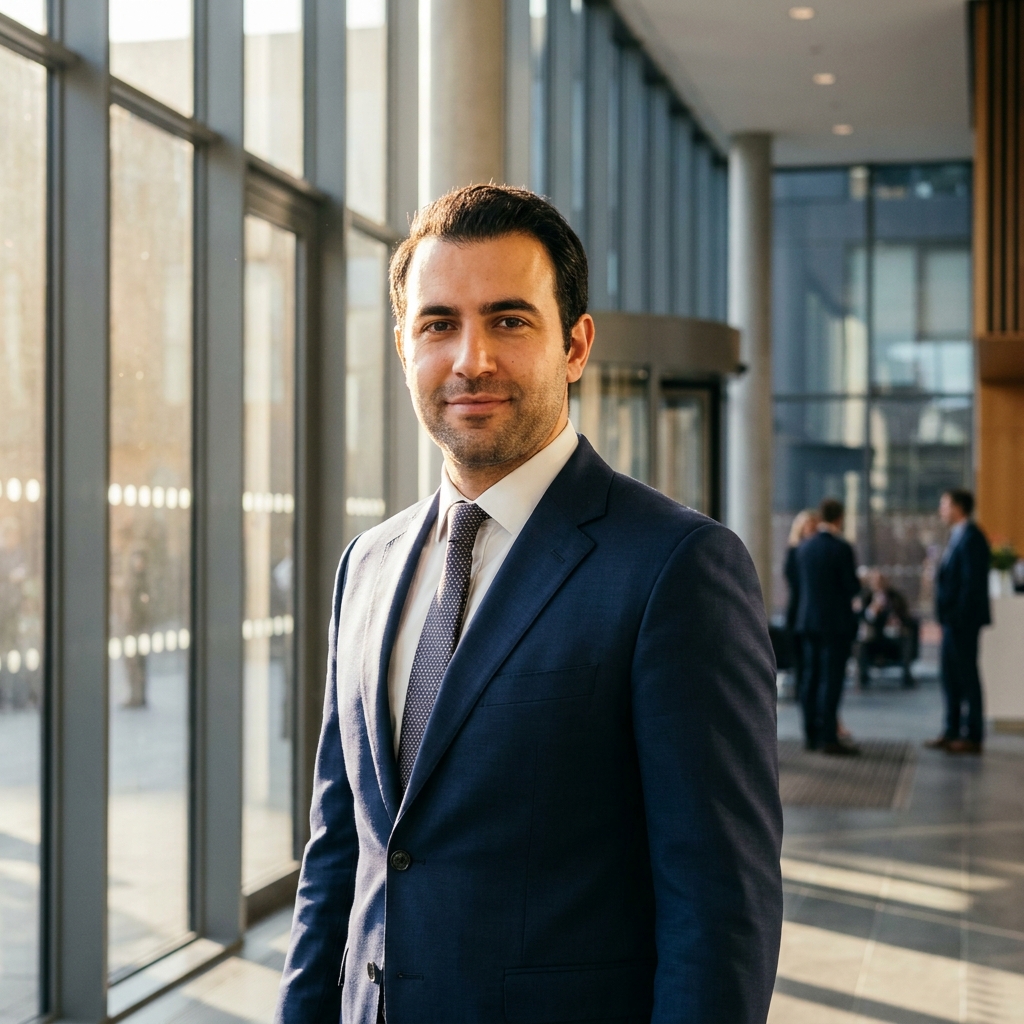
Hair Loss Treatment for Professional Men: Protect Your Career Edge
Introduction: Your Professional Brand Starts at the Top
A high-performing professional walks into a boardroom for a critical client pitch. Before he speaks a single word, before he presents his credentials or demonstrates his expertise, subconscious judgments have already been made. His appearance communicates competence, authority, and approachability in the span of seconds.
Hair loss is not merely a cosmetic concern. For professional men, it represents a professional brand issue with measurable career implications. The statistics underscore the scale of the problem: 85% of men experience hair loss at some point in their lifetime, and by age 35, approximately 65% will notice some level of thinning. This timeline places hair loss squarely within the prime career-building years when leadership credibility, visibility, and professional advancement matter most.
This article approaches hair loss treatment through a career ROI framework. The discussion centers not on vanity, but on protecting a professional asset that influences first impressions, confidence levels, and earning potential. For men seeking a solution that fits a high-performance lifestyle, the answer lies in a discreet, once-daily oral protocol that integrates seamlessly into demanding schedules without adding complexity or drawing unwanted attention.
The Career Cost of Hair Loss: What the Research Actually Shows
The professional impact of hair loss extends far beyond the mirror. Research validates what many professional men feel but rarely discuss openly.
A Johns Hopkins University study examined how observers perceived the same individual with varying amounts of hair. The findings were unambiguous: men with a full head of hair were rated as more attractive, younger, more successful, and more approachable than when they appeared with less hair. These perceptions translate directly to professional contexts where first impressions shape client relationships, hiring decisions, and leadership evaluations.
The career consequences manifest in concrete ways. According to research from Chemist4U, 63% of people with alopecia report career-related problems, including reduced confidence, avoidance of networking events, and hesitation to pursue promotions. Additionally, 60% of men experiencing hair loss report decreased confidence in professional settings, leading them to avoid speaking opportunities and high-visibility situations.
The professional stakes are significant enough to drive major decisions. A Medihair study found that 34.7% of men who pursued hair transplant surgery cited their career and professional life as the primary motivation.
Hair loss also affects mental performance in ways that impact workplace productivity. A 2025 cross-sectional study found that 46% of androgenetic alopecia patients showed symptoms of depression, with low self-esteem strongly correlated to more advanced hair loss stages. The American Hair Loss Association has documented cases of men changing career paths entirely due to the psychological burden of progressive hair loss.
The data presents a clear picture: hair loss carries a professional tax. The question becomes whether to pay it or address it.
Why First Impressions in Professional Settings Are Non-Negotiable
The psychology of appearance-based first impressions is well documented. Research consistently demonstrates that judgments about competence, authority, and approachability form within seconds of meeting someone.
In controlled observer studies of men treated for androgenetic alopecia, casual observers rated post-treatment photos as younger, more attractive, more successful, and more approachable. This evidence confirms that hair directly shapes how colleagues, clients, and decision-makers perceive a professional.
These findings apply to specific high-stakes professional contexts: job interviews where candidates compete for limited positions, client pitches where trust must be established quickly, board presentations where leadership presence matters, networking events where relationships begin, and performance reviews where advancement decisions are made.
The compounding effect deserves attention. As hair loss progresses, the gap between how a professional sees himself and how others perceive him widens. This disconnect erodes confidence precisely in the moments that matter most.
According to a multinational European survey of men aged 18 to 45, over 70% considered hair important to their image, and 62% agreed that hair loss affects self-esteem. Men who successfully treated hair loss reported 43% to 59% improvements in self-esteem and personal attractiveness.
Understanding Male Pattern Hair Loss: The Science Behind the Problem
Male pattern baldness, clinically known as androgenetic alopecia, accounts for approximately 95% of all male hair loss cases. Understanding the mechanism helps explain why early intervention matters.
DHT, or dihydrotestosterone, is a byproduct of testosterone that binds to hair follicles. When DHT attaches to follicle receptors, it causes the follicles to shrink progressively. This process, called follicle miniaturization, continues until affected follicles stop producing visible hair entirely.
The critical insight for professional men concerns timing. Follicles that are actively miniaturizing can often be preserved and reactivated through treatment. Follicles that have been dormant for extended periods cannot be recovered with medication alone.
Two primary treatment mechanisms address male pattern hair loss: DHT blocking and follicle stimulation. DHT blockers like finasteride and dutasteride prevent the hormone from binding to follicles. Minoxidil stimulates blood flow to follicles, promoting regrowth. Combining both mechanisms produces superior results to either treatment alone.
The urgency of early action cannot be overstated. With 65% of men noticing hair loss by age 35, the prime decade for career advancement and leadership visibility, the window for effective intervention aligns precisely with the years when professional brand matters most. Understanding the science behind hair loss causes and evidence-based solutions can help professionals make informed decisions about when and how to act.
Hair Loss Treatment Options in 2026: What Works and What Fits Your Life
The Clinical Gold Standards: Minoxidil and DHT Blockers
Minoxidil works by improving blood flow to hair follicles, stimulating regrowth. It is available in both topical and oral formulations.
Finasteride and dutasteride function as DHT blockers. Finasteride blocks the Type II DHT enzyme, while dutasteride blocks both Type I and Type II enzymes, offering more comprehensive DHT suppression.
According to clinical data, finasteride demonstrates 90% effectiveness in slowing or stopping hair loss in men, with approximately two-thirds experiencing actual regrowth. However, visible results require 6 to 12 months of consistent use.
The combination of an oral DHT blocker and minoxidil remains the most evidence-backed regimen for male pattern hair loss in 2026. Healthline confirms that this approach shows synergistic effects superior to either treatment alone.
The growing acceptance of medical treatment is reflected in search data: interest in finasteride rose 88% between 2020 and 2025, signaling mainstream normalization of proactive hair loss management.
What’s Emerging: The 2026 Treatment Landscape
The treatment landscape continues to evolve. Clascoterone, marketed as Breezula, showed breakthrough Phase 3 results in late 2025 with up to 539% relative improvement in hair count versus placebo. FDA submission is expected in spring 2026, potentially marking the first new approved mechanism in three decades.
PP405 by Pelage Pharmaceuticals targets follicle stem cells and was named a Time Magazine Best Invention of 2025. Phase 3 trials are planned for 2026.
While these developments offer future promise, the current gold standard remains the DHT blocker plus minoxidil combination, which is available now and proven effective. Stay up to date on new breakthroughs in hair growth research as the landscape continues to evolve.
The Professional Man’s Treatment Challenge: Why Compliance Is the Real Problem
Hair loss treatment requires long-term daily consistency over several months before meaningful results appear. This represents a significant commitment for men managing demanding work schedules, frequent business travel, and high-pressure responsibilities.
Several factors undermine treatment compliance: multiple separate products with different application methods, topical treatments that leave residue under business hairstyles, messy or odorous formulas impractical in office environments, and the logistical complexity of managing prescriptions from multiple sources.
Privacy concerns add another layer. Many professional men are reluctant to apply visible topical treatments at the office or discuss hair loss with colleagues. Discreet, oral-only protocols address this concern directly.
Travel creates additional friction. Professionals who travel frequently face liquid restrictions, refrigeration requirements, and the inconvenience of packing multiple products.
The most effective regimen is ultimately the one a professional will maintain consistently. This means simplicity, discretion, and seamless integration into an existing morning routine.
Thryve Hair Lab: A Treatment Protocol Built for High-Performance Professionals
Thryve Hair Lab was engineered specifically to eliminate the compliance barriers that derail professional men’s treatment. The brand was formulated by a team with over 100 years of combined clinical experience in hair restoration, including board-certified hair surgical specialists and transplant surgeons.
Founder Aaron Feldman brings authentic authority to the brand. His 30-year personal and professional journey with hair loss, beginning at age 15, provides a foundation of genuine understanding rather than clinical detachment.
Dr. Glenn M. Charles, with over 20 years in hair restoration, endorses the approach: “After 30 years in this field, I’ve never seen a simpler, more effective option than Thryve Hair Lab’s 4-in-1 formula.”
The core value proposition centers on a single daily capsule that replaces multiple separate products. The prescription is obtained online, delivered directly, and taken in seconds. No office visits, no topical mess, no schedule disruption.
The 4-in-1 Formula: Clinical Efficacy in a Single Daily Capsule
The formula combines four active ingredients in precise doses:
Minoxidil (2.5 mg) stimulates follicle regrowth by improving blood flow, serving as the proven growth activator.
Dutasteride (0.5 mg) blocks both Type I and Type II DHT enzymes. This provides more comprehensive DHT suppression than finasteride, which targets only Type II. This clinical differentiator addresses hair loss at the hormonal root.
Biotin (1 mg) supports keratin production and hair strength, providing structural support.
Vitamin D3 (600 IU) nourishes follicle health as the foundational wellness component.
The synergistic logic is straightforward: DHT blocking prevents further loss while minoxidil actively stimulates regrowth. This dual approach addresses the problem from two directions simultaneously.
Efficacy data supports the approach: 97% to 98% of men stop further hair loss, and 90% see visible improvement in thickness and coverage within 3 to 6 months, with peak improvement at 9 to 12 months.
Regarding side effects, less than 0.3% of users report mild, temporary sexual side effects. This addresses a key concern for professional men evaluating oral DHT blockers.
Designed for the Professional Lifestyle: Discretion, Convenience, and Continuity
The features align specifically with a professional man’s lifestyle requirements.
The once-daily oral capsule takes seconds, leaves no residue, and requires no application technique. It fits into any morning routine without adding complexity.
TSA-compliant foil-blister packaging was designed for frequent travelers. No liquid restrictions, no refrigeration, no packing friction.
Discreet packaging and delivery ensure no identifying labels, no pharmacy queues, and no colleagues noticing. Privacy is built into the protocol.
The online medical consultation takes 2 to 3 minutes, with licensed provider review typically within one business day. No office visit required.
Two-day FedEx delivery with tracking provides a predictable, reliable supply chain supporting treatment continuity.
The subscription model offers full flexibility: cancel or modify anytime with no contracts.
Risk is minimized through a full refund if not approved by medical staff and a 1-year satisfaction guarantee if no visible results after consistent use.
The Investment Case: What Hair Loss Treatment Actually Costs and What It Returns
Most insurance carriers consider hair loss treatment cosmetic and do not cover it. Professionals must budget for ongoing out-of-pocket costs.
Telehealth prescription hair loss plans typically cost $30 to $90 per month. Thryve’s pricing is $67 per month on the 20-week plan or $78 per month on the 12-week plan, with free shipping on both.
The savings argument is quantifiable. Purchasing the four active ingredients separately costs approximately $135 per month. Thryve’s all-in-one formula represents a claimed annual saving of $816.
In professional terms, $67 per month is less than a single business lunch, a monthly parking fee in most city centers, or one round of client drinks. Yet it protects a professional asset that influences every client meeting, interview, and networking event.
The broader market validates this investment category. According to Research and Markets, the hair loss telehealth market will grow from $2.25 billion in 2024 to $6.11 billion by 2029. Professional men are already investing in this category at scale.
The question is not whether $67 per month is worth spending. It is whether the professional cost of untreated, progressive hair loss is worth absorbing.
Real Results: What Professional Men Are Experiencing
Clinical claims find validation in real-world outcomes from verified customers. View Thryve before and after results to see the documented transformations from men in their prime career years.
Chris L., age 39, reported his hairline visibly filling in within 3 months.
Jason M., age 34, observed baby hairs returning at the hairline within 3 months.
Marcus G., age 29, experienced new growth at temples and specifically praised the discreet ordering and delivery process.
R. Silver, age 44, noticed less scalp visible in photos after 4 months despite 6 years of thinning.
The consistent themes across testimonials include visible results within 3 to 4 months, new growth at hairline and temples, and appreciation for discretion.
These are men in their 30s and 40s, prime career years, who took action and saw measurable results. The European study noted earlier found men who successfully treated hair loss reported 43% to 59% improvements in self-esteem and personal attractiveness, outcomes with direct professional implications.
When to Start: The Case for Acting During Career-Building Years
The most common delay tactic is waiting to see how severe the problem becomes. This approach misunderstands the biology involved.
Miniaturized follicles that are still active can be preserved and reactivated. Follicles that have been dormant for extended periods cannot be recovered with medication alone. Every month of inaction represents continued miniaturization.
The career timing argument reinforces urgency. With 65% of men experiencing noticeable hair loss by age 35, the decade when most professionals build leadership credibility and pursue promotions, the window for effective intervention aligns with the years when professional brand matters most.
Results from treatment take 3 to 6 months to become visible and peak at 9 to 12 months. A man who starts today will see results within his current career cycle. A man who waits another year loses that window.
The surge in treatment awareness reflects this understanding. Search interest in finasteride rose 88% between 2020 and 2025. The professional men who are winning are the ones who acted early.
How to Get Started with Thryve: A 3-Step Process That Fits Any Schedule
The process is designed for speed and simplicity.
Step 1: Complete the online medical questionnaire. This takes 2 to 3 minutes with no office visit, no waiting room, and no scheduling friction.
Step 2: Licensed provider review. A qualified medical professional reviews the submission and approves the prescription, typically within one business day.
Step 3: Delivery and daily protocol. The prescription ships via 2-day FedEx with tracking. Once received, the protocol is one capsule per day.
Automatic refills ensure treatment continuity without the administrative burden of managing prescriptions manually.
The risk-free entry includes a full refund if treatment is not approved and a 1-year satisfaction guarantee if no visible results after consistent use.
The entire process, from questionnaire to first delivery, can be completed without disrupting a single workday.
Conclusion: Protect the Professional Asset Built Over Years
Professional men invest deliberately in suits, education, networking, and personal development. Hair loss treatment belongs in the same category of strategic professional investment.
The evidence is clear: hair loss measurably affects professional first impressions, confidence in high-stakes settings, and career trajectory. Treatment measurably reverses those effects.
Thryve Hair Lab offers a solution clinically formulated by hair restoration specialists, combining the most effective available ingredients in a single daily capsule designed for the professional lifestyle.
The decision is straightforward. The treatment is discreet, the protocol is minimal, the cost is less than a business lunch per week, and the risk is eliminated by a 1-year satisfaction guarantee.
The men who protect their professional edge are the ones who treat the problem early, consistently, and strategically.
Take the First Step Toward Protecting Your Professional Edge
Start the 2 to 3 minute online consultation with Thryve Hair Lab today. No office visit required, with results visible in 3 to 6 months.
A full refund is available if not approved by medical staff. A 1-year satisfaction guarantee applies if no visible results after consistent use.
Every month of inaction means continued follicle miniaturization. The best time to start was earlier. The second-best time is now.
Formulated by a team with over 100 years of combined clinical experience in hair restoration.