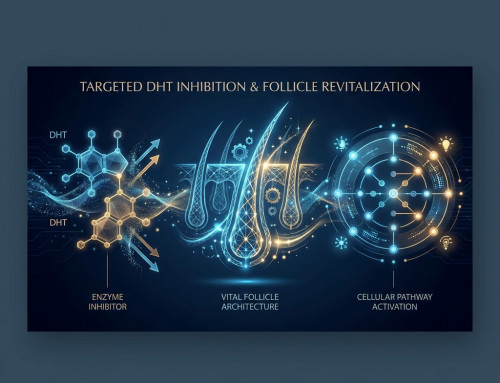

Hair Loss Treatment for Diffuse Thinning Men: Why This Pattern Needs a Different Approach
Introduction: When Hair Loss Doesn’t Follow the Rules
A man in his mid-30s catches his reflection under harsh bathroom lighting and notices something unsettling. His hair looks thinner. Not a receding hairline. Not a bald spot at the crown. Just less hair everywhere. The scalp seems more visible through what used to be thick, full coverage. He assumes it must be stress, a seasonal thing, or simply part of getting older. He decides to wait and see.
This decision to wait is the worst possible response to diffuse thinning, one of the most common yet most misunderstood presentations of male hair loss.
The problem runs deeper than a single missed diagnosis. Most hair loss content, most treatment recommendations, and most products on the market are built around classic male pattern baldness: the receding temples, the thinning crown, the predictable Norwood scale progression. Diffuse thinning operates differently. Treating it the same way often means treating it wrong.
This article explains what diffuse thinning actually is, why it evades early detection, and why effective hair loss treatment for diffuse thinning men requires a specific, dual-mechanism strategy rather than the standard off-the-shelf approach. The condition is solvable, but only with the right understanding and the right treatment protocol.
What Is Diffuse Thinning? (And Why It’s Not the Same as Male Pattern Baldness)
Diffuse thinning refers to a generalized reduction in hair density across the entire scalp. Rather than a localized receding hairline or crown loss pattern, the hair simply looks translucent, flat, and low-volume. There is no distinct bald zone, just an overall loss of fullness and coverage that affects the entire head.
This presentation stands in stark contrast to classic male pattern baldness (MPB), which follows the predictable Norwood scale progression. MPB typically begins with receding temples, moves to crown thinning, and eventually results in vertex loss. The pattern is identifiable, and men often recognize it early because the change is visible in specific zones.
Diffuse thinning is harder to self-diagnose precisely because the hair loss is evenly distributed. There is no obvious “before and after” zone to compare. Men frequently attribute the change to lighting conditions, hair products, temporary stress, or simply aging. By the time they recognize the problem, significant density has already been lost.
The clinical significance of this distinction cannot be overstated. Approximately 20 to 40 percent of men with early-stage androgenetic alopecia (AGA) also experience diffuse thinning alongside or instead of patterned loss. This is not a cosmetic quirk or a minor variation. It is a recognized clinical presentation of AGA that requires targeted evaluation and treatment.
DPA vs. DUPA: The Critical Distinction Most Men Have Never Heard Of
Within the category of diffuse thinning, there are two subtypes that determine treatment pathways and long-term outcomes. This distinction is rarely explained in consumer-facing content, but it is clinically essential.
Diffuse Patterned Alopecia (DPA) involves thinning concentrated across the front, mid-scalp, and crown. Critically, the donor area at the back and sides of the scalp remains stable and unaffected by miniaturization.
Diffuse Unpatterned Alopecia (DUPA) is more severe. Thinning extends across the entire scalp, including the donor zone. This presentation is less predictable and carries significant implications for treatment options.
The practical consequences of this distinction are substantial. Men with DPA may eventually be candidates for hair transplant surgery (FUE or FUT) because their donor area remains stable. Transplanted follicles from a healthy donor zone can provide lasting coverage.
Men with DUPA are not transplant candidates. Donor follicles from a miniaturized zone will continue to thin after transplantation, making surgery ineffective and potentially wasting significant resources. For DUPA patients, aggressive pharmacological intervention becomes the primary and often only viable treatment pathway.
Most men, and even some general practitioners, are unaware of this distinction. This knowledge gap is precisely why specialist evaluation matters for anyone experiencing diffuse hair loss.
Why Diffuse Thinning Gets Missed Until It’s Serious
The “invisible progression” problem makes diffuse thinning particularly dangerous. Because density loss is uniform across the scalp, the brain compensates visually. Men often do not notice significant thinning until 30 to 50 percent of their hair density has already been lost.
Common misattributions further delay diagnosis. Men blame stress, seasonal shedding, a new shampoo, or simply getting older. All of these explanations feel reasonable in the moment, and all of them delay proper diagnosis and treatment.
Even clinicians face diagnostic challenges with diffuse thinning. The presentation can mimic telogen effluvium (TE), alopecia areata incognita, or nutritional deficiency. Each of these conditions presents similarly but requires entirely different treatment approaches.
The gold-standard diagnostic tool is trichoscopy (dermoscopy of the scalp). This evaluation identifies follicular miniaturization (anisotrichosis), hair diameter variability, and vellus-to-terminal hair ratios. A terminal-to-vellus (T:V) ratio below 4:1 strongly indicates androgenetic alopecia-driven diffuse thinning, distinguishing it from reversible causes like telogen effluvium.
The urgency message is clear: follicle miniaturization caused by DHT is progressive and largely irreversible once follicles reach a certain stage. Early identification and treatment is the most important factor in outcomes.
What’s Actually Causing Diffuse Thinning
Effective treatment starts with understanding the root cause. Not all diffuse thinning has the same driver, and misidentifying the cause leads to ineffective treatment.
DHT-driven follicle miniaturization (AGA) is the primary cause. Dihydrotestosterone (DHT) binds to androgen receptors in genetically sensitive follicles, progressively shrinking them until they can no longer produce visible hair. This process is chronic and will not resolve without intervention. Understanding the science behind hair loss causes is essential for choosing the right treatment path.
Telogen effluvium (TE) is a secondary cause that often mimics AGA. TE is a temporary, reactive shedding condition triggered two to three months after a stressor such as illness, surgery, crash dieting, major emotional stress, or medication changes. TE typically resolves within six to nine months once the trigger is removed. No DHT-blocking treatment is needed.
A highly relevant cause in 2026 is the connection to GLP-1 weight loss medications. The explosion in semaglutide (Ozempic, Wegovy) use is generating a new wave of diffuse thinning cases due to rapid weight loss-induced telogen effluvium.
Nutritional deficiencies in iron, zinc, biotin, and vitamin D can all contribute to diffuse shedding and reduced hair quality. These causes are addressable and reversible with proper supplementation.
Thyroid disorders and autoimmune conditions such as alopecia areata incognita are less common but important to rule out, as they require entirely different management.
The key takeaway: if diffuse thinning is AGA-driven, it will not resolve on its own. It will worsen without intervention. This presentation requires the specific treatment approach outlined in this article.
Why Standard Hair Loss Treatments Fall Short for Diffuse Thinning
Standard treatments, specifically topical minoxidil and oral finasteride, are FDA-approved first-line options that do work for AGA. However, monotherapy has significant limitations for diffuse thinning.
Topical minoxidil alone addresses regrowth and blood flow but does not stop the underlying DHT-driven miniaturization. Finasteride alone blocks DHT but may not adequately stimulate regrowth in already-miniaturized follicles. Each approach leaves a gap in the treatment strategy.
The adherence problem compounds these limitations. Diffuse thinning affects the entire scalp. Applying topical minoxidil consistently across a full scalp is messy, time-consuming, and leads to poor long-term adherence. Many men abandon the regimen before seeing results.
Diffuse thinning demands a dual-mechanism approach: simultaneously stopping the hormonal driver (DHT) and actively stimulating follicle regrowth. One without the other leaves the treatment incomplete.
A 2025 network meta-analysis published in Frontiers in Medicine established that finasteride combined with minoxidil is the most effective treatment for male AGA (SUCRA=80.18%), producing a mean increase of 35.12 hairs per square centimeter versus minoxidil alone.
The question is not whether combination therapy works. The evidence is clear. The question is which combination, and in what form, is most effective and practical for diffuse thinning specifically.
The Case for Combination Therapy: Addressing Both the Cause and the Regrowth
The two-pronged treatment logic for AGA-driven diffuse thinning is straightforward. Prong one: block DHT to halt ongoing miniaturization. Prong two: stimulate follicle activity to recover density in thinning areas.
Low-dose oral minoxidil (LDOM) represents a significant advancement in this approach. At 1 to 5 mg per day, oral minoxidil delivers systemic follicle stimulation without the scalp application burden. This is particularly valuable for diffuse thinning where the entire scalp is affected.
Real-world evidence supports this approach. A retrospective study of 502 men on combined oral minoxidil (2.5 mg) plus finasteride (1 mg) showed 92.4 percent achieved stable or improved outcomes at 12 months, with 57.4 percent showing marked improvement.
Dutasteride offers an advantage over finasteride for diffuse presentations. As a dual 5-alpha-reductase inhibitor, dutasteride blocks both Type I and Type II enzymes, compared to finasteride which only blocks Type II. This delivers more complete DHT suppression, which is particularly relevant for diffuse thinning where the hormonal burden may be more widespread.
A 2025 JAAD study demonstrated that dutasteride significantly increased hair density and diameter in a dose-dependent manner, with intermittent regimens showing no sexual side effects. A 2025 network meta-analysis established dutasteride as the most effective monotherapy for AGA in men, outperforming finasteride in hair density gains.
For diffuse thinning specifically, a combination of low-dose oral minoxidil (for scalp-wide regrowth stimulation) and dutasteride (for comprehensive DHT blockade) addresses both failure points of monotherapy.
What to Look for in a Hair Loss Treatment for Diffuse Thinning Men
When evaluating treatment options, men should apply clinical criteria rather than respond to marketing claims.
Dual-mechanism action is essential. The treatment should address both DHT suppression and follicle regrowth stimulation. Single-ingredient products are insufficient for diffuse AGA.
Oral delivery for scalp-wide coverage matters because diffuse thinning affects the entire scalp. An oral formula delivers systemic benefit without the application burden that derails adherence.
A dual-enzyme DHT blocker provides superior results. Dutasteride’s ability to block both Type I and Type II 5-alpha-reductase makes it more effective than finasteride for comprehensive DHT suppression.
Follicle-supporting nutrients complement the pharmacological components. Ingredients like biotin (for keratin production) and vitamin D3 (for follicle health) address common nutritional gaps associated with diffuse thinning.
Medical oversight ensures proper diagnosis. Diffuse thinning requires evaluation to rule out reversible causes. Any legitimate treatment program should involve licensed provider review.
Convenience and adherence determine long-term success. The single biggest predictor of treatment outcomes is consistency. A once-daily oral formula dramatically improves adherence compared to multi-step topical regimens.
Thryve Hair Lab’s 4-in-1 hair loss pill is designed around exactly these criteria: not as a generic hair loss product, but as a clinically structured solution for the specific demands of diffuse thinning.
How Thryve’s 4-in-1 Formula Addresses Diffuse Thinning Specifically
Thryve Hair Lab’s approach represents the logical convergence of the treatment principles established throughout this article. The formula combines four active ingredients, each addressing a different layer of the diffuse thinning problem.
Breaking Down the Four Active Ingredients
Minoxidil (2.5 mg oral) stimulates follicle regrowth by improving blood flow and extending the anagen (growth) phase. Oral delivery ensures scalp-wide coverage, which is critical for diffuse thinning where the entire scalp is affected. The dose aligns with real-world evidence showing strong outcomes at 2.5 mg.
Dutasteride (0.5 mg) blocks both Type I and Type II 5-alpha-reductase enzymes, delivering more complete DHT suppression than finasteride. This addresses the hormonal root cause of AGA-driven diffuse thinning at the source, backed by 2025 JAAD and network meta-analysis data showing superior hair density outcomes.
Biotin (1 mg) supports keratin production, the structural protein that makes up the hair shaft. This addresses a common nutritional gap in men with diffuse thinning and supports the quality and strength of regrowth.
Vitamin D3 (600 IU) plays a role in follicle cycling through vitamin D receptors present in hair follicles. Deficiency is associated with diffuse shedding, and supplementation supports follicle health and the regrowth process.
The synergy is the key differentiator. Each ingredient addresses a different layer of the diffuse thinning problem: hormonal suppression, follicle stimulation, structural support, and nutritional optimization, all in a single daily capsule.
The Convenience Factor: Why One Capsule Beats a Multi-Step Regimen
Treatment consistency over 9 to 12 months is the most important factor in outcomes for diffuse thinning. A single daily capsule is far more sustainable than managing separate topicals, pills, and supplements.
The TSA-compliant foil-blister packaging ensures treatment is not disrupted by travel. The telehealth model means the entire process, from medical questionnaire to licensed provider review to prescription to delivery, happens online. No office visits, no pharmacy queues.
The 1-year satisfaction guarantee reduces risk for men who are skeptical after previous treatment failures. At $67 per month versus approximately $135 per month purchasing the same ingredients separately, the cost efficiency supports the long-term commitment that effective treatment requires.
What to Expect: Timeline, Results, and Realistic Outcomes
Setting accurate expectations is essential for building trust and ensuring adherence.
Months 1 to 3: The treatment is working at a cellular level. Some men notice reduced shedding. Visible regrowth is not yet expected. This is normal and does not mean the treatment is not working.
Months 3 to 6: Initial signs of regrowth begin to appear: baby hairs, improved density in thinning areas, less visible scalp. Thryve customer testimonials consistently report visible improvement at the 3 to 4 month mark.
Months 6 to 12: Continued density improvement and coverage gains. Peak improvement typically occurs at 9 to 12 months on a consistent regimen.
The clinical evidence supports these timelines. A study of 502 men on combined oral minoxidil plus finasteride showed 92.4 percent achieved stable or improved outcomes at 12 months. Thryve reports that 90 percent of users see visible improvement in thickness and coverage within 3 to 6 months.
The maintenance reality must be understood: this is not a cure. AGA is a chronic condition. Stopping treatment leads to reversal of gains. Ongoing use is required to maintain results. This is a long-term investment in hair health, not a short-term fix.
The psychological dimension deserves acknowledgment. Over 60 percent of men report hair loss negatively affects self-esteem, and 21 percent experience feelings of depression. Effective treatment is not just cosmetic; it has meaningful quality-of-life implications.
Adjunct Options Worth Knowing About
For men who want to maximize results, several adjunct therapies can complement the core pharmacological approach.
PRP (Platelet-Rich Plasma) therapy is supported by a 2025 systematic review and meta-analysis of 43 RCTs involving 1,877 participants. The data confirms activated PRP effectively increases hair density and reduces recurrence versus placebo. PRP works best as an adjunct to pharmacological treatment, not a standalone.
Low-Level Laser Therapy (LLLT) is a non-invasive option. A 2024 double-blind study found a 35 percent increase in hair density after 24 weeks of home LLLT use versus placebo. Results are best when combined with minoxidil or oral supplements.
The emerging pipeline includes PP405 (targeting follicle stem cells, Phase 3 planned for 2026), Breezula/clascoterone (a topical anti-androgen with positive Phase 3 results and US/EU submissions underway in 2026), and topical dutasteride formulations. These treatments show promise specifically for AGA-driven diffuse thinning. For a broader look at what’s coming, new breakthroughs in hair growth research offer additional context on the evolving treatment landscape.
None of these adjuncts replace the foundational DHT-blocking plus regrowth-stimulation approach. They enhance it.
Frequently Asked Questions About Hair Loss Treatment for Diffuse Thinning Men
How do I know if I have diffuse thinning or regular male pattern baldness?
Diffuse thinning presents as uniform density loss across the entire scalp, while MPB shows localized recession at the temples or crown. A trichoscopy evaluation provides definitive diagnosis by measuring follicle miniaturization and T:V ratios.
Can diffuse thinning be reversed?
AGA-driven diffuse thinning can be significantly improved with early, consistent combination therapy. The degree of reversal depends on how advanced the miniaturization is at the start of treatment. Earlier treatment produces better outcomes.
Is dutasteride safe for long-term use?
Less than 0.3 percent of men on Thryve’s formula report mild, temporary sexual side effects. The 2025 JAAD study showed intermittent dutasteride regimens with no sexual side effects. Licensed provider oversight ensures appropriate use.
How is diffuse thinning different from telogen effluvium?
Telogen effluvium is triggered by a specific stressor, causes sudden shedding, and typically resolves within 6 to 9 months. AGA-driven diffuse thinning is progressive and requires ongoing treatment. A trichoscopy evaluation can distinguish the two.
Can a man get a hair transplant if he has diffuse thinning?
DPA patients with a stable donor area may be candidates. DUPA patients are not, because donor follicles are also miniaturized. Medical treatment is the priority for both subtypes.
How long before results appear with Thryve’s formula?
Initial visible improvement typically appears at 3 to 6 months. Peak results occur at 9 to 12 months. Consistency is the key variable. Visit our frequently asked questions page for more detailed answers about the treatment process.
Conclusion: Diffuse Thinning Requires a Different Approach
Diffuse thinning is not a mild version of male pattern baldness. It is a distinct clinical presentation that is harder to detect, frequently misdiagnosed, and mechanistically requires a dual-action treatment strategy.
The distinctions matter. DPA versus DUPA determines transplant candidacy. The DHT-driven root cause determines whether treatment will work. The difference between monotherapy and combination therapy determines whether results will be meaningful. Understanding these distinctions separates effective treatment from wasted time and money.
Hair loss affects confidence, self-esteem, and quality of life in measurable ways. Acting early with the right treatment is the most powerful step a man can take.
For AGA-driven diffuse thinning, a once-daily oral formula combining low-dose minoxidil (for scalp-wide regrowth) with a dual-enzyme DHT blocker like dutasteride (for comprehensive hormonal suppression) is the most clinically supported approach available.
Thryve Hair Lab’s 4-in-1 formula represents the practical embodiment of this approach: doctor-formulated, evidence-backed, and designed specifically for the demands of diffuse thinning.
The best time to start was earlier. The second best time is now.
Start Your Personalized Treatment Plan Today
Get a Doctor-Reviewed Treatment Plan in Minutes
One daily capsule. Four clinically backed ingredients. Licensed provider oversight. 2-day delivery. A 1-year satisfaction guarantee.
A 2 to 3 minute online questionnaire is all it takes to get started. No office visit. No waiting room.
Full refund if treatment is not approved by medical staff. Full refund or account credit if no visible results after consistent use.
Start Your Free Consultation
Reviewed by licensed providers. Shipped discreetly in 2 days. Backed by hair restoration specialists with over 100 years of combined experience.