
Best DHT Blocker for Men 2026: The Evidence-Ranked Guide
Roughly 50 million American men are losing their hair to a single hormone, and most of them are fighting back with products ranked by marketing spend rather than clinical evidence. The shelves are crowded with shampoos, gummies, and “natural” supplements promising regrowth, while the treatments with the strongest research behind them sit quietly behind a prescription barrier most men never cross.
That is the central problem this guide exists to solve: the gap between what the science actually shows and what men are actually buying.
Hair loss is not a vanity issue to be brushed aside. The mean onset age of androgenetic alopecia (AGA) in men is 23.9 years, severe cases affect roughly 38.5% of men, and the psychological toll is real and measurable, with documented elevations in anxiety and emotional distress (NIH/PMC). Men deserve answers built on evidence, not advertising budgets.
This guide ranks every major DHT blocker category using a four-tier clinical evidence hierarchy, from prescription oral drugs down to natural supplements. The headline finding is unambiguous: based on the 2025 network meta-analysis and the 2026 JAAD International RCT data, dutasteride sits definitively at Tier 1. What follows covers prescription drugs, topicals, OTC options, and natural supplements, ranked by the strength of the research, not the size of the marketing campaign.
Why DHT Is the Root Cause of Male Pattern Baldness
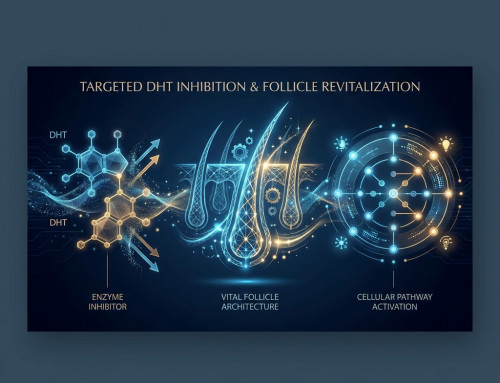
The mechanism behind male pattern baldness is well understood. The enzyme 5-alpha reductase converts roughly 5 to 10% of circulating testosterone into dihydrotestosterone (DHT). In genetically predisposed men, DHT binds to androgen receptors in the hair follicle and triggers miniaturization, the gradual shrinking of follicles until they stop producing visible hair (StatPearls/NIH). Androgenetic alopecia accounts for approximately 95% of all male hair loss, which makes DHT the single most important therapeutic target. The scale is significant: by age 35, about 65% of men notice some hair loss, and by age 50, roughly 50% of Caucasian males are affected.
A critical distinction drives treatment selection: 5-alpha reductase exists in two isoforms. Type I is expressed primarily in sebaceous glands and scalp skin, while Type II is concentrated in the hair follicles. A drug that blocks only one isoform leaves the other pathway free to keep producing scalp DHT. As this guide will show, that difference separates the most effective treatment from the merely good one.
There is also a new driver of demand in 2026. GLP-1 weight loss medications such as semaglutide are triggering a wave of telogen effluvium, pushing a fresh segment of patients toward DHT blocker treatments.
One principle underlies everything that follows: DHT blockers work best when started early. Benefits accumulate over years of continuous use, and stopping treatment leads to resumed hair loss within months.
The Four-Tier Clinical Evidence Hierarchy: How This Guide Ranks DHT Blockers
Most “best DHT blocker” roundups list shampoos, supplements, and prescription drugs side by side without ranking them, creating a false equivalence. This guide uses a clear framework based on clinical trial quality, mechanistic data, and regulatory status.
- Tier 1: Prescription oral DHT blockers (dutasteride, finasteride): supported by Phase 3 RCTs, network meta-analyses, and regulatory approvals.
- Tier 2: Topical prescription and emerging receptor-targeted therapies (topical finasteride, clascoterone/Breezula): strong Phase 3 data, limited or pending approval.
- Tier 3: OTC topical agents with modest DHT-blocking activity (ketoconazole 2% shampoo): smaller studies, useful as adjuncts.
- Tier 4: Natural supplements (saw palmetto, pumpkin seed oil): some RCT evidence, clearly inferior to prescription options, best used as adjuncts.
The core problem can be stated plainly: most men are buying Tier 3 and Tier 4 products marketed with Tier 1 language. The higher tiers require a prescription, but thanks to telehealth platforms, that barrier is now lower than it has ever been.
Tier 1: Prescription Oral DHT Blockers — The Clinical Gold Standard
Tier 1 represents the highest-evidence category, with the strongest outcomes for both stopping and reversing male pattern hair loss. Two drugs belong here: dutasteride and finasteride. They are both effective, but they are not equivalent.
Dutasteride 0.5 mg: The Tier 1 Leader
A 2025 network meta-analysis ranked oral dutasteride 0.5 mg as the single most effective medical therapy for male pattern hair loss, outperforming both finasteride and minoxidil.
The mechanistic advantage is straightforward. Dutasteride inhibits both Type I and Type II isoforms of 5-alpha reductase, suppressing serum DHT by 90 to 98%, compared to finasteride’s roughly 70%, which targets Type II only. Finasteride leaves the Type I pathway, active in scalp skin and sebaceous glands, completely unblocked. In raw potency terms, dutasteride is approximately 100 times more potent at inhibiting Type I and about 3 times more potent at inhibiting Type II.
The head-to-head data backs this up. A 2019 meta-analysis (Zhou et al., 576 patients) found dutasteride 0.5 mg/day produced 28.57 more hairs per cm² than finasteride (P<0.00001). A 2014 JAAD RCT of 917 men confirmed significantly greater hair count and hair width versus finasteride 1 mg (P=0.003).
One underreported finding deserves attention. A 2025 JAAD International RCT showed that thrice-weekly dutasteride 0.5 mg produced a greater moderate-to-marked improvement rate than once-daily finasteride (35% vs. 21%), with comparable sexual side effects. This works because dutasteride’s half-life is roughly 4 to 5 weeks, versus finasteride’s 6 to 8 hours, allowing flexible dosing without sacrificing efficacy. For men concerned about a daily commitment, that is a meaningful practical advantage.
On regulatory status, the picture is honest and reassuring. Dutasteride is FDA-approved for benign prostatic hyperplasia and used off-label for hair loss in the U.S., but it is formally approved for AGA at 0.5 mg/day in South Korea, Japan, and Taiwan (ISHRS), reflecting a global clinical consensus on its superiority.
Side effects, in context: sexual side effects occur in roughly 1.8 to 2.4% of users per 2025 to 2026 research and typically resolve upon discontinuation. In real-world data, fewer than 0.3% report persistent effects.
Finasteride 1 mg: Tier 1, But Second in Class
Finasteride deserves respect. FDA-approved for male AGA since 1997, it stops hair loss in over 80% of men, with stabilization typically within 3 to 6 months per current data.
Its mechanism explains its ceiling: finasteride inhibits only Type II 5-alpha reductase, reducing serum DHT by about 70 to 73%. Effective, but it leaves the Type I pathway active in scalp tissue. That is why the clinical evidence consistently places dutasteride above it.
There is also the half-life limitation. Finasteride’s 6 to 8 hour window requires strict daily dosing; a missed dose has a more immediate effect on DHT suppression than with dutasteride. Post-Finasteride Syndrome (PFS), meaning persistent symptoms after stopping the drug, is a documented but rare concern that the FDA now reflects on the label. It should be weighed against the 1.8 to 2.4% incidence rate and the reversibility seen in the vast majority of cases.
For men concerned about systemic exposure, topical finasteride (0.1 to 0.25%) offers a bridge, covered next under Tier 2.
Tier 2: Topical Prescription Options and Emerging Therapies
Tier 2 covers treatments with strong Phase 3 data and targeted mechanisms, but either limited regulatory approval or pending FDA review. These are meaningful options, especially for men prioritizing localized action over systemic DHT suppression.
Topical Finasteride (0.1–0.25%): Reduced Systemic Exposure Without Sacrificing Scalp Efficacy
Topical finasteride reduces scalp DHT at levels comparable to oral finasteride while producing significantly lower serum drug concentrations. That profile makes it appealing for men concerned about systemic side effects or PFS. It still requires a prescription and, in most markets, compounding pharmacy access. The trade-off is clear: it does not provide the dual-isoform inhibition advantage that defines dutasteride.
Clascoterone 5% (Breezula): The Most Significant Emerging Contender in 2026
Clascoterone is the most significant development in AGA treatment in over 30 years. Rather than reducing DHT throughout the body, it blocks DHT directly at the androgen receptor in the scalp follicle, producing no systemic hormonal side effects.
The Phase 3 SCALP 1 and SCALP 2 trials (1,465 men across 51 centers in the US and Europe), completed in December 2025, reported a 539% relative improvement in hair count in SCALP-1 and 168% in SCALP-2 versus placebo. In April 2026, Cosmo Pharmaceuticals reported positive 12-month Phase 3 safety data confirming sustained efficacy and a favorable long-term profile. An FDA NDA submission is targeted for early 2027.
For men who have avoided DHT blockers due to side effect fears, clascoterone could become the first viable option. It is not yet FDA-approved and is expected to reach the market only by 2027 to 2028. It is a Tier 2 contender today with Tier 1 potential upon approval, and men seeking treatment now cannot rely on it. For a broader look at new breakthroughs in hair growth research, including emerging therapies like clascoterone, the latest clinical findings are worth reviewing.
Tier 3: OTC Topical Agents With Measurable DHT-Blocking Activity
Tier 3 includes over-the-counter products with documented but modest scalp-level DHT-blocking activity. They are useful as adjuncts, not standalone solutions.
Ketoconazole 2% Shampoo: The Most Evidence-Backed OTC Option
Ketoconazole is an antifungal that also inhibits 5-alpha reductase locally, reducing scalp DHT by approximately 12 to 16% after four weeks of twice-weekly use. The 2% strength requires a prescription in some markets; 1% versions are available over the counter. It will not stop or reverse significant hair loss on its own, but it adds real, measurable value as a stackable part of a combination protocol.
Tier 4: Natural DHT Blockers — Adjuncts, Not Alternatives
Natural supplements carry some RCT evidence for modest DHT-blocking activity, but they are clearly inferior to prescription options. Many are sold with Tier 1 language, making this the most egregious example of the evidence-versus-marketing gap.
Saw Palmetto (Serenoa repens): The Most Researched Natural Option
Saw palmetto inhibits both Type I and Type II 5-alpha reductase at a modest scale (roughly 32 to 38% inhibition). A 2021 trial showed a 25% increase in hair density after 24 weeks, and a 2025 RCT confirmed significant improvements versus placebo (NIH/PMC). In a head-to-head comparison, saw palmetto produced a 38% improvement in hair count versus 68% for finasteride: meaningful, but clearly inferior. It is appropriate for men with very early thinning who are not yet ready for prescription therapy, or as an adjunct to Tier 1 treatment.
Pumpkin Seed Oil: Promising but Limited Data
A 24-week study found a 40% increase in hair count at 400 mg/day, attributed to phytosterols that mildly inhibit 5-alpha reductase. The evidence base is thinner than saw palmetto’s and the effect size is modest. It belongs in Tier 4 as a potential adjunct, never a standalone solution.
The Evidence vs. Marketing Gap: What Most Men Are Actually Buying
The hair loss supplement market is dominated by Tier 4 products marketed with Tier 1 language, and that confusion is helping drive the global hair loss treatment market toward a projected $20.20 billion by 2035.
Awareness is shifting. Search interest in finasteride rose 88% between 2020 and 2025, yet the supplement market still dwarfs prescription adoption. The gap persists largely because side effect fear remains the primary reason men avoid prescription DHT blockers. The reality is far less alarming than the perception: the actual incidence rate is 1.8 to 2.4%, and the vast majority of cases resolve upon discontinuation.
The cost of inaction is the part most men overlook. Miniaturization is progressive. Every month spent on a Tier 4 product instead of Tier 1 treatment represents continued follicle damage that becomes harder to reverse. Understanding the science behind hair loss causes and evidence-based solutions makes clear why early intervention with the right treatment tier matters so much.
Why Combination Therapy Consistently Outperforms Monotherapy
The clinical evidence on combination therapy is decisive. One study found that 94.1% of men improved on finasteride plus topical minoxidil, versus 80.5% with finasteride alone and 59% with minoxidil alone.
The mechanisms are complementary. DHT blockers, particularly dutasteride, address the root cause by suppressing DHT and halting miniaturization. Minoxidil stimulates regrowth by improving blood flow to the follicle. Together they attack the problem from two angles simultaneously. For men with moderate-to-significant hair loss, combination therapy is the standard of care, not an optional upgrade.
The historical barrier was practical: managing multiple separate products. Compounded formulations now solve that, which raises the natural question of how a man actually accesses Tier 1 combination therapy in 2026.
How to Access Tier 1 DHT Blocker Treatment in 2026
Dutasteride requires a prescription, and for years the dermatologist visit was the obstacle most men never got past. Telehealth has changed that equation entirely. Licensed providers can now review a medical questionnaire and issue a prescription online, typically within one business day, with no office visit required.
Compounded formulations are the practical delivery vehicle. A single daily capsule combining dutasteride 0.5 mg with oral minoxidil 2.5 mg eliminates the complexity of managing separate prescriptions. Oral minoxidil at 2.5 mg is clinically meaningful because systemic absorption stimulates follicles across the entire scalp, not just where a topical is applied. Single-capsule blister packaging also improves adherence, which matters because DHT blocker benefits depend on continuous use. Compounded combination formulas are often considerably more affordable than buying each ingredient separately through traditional pharmacies.
Thryve Hair Lab’s 4-in-1 Formula: Tier 1 Dutasteride Made Accessible
For men seeking Tier 1 dutasteride in a convenient, telehealth-accessible format, Thryve Hair Lab offers a once-daily compounded capsule built around exactly this evidence.
The 4-in-1 formula combines:
- Dutasteride 0.5 mg: the Tier 1 DHT blocker delivering 90 to 98% DHT suppression through dual-isoform inhibition
- Oral Minoxidil 2.5 mg: synergistic follicle stimulation across the whole scalp
- Biotin 1 mg: keratin and strand-strength support
- Vitamin D3 600 IU: follicle health support
The formula was developed by a medical team with over 100 years of combined experience in hair restoration, including board-certified hair surgical specialists and transplant surgeons. Their reported outcomes align with the broader clinical literature: 97 to 98% of men stop further hair loss, 90% see visible improvement in thickness and coverage within 3 to 6 months, and peak results arrive at 9 to 12 months. On safety, fewer than 0.3% of users report mild, temporary side effects, consistent with real-world data on oral DHT blocker use.
The access experience is built for the realities of modern life: a 2 to 3 minute online questionnaire, licensed provider review within one business day, 2-day FedEx shipping, TSA-compliant blister packaging, and discreet delivery. At $67/month on the 20-week plan with free shipping, versus roughly $135/month to buy the ingredients separately, the claimed savings reach $816 per year. A 1-year satisfaction guarantee further reduces the risk for men hesitant to commit.
DHT Blocker Comparison: Evidence Tier Summary Table
| Treatment | Evidence Tier | DHT Suppression | Mechanism | Rx Required | Key Clinical Evidence | Best For |
|---|---|---|---|---|---|---|
| Dutasteride 0.5 mg (oral) | Tier 1 | 90–98% | Inhibits Type I + II | Yes | 2025 network meta-analysis #1; 28.57 more hairs/cm² vs. finasteride | Maximum efficacy |
| Finasteride 1 mg (oral) | Tier 1 | ~70–73% | Inhibits Type II only | Yes | FDA-approved 1997; halts loss in 80%+ | Proven first-line option |
| Topical Finasteride | Tier 2 | Scalp-level, low serum | Type II, localized | Yes | Comparable scalp DHT, lower systemic exposure | Systemic exposure concerns |
| Clascoterone 5% (Breezula) | Tier 2 | None systemic | Blocks receptor in follicle | Pending | 539% / 168% improvement in Phase 3 | Future side-effect-averse users |
| Ketoconazole 2% Shampoo | Tier 3 | ~12–16% scalp | Local 5-AR inhibition | Some markets | Modest scalp DHT reduction | Adjunct only |
| Saw Palmetto | Tier 4 | ~32–38% | Inhibits Type I + II (mild) | No | 38% vs. 68% (finasteride) hair count | Very early thinning, adjunct |
| Pumpkin Seed Oil | Tier 4 | Mild | Phytosterol 5-AR inhibition | No | 40% hair count increase (24 wks) | Adjunct only |
Note: The highest-evidence protocol available today is the combination of dutasteride plus minoxidil, which attacks both the cause and the regrowth pathway simultaneously.
Frequently Asked Questions About DHT Blockers for Men
What is the strongest DHT blocker available in 2026?
Dutasteride 0.5 mg. The 2025 network meta-analysis ranked it the most effective therapy, and its dual-isoform inhibition achieves 90 to 98% DHT suppression.
Is dutasteride better than finasteride for hair loss?
Yes. Multiple head-to-head RCTs support this conclusion, including the 2025 JAAD International study showing 35% vs. 21% moderate-to-marked improvement rates.
Can dutasteride be taken every other day instead of daily?
Yes. The 2025 JAAD International RCT showed thrice-weekly dosing outperformed daily finasteride, thanks to dutasteride’s 4 to 5 week half-life supporting flexible schedules.
What are the side effects of DHT blockers?
Sexual side effects (decreased libido, erectile dysfunction) occur in roughly 1.8 to 2.4% of users and typically resolve upon discontinuation. PFS is rare but documented.
Do natural DHT blockers like saw palmetto actually work?
They produce modest, measurable effects (38% improvement in hair count for saw palmetto vs. 68% for finasteride) but are clearly inferior to prescription options. Best used as adjuncts.
When will clascoterone (Breezula) be available?
An FDA NDA submission is targeted for early 2027. It is not yet approved or available as of mid-2026.
How long does it take for DHT blockers to work?
Stabilization typically occurs within 3 to 6 months, with visible improvement in the same window and peak results at 9 to 12 months of consistent use.
Do men need a prescription for dutasteride?
Yes, but telehealth platforms like Thryve Hair Lab allow men to obtain one online through licensed provider review, typically within one business day.
Conclusion: The Evidence Is Clear — Don’t Let Marketing Decide Your Treatment
The clinical evidence hierarchy is unambiguous. Dutasteride 0.5 mg is the most effective DHT blocker available in 2026, backed by a 2025 network meta-analysis, multiple head-to-head RCTs, and the 2025 JAAD International intermittent dosing data. Yet the most widely purchased DHT blockers are not the most clinically effective ones, and that gap carries a real cost in continued, irreversible hair loss.
Clascoterone (Breezula) is a genuinely significant development that may reshape Tier 2 by 2027 to 2028, but men who need treatment today cannot wait for it. The highest-evidence protocol available right now is dutasteride paired with oral minoxidil, and compounded formulas make that accessible in a single daily capsule.
Hair loss is progressive, and follicle miniaturization is reversible only in its early stages. The most effective treatment is the one a man starts today. For those ready to access Tier 1 care without a clinic visit, Thryve Hair Lab’s 4-in-1 formula is the most practical path to dutasteride plus minoxidil combination therapy in 2026.
Start Tier 1 Treatment Today — No Office Visit Required
The process is built to be simple and private. Men complete a 2 to 3 minute online medical questionnaire, have a licensed provider review and approve it (typically the same day), and receive a compounded prescription shipped via 2-day FedEx. From there, it is one capsule daily.
The risk is minimal. Thryve Hair Lab backs the formula with a 1-year satisfaction guarantee: a full refund or account credit if there are no visible results after consistent use. If the medical team determines the treatment is not appropriate, a full refund is issued, so there is no risk to completing the consultation. Treatment starts at $67/month with free shipping on the 20-week plan.
This is doctor-guided, evidence-backed care formulated by specialists with over a century of combined experience in hair restoration. It is not a supplement purchase; it is the clinical gold standard made accessible.